How Does Tax-Free Childcare Work? Eligibility, 2026/27 Income Limits, and How to Apply
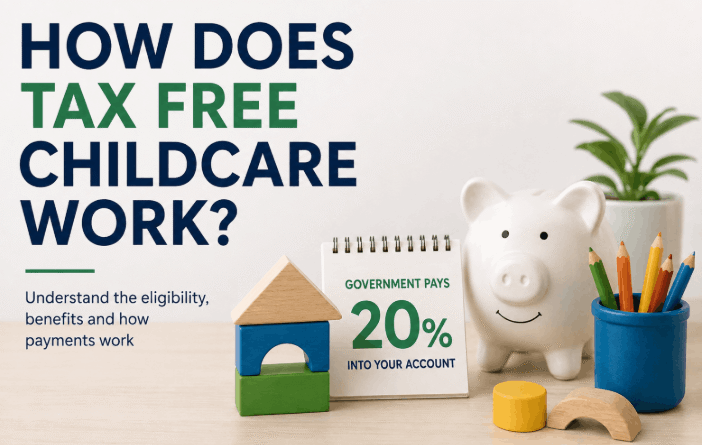
Tax-Free Childcare is a UK government scheme that tops up money paid into an online childcare account, adding £2 for every £8 a parent deposits, up to £2,000 per child per year. Working families in England, Scotland, Wales and Northern Ireland use it to pay approved childcare providers directly.
HMRC has confirmed that both the £100,000 individual income ceiling and the £2,000 annual cap stay the same for 2026/27.
Key Takeaways
- Tax-Free Childcare adds £2 for every £8 paid in, capped at £500 every three months per child, or £2,000 a year.
- Disabled children qualify for double the support, up to £1,000 every three months, or £4,000 a year, until the September after their 17th birthday.
- Neither parent can earn over £100,000 in adjusted net income a year, and this is tested individually, not as a household figure.
- Tax-Free Childcare cannot be claimed alongside Universal Credit, tax credits or employer childcare vouchers.
What Is Tax-Free Childcare and How Does It Work?
Tax-Free Childcare works by topping up an online account that parents use to pay their childcare provider directly. HMRC adds £2 for every £8 paid in, and that money lands in the account within a working day of a deposit going through.
Setting it up takes five steps:
- Open an online childcare account through GOV.UK.
- Add a childcare provider by searching for them by name, town or postcode inside the account.
- Deposit money by bank transfer, standing order or debit card.
- Use the topped up balance to pay the provider directly from the account.
- Reconfirm eligibility every three months, or the top ups stop.
One thing worth knowing: GOV.UK’s guidance now sits on Best Start in Life, the parent information hub that replaced the older Childcare Choices website in September 2025.
The switch did not change how the scheme itself works, only where the official guidance lives, so anyone still bookmarking the old Childcare Choices site should update the link.
The account can be used to pay a set range of registered providers:
- Registered childminders, nannies, nurseries and playschemes
- Before and after school clubs, breakfast clubs and holiday schemes
- Registered schools and home care workers signed up to the scheme
Who Can Get Tax-Free Childcare? Eligibility Criteria?
Eligibility depends on employment, income and a child’s age, and all three conditions must be met together. Parents who meet every condition below can usually apply straight away.
- Both parents must be working, whether employed or self-employed, unless one partner receives Incapacity Benefit, Carer’s Allowance or a similar qualifying benefit.
- Each parent must expect to earn at least the National Minimum Wage or National Living Wage for 16 hours a week.
- Self-employed parents in their first year of trading are exempt from the minimum earnings test.
- A child must be 11 or younger, or 16 if they are disabled, to start a new claim.
Eligibility for an existing claim runs until the September after a child’s 11th birthday, or their 17th birthday if disabled.
That cut off point catches many parents out. Other family benefits run to their own separate age rules, including when does Child Benefit stop, which uses a different test entirely.
Tax-Free Childcare Income Limits for 2026/27
The income rules set both a floor and a ceiling, and missing either one removes eligibility completely. Both limits are assessed per parent, not as a combined household figure.
Minimum Earnings You Need
Each parent must expect to earn the equivalent of 16 hours a week at the National Minimum or Living Wage.
Following the April 2026 increase to £12.71 an hour for workers aged 21 and over, that works out to roughly £2,643.68 every three months, or around £10,159 across a full tax year, for parents relying on the National Living Wage rate.
Maximum Earnings Allowed, the £100,000 Limit
If either parent’s adjusted net income goes over £100,000 in a tax year, that parent’s household becomes ineligible, even if the other partner earns far less.
| Test | 2026/27 Figure | Assessed |
|---|---|---|
| Minimum earnings (21 plus) | Approximately £2,643.68 per quarter | Per parent |
| Minimum earnings (self employed, year one) | Exempt from the test | Per parent |
| Maximum earnings | £100,000 adjusted net income | Per parent, individually |
| Reconfirmation | Every 3 months | Per account |
Because the ceiling is tested per parent rather than per household, it works quite differently from the high income child benefit charge, which is worked out its own way. Parents juggling both thresholds should check each one on its own terms rather than assuming a pass on one guarantees a pass on the other.
How Much Can You Get Through Tax-Free Childcare?
The maximum government contribution is £2,000 per child per year, reached by depositing £8,000 and receiving a £2,000 top up across four quarters. The cap is enforced in three month blocks, with £500 the most that can be added in any single quarter for a non disabled child.
Take a family with a £250 monthly childcare bill. Paying that in full through the account means depositing £200 and receiving a £50 top up from HMRC, covering the whole £250 bill without dipping into the family’s own pocket beyond the 80 percent share.
Spread across a year, that pattern uses roughly £600 of the available £2,000 allowance, leaving headroom if costs rise later in the year.

How to Apply for Tax-Free Childcare?
Applying means creating a Government Gateway account and letting HMRC verify income and identity automatically. The process typically takes a few days from start to approval.
- Go to GOV.UK and start the Tax-Free Childcare application.
- Create a Government Gateway account if one does not already exist.
- Verify identity using a National Insurance number and a passport or driving licence.
- Confirm employment details, which HMRC checks against its own records.
- Add a childcare provider once the account is live, then reconfirm eligibility every three months to keep the top ups flowing.
Tax-Free Childcare for Disabled Children
Disabled children qualify for double the standard support, up to £4,000 a year rather than £2,000. That extra support exists because childcare for a disabled child often costs more and needs more specialist care.
A child counts as disabled for this scheme if they receive Disability Living Allowance, Personal Independence Payment, an armed forces independence payment, or if they are certified as severely sight impaired or blind.
The extra funds can also cover specialist equipment bought through a registered provider, such as mobility aids, rather than only paying for hours of care.
Parents who already receive DLA for their child and want to understand the wider picture of what else they can claim can review my child gets DLA what else am I entitled to, since disability related support is often spread across more than one scheme.
Tax-Free Childcare vs Universal Credit and Other Schemes
A household can only use one childcare support scheme at a time, and switching away from Universal Credit or tax credits to claim Tax-Free Childcare closes the original claim permanently. It is worth checking the numbers for both schemes before switching.
Universal Credit’s childcare element can cover up to 85 percent of costs, with a monthly cap of £1,071.09 for one child or £1,836.16 for two or more children in 2026/27.
Families with higher childcare bills and lower earnings are frequently better off staying on Universal Credit rather than switching, since Tax-Free Childcare’s flat £2,000 annual cap can work out lower in cash terms once costs climb.
Families already claiming the disabled child element of Universal Credit should compare it against the Tax-Free Childcare disabled child cap to see which pays more.

Common Myths About Tax-Free Childcare, and What Is Actually True
Most of the confusion around this scheme comes down to a handful of repeated misunderstandings, several of which stem from different sources describing the same maths in different ways.
Widely circulated claim: Some guidance describes Tax-Free Childcare as a flat 20 percent discount on childcare costs, while other sources describe it as a 25 percent top up.
Correct position: Both figures describe the same £8 to £2 mechanic from different angles. £2 added to every £8 paid in is a 25 percent top up on the deposit, and it also equals 20 percent of the total £10 bill once combined.
Source: GOV.UK’s Tax-Free Childcare guidance, which states the ratio directly as £8 paid in for every £2 added.
| Myth | Reality |
|---|---|
| It is a straightforward tax break | It is a government top up scheme, unrelated to income tax rates |
| Any childcare provider qualifies | Only providers signed up to the scheme, such as Ofsted registered nurseries, can be paid |
| Universal Credit and Tax-Free Childcare can be combined | Only one scheme can be claimed at a time |
| The income limit is a household figure | Each parent is tested individually against the £100,000 ceiling |
| Unused top ups roll over each year | The annual allowance resets and unused amounts do not carry forward |
Conclusion
Tax-Free Childcare means a £2 top up for every £8 paid in, up to £2,000 a year per child, for working parents earning under £100,000 each in 2026/27. Checking the income test, confirming a registered provider and reconfirming every three months keeps the payments coming without a break.
FAQ
Is it worth doing tax-free childcare?
Yes, for most working families earning under £100,000 each and not already claiming Universal Credit or tax credits. Households with lower earnings and higher childcare costs often do better through Universal Credit’s childcare element instead.
How much money should I pay into my tax-free childcare account?
Pay in amounts that match your childcare provider’s fees, since the top up applies automatically to every deposit. To reach the full £2,000 annual cap, a family needs to deposit £8,000 across the year.
How long does it take for money to get into a tax-free childcare account?
Deposits usually appear within one working day, with the government top up added at the same time. Bank transfer times can vary slightly depending on the sending bank.
Is 30 hours free childcare actually free?
The 30 hours entitlement covers only the funded hours themselves, not meals, trips or additional hours beyond the allowance. Many nurseries charge separately for these extras, which Tax-Free Childcare can then help cover.
What age does tax-free childcare stop?
Support stops the September after a child turns 11, or after they turn 17 if they are disabled. Reconfirming eligibility every three months keeps the account active up to that cut off point.
Disclaimer: This article is for informational purposes only and does not constitute financial or legal advice; please consult official GOV.UK guidance for personal eligibility.