Working From Home Tax Relief 2026: Employee Changes, Backdating Rules, and Self-Employed Claims
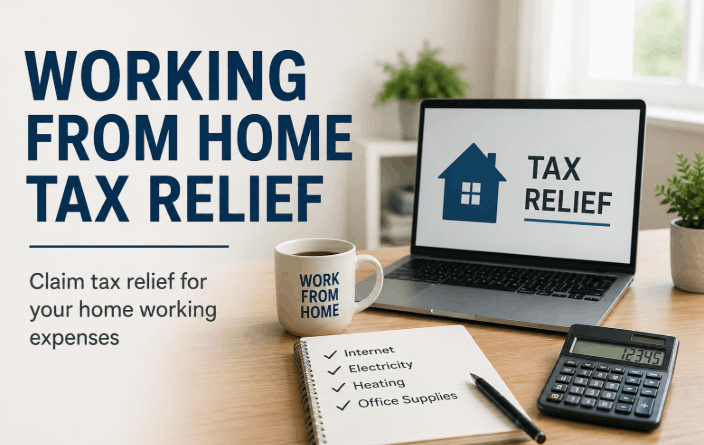
Working from home tax relief is a UK income tax relief that let eligible employees claim back tax on extra household costs, such as heating and electricity, caused by working at home.
From the 2026 to 2027 tax year, HMRC has abolished this relief for employees, though the previous four tax years can still be claimed.
Key takeaways
- Working from home tax relief for employees ended on 6 April 2026, following confirmation at the Autumn Budget 2025.
- The old HMRC working from home allowance was £6 a week (£312 a year), and claims for the four tax years before 2026/27 remain open.
- Self employed workers are unaffected and can claim a separate flat rate of £10, £18 or £26 a month depending on hours worked from home.
Has working from home tax relief changed for 2026?
Yes. Working from home tax relief changed for employees from 6 April 2026, when HMRC removed the ability to claim it directly. The change was confirmed at the Autumn Budget 2025 and took effect at the start of the 2026 to 2027 tax year.
Before that date, employees required to work from home could claim a flat rate of £6 a week, or the exact amount spent, without detailed receipts for the flat rate option.
According to HMRC, this removes non reimbursed homeworking expenses from the list of employee deductions permanently, rather than tightening eligibility again. This reflects GOV.UK’s published position as of August 2026.
Some older guides still describe the £6 a week allowance as something employees can claim directly from HMRC. That route has, in fact, been closed to new claims since 6 April 2026 and has not been reinstated.
Source: GOV.UK, tax relief for employees guidance.
The self employed are unaffected, a distinction covered further down this guide.
Who could claim working from home tax relief before April 2026?
Before the 2026 change, eligibility depended on why someone worked from home, not simply whether they did. Employees could claim only if their job genuinely required home working.
You could claim tax relief if:
- Your employer had no office for you to work from
- Your job required you to live too far from the office for a reasonable daily commute
- Your employment contract stated home working was a requirement, not an option
You could not claim if working from home was your own choice, even under a flexible working policy. This distinction under PAYE rules caught out people who assumed hybrid working arrangements automatically qualified them for additional household costs relief.
Why did HMRC abolish the working from home allowance?
HMRC abolished the relief because a large share of claims were invalid. A review found more than half of claims examined did not meet the qualifying criteria, often because employees chose to work from home rather than being required to, or because claims went in without checking eligibility first.
Rather than tightening the rules again, the government judged a full removal simpler to police and cheaper to administer. The change also fits a wider pattern.
HM Treasury has narrowed several personal reliefs in recent years to manage the cost of frozen thresholds elsewhere in the tax system, a pattern also visible in the pensioners income tax personal allowance freeze, which has left many retirees on fixed incomes worse off. HMRC estimates the change will save the Treasury £115 million over five years.

What can employees claim instead of working from home tax relief?
You still have two main options if your employer will not reimburse your costs directly.
- Ask your employer to pay a tax free flat rate allowance of up to £6 a week, provided there is a formal agreement confirming you work from home.
- Ask your employer for actual costs employer reimbursement, such as a proportion of your heating or business phone use, backed by bills.
Neither route needs HMRC involvement, since payment sits with your employer rather than your tax code. If your employer refuses both, there is currently no way to claim the shortfall yourself — for most affected workers, that’s the practical effect of the 2026 change.
How much could the old flat rate scheme save you, and can you still backdate a claim?
Yes, you can backdate a claim covering the four tax years before the relief ended, provided you met the old eligibility rules for each year.
| Tax year | Working from home tax relief flat rate | Can still be claimed |
|---|---|---|
| 2022/23 | £6 a week (£312 a year) | Yes, until the four year deadline passes |
| 2023/24 | £6 a week (£312 a year) | Yes |
| 2024/25 | £6 a week (£312 a year) | Yes |
| 2025/26 | £6 a week (£312 a year) | Yes, final eligible year |
| 2026/27 onward | Not available | No |
A basic rate taxpayer claiming the full £312 rebate received around £62 in tax relief a year, while a higher rate taxpayer received around £124. Missing the backdating window means losing that amount permanently, since HMRC applies a strict four year limit.
How do you claim working from home tax relief for previous tax years?
- Check which tax years you were eligible, based on whether your employer required home working during that period.
- Gather evidence, such as your employment contract or written confirmation that home working was required.
- Submit your claim online through your Personal Tax Account, or by post using the P87 form.
- Wait for HMRC to confirm your claim and make a tax code adjustment, or issue a refund if the year has already ended.
Claims submitted through Self Assessment go through your tax return rather than the standalone claim service, since HMRC treats these as separate processes.
Does working from home tax relief still exist for the self employed?
Yes. The 2026 change applies only to employees claiming through PAYE, and has no effect on sole traders or self employed workers claiming through Self Assessment.
It’s the most common point of confusion since the abolition was announced, many self employed readers have wrongly assumed their own claims ended too.
Self employed workers can still claim use of home as office costs as a business expense, reducing the profit they pay tax on rather than claiming a fixed rebate.
Many use the extra headroom this creates to plan further ahead, for instance, building a self employed pension plan to cover the retirement savings an employer would otherwise provide through a workplace scheme.
How much can self employed workers claim for using their home as an office?
Simplified expenses flat rate
If you work from home for 25 hours or more a month, you can use HMRC’s simplified expenses flat rate instead of working out exact sole trader expenses.
| Hours worked from home per month | Flat rate you can claim |
|---|---|
| 25 to 50 hours | £10 a month |
| 51 to 100 hours | £18 a month |
| 101 hours or more | £26 a month |
This rate does not cover phone or internet costs, so you can claim the business proportion of those on top.
Actual costs method
- Work out how many rooms in your home you use for business, excluding bathrooms and hallways.
- Calculate what proportion of your household bills claim relates to that space, covering heating, electricity, and council tax.
- Apply that proportion to your actual home office expenses for the tax year, then claim the total through Self Assessment.
The actual costs method usually gives a larger claim if you work from home full time, while the flat rate suits occasional home working with minimal record keeping.
Are limited company directors treated as employees or self employed for this relief?
Limited company directors are treated as employees for this relief, not as self employed workers, because they are paid through PAYE like any other member of staff. This means the 2026 abolition applies to directors in exactly the same way it applies to employees of any other company.
Directors do have one option ordinary employees typically lack: the company itself can pay the director a tax free home working allowance of up to £6 a week, provided a formal agreement is in place, or reimburse actual costs directly.
This distinction matters because directors sometimes assume that owning the company changes their tax position, when in practice their employment status for this particular relief stays the same as any other worker on the payroll.
What happens to your tax position if you sell your home after claiming office costs?
Claiming a proportion of your home running costs can affect Capital Gains Tax when you eventually sell, but only if you claim for a space used exclusively for business, with no personal use at all. Using a spare room mainly as an office while it also serves as a guest bedroom generally avoids this issue.
If a room genuinely has sole business use over several years, HMRC can treat that portion of the property as ineligible for full Private Residence Relief on sale, creating a Capital Gains Tax liability on that share of any increase in value.
It’s worth weighing alongside wider later life property and estate planning, particularly if you’re already looking at the over 55s inheritance tax risk that comes with a growing property value.
How can you avoid losing money to tax refund companies?
Third party tax refund companies sometimes advertise working from home and other expense claims, then take a cut of anything HMRC pays out. You keep 100% of any relief you are owed by claiming directly with HMRC yourself.
Watch out for:
- Companies that guarantee a refund before checking your eligibility
- Agents who never ask for receipts or evidence to support your claim
- Third party agreements that make you responsible for repaying HMRC if the claim turns out to be invalid
If a company submits an ineligible claim on your behalf, HMRC will still expect you to repay the full amount, plus interest, even after the company has already taken its fee. Checking eligibility yourself on GOV.UK before claiming, whether directly or through an agent, avoids this risk entirely.
How does working from home tax relief compare with other tax reliefs based on your tax band?
Working from home tax relief, like most income tax deduction schemes, was never a flat cash payment. It worked by reducing the amount of your income taxed at your marginal rate, so a higher rate taxpayer received more relief from the same £6 a week claim than a basic rate taxpayer did.
The same mechanism applies to reliefs like pension contributions, where tax relief is calculated on the same marginal rate principle rather than paid as a fixed rebate.
It’s a distinction worth understanding beyond home working costs too, since it explains why two people claiming an identical amount can end up with very different savings, depending on their tax band.
Conclusion
Working from home tax relief for employees ended in April 2026, closing a claim worth up to £312 a year. Self employed workers keep a separate, unaffected route through simplified expenses.
Anyone missing a claim from the previous four years should act before the backdating window closes. For UK workers, working from home tax relief now works under a different set of rules from 2026 onward.
FAQ
How much can I claim back for a home office?
Working from home tax relief let employees claim £312 a year under the old flat rate before it ended in April 2026. Self employed workers can claim between £120 and £312 a year using the simplified expenses flat rate, or more using the actual costs method.
What is deductible if you work from home?
For the self employed, deductible costs include a proportion of heating, electricity, council tax, and mortgage interest, based on the space and time used for work. Employees can no longer deduct these costs directly from HMRC, though employers can still reimburse them tax free.
Can I claim if I only work from home one day a week?
No, not under the old employee scheme, and that option no longer exists in any case from April 2026, for self-employed workers using simplified expenses, occasional home working can still qualify, provided total hours reach at least 25 in that month.
What happens if working from home is still showing in my tax code?
Yes, this can happen if HMRC has not yet updated your code after the 2026 change. Contact HMRC directly to correct it, since an outdated code could mean you are paying the wrong amount of tax without realising.
Do I need evidence to claim for previous tax years?
Yes, HMRC generally asks for evidence such as your employment contract or written confirmation that home working was required. Keeping this paperwork ready before submitting a backdated claim helps avoid delays.
Disclaimer: This article is for informational purposes only and does not constitute formal financial or legal advice; please consult HMRC guidelines or a qualified tax advisor for your specific situation.