What Triggers a DWP Investigation? A Complete Guide to Checks, Evidence, and Next Steps
A DWP investigation is triggered when the Department for Work and Pensions receives information suggesting a benefit claim may be false, such as a data mismatch, an anonymous tip, undisclosed savings, or a change in circumstances that was never reported.
The Department for Work and Pensions cross-checks claims against HM Revenue and Customs records, bank data and reports to the National Benefit Fraud Hotline to identify cases that need a closer look. The figures below reflect DWP policy confirmed in June 2025.
Key Takeaways
- The Department for Work and Pensions opened around 23,000 investigation outcomes in 2023 to 2024, with 14,000 cases referred to its own investigators.
- Data-matching with HMRC, banks, and the DVLA is the single most common way a claim gets flagged, ahead of public tip-offs to the National Benefit Fraud Hotline.
- New powers under the Public Authorities (Fraud, Error and Recovery) Bill, updated 19 June 2025, let the DWP compel information from third parties digitally rather than by post.
What Triggers a DWP Investigation?
A DWP investigation is most commonly triggered by a mismatch between government records, a third-party tip-off or an unreported change in a claimant’s circumstances. The Department for Work and Pensions does not rely on one method.
It combines automated checks with information from the public and other organisations.
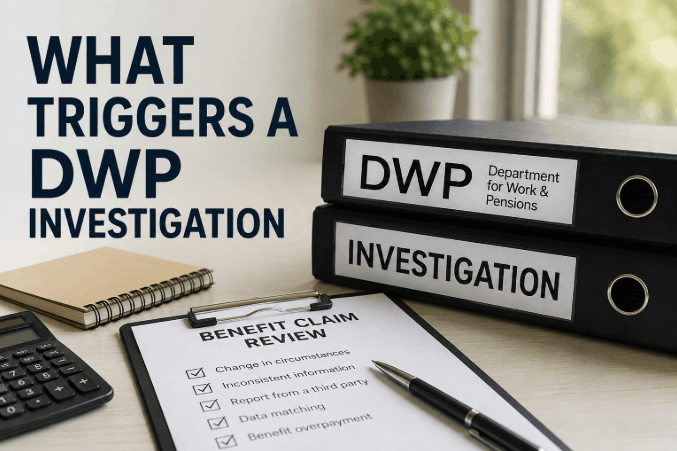
The main triggers include:
- Data-matching discrepancies: Income, address, or employment records held by HMRC, banks, or the DVLA that do not match what was declared on the claim.
- Reports to the National Benefit Fraud Hotline: Tip-offs from neighbours, ex-partners, or employers, which the DWP treats as leads rather than proof.
- Undisclosed savings or capital: Held above the relevant threshold while a means-tested benefit is still being claimed.
- Unreported changes of circumstances: A new job, a partner moving in, or a pay rise that was never updated on the claim.
- Social media activity: Posts, tagged photos, or check-ins that appear to contradict what was declared about mobility, income, or living arrangements.
More than one of these signals can appear at the same time, which is why an investigation may seem sudden even when nothing was deliberately hidden.

How Data-Matching and Bank Checks Flag a Claim
Data-matching is behind many DWP investigations, with a claimant’s details compared against records held by other organisations under powers set out in the Social Security Administration Act 1992.
This legislation allows the Department for Work and Pensions to request information from banks, credit reference agencies and utility providers where there are reasonable grounds to suspect fraud. In 2023 to 2024, Information Gathering Officers made around 20,000 requests under these existing powers.
A mismatch does not automatically mean fraud has occurred. It simply means the claim may need further review.
Common flags include undeclared employer payments or DWP benefit fraud bank account threshold savings sitting above the limit for Universal Credit.
Pension-age claimants are checked slightly differently, since DWP pension credit review bank statements often form part of a routine entitlement review rather than a fraud-specific process. HMRC and the DVLA are the two departments most frequently cited as data-sharing partners.
What to Do If You Get a DWP Investigation Letter
A DWP investigation letter should be read carefully and dealt with within the stated timeframe, as ignoring it can lead to a payment being suspended before any wrongdoing is established. The letter will usually explain what the DWP wants to check and how to respond.
- Read the letter in full before reacting. Note whether it asks for documents, an interview, or simply confirmation of a change, these can mean very different things.
- Gather the specific evidence requested. This might include bank statements, tenancy agreements or medical evidence. If you take photos, make sure the copies are clear.
- Respond within the stated deadline. If more time is needed, contact the department named on the letter as soon as possible.
- Seek advice before an interview under caution. DWP benefit warning letters that mention this mean a possible offence is being considered, and free advice from a solicitor or Citizens Advice is available beforehand.
- Keep a copy of everything sent. This protects the claimant if there is a later dispute about what was provided and when.
Not every letter signals fraud. Many are routine compliance checks confirming that circumstances have not changed.
How Long Does a DWP Investigation Take?
A DWP investigation can take anything from a few weeks to more than a year, although straightforward cases are often resolved within three to six months. How long it takes depends largely on whether it is a simple compliance check or a full criminal investigation through the Single Fraud Investigation Service.
| Case type | Typical duration | What extends it |
|---|---|---|
| Routine compliance check | 2–6 weeks | Missing documents, slow response |
| Formal fraud investigation | 3–6 months | Interview under caution, multiple data sources |
| Complex or criminal referral | 6 months–2 years | Court proceedings, cross-agency evidence, appeals |
A DWP investigation can typically take three to twelve months from first contact to a decision, although simple compliance checks may be completed within a few weeks.
The process can take much longer once a case reaches an interview under caution, as arranging the interview, gathering evidence and any referral to the Crown Prosecution Service can all add time.

Inside the DWP Investigation Process
The DWP investigation process generally follows five stages, from the first notification through to a formal decision on whether fraud occurred. Not every case reaches every stage.
- Notification. The claimant is contacted, usually by letter or phone.
- Evidence gathering. The DWP requests bank statements, employer records, or runs data-matching checks.
- Interview under caution. If a criminal offence is suspected, a recorded interview is arranged, often with the right to bring a solicitor.
- Decision review. A decision maker assesses whether an overpayment, civil penalty, or criminal referral is appropriate.
- Outcome and appeal rights. The claimant is informed of the result and can usually request a mandatory reconsideration if they disagree.
The Single Fraud Investigation Service has run this process nationally since being fully rolled out between July 2014 and March 2016, consolidating Housing Benefit and Tax Credit fraud work that local authorities and HMRC previously handled separately.
What Evidence Does DWP Actually Gather?
The DWP needs evidence of deliberate dishonesty, rather than just an overpayment, before a case can be prosecuted under the Fraud Act 2006. An honest mistake is treated very differently from a knowingly false claim.
To bring a prosecution, investigators must typically show that false information was given, or that required information was withheld, and that this was done dishonestly with intent to gain.
Courts commonly use a two-part dishonesty test, looking at what the claimant genuinely believed at the time and whether an ordinary person would regard the behaviour as dishonest.
Supporting evidence can include bank statements, surveillance footage and records from an interview under caution gathered under the Fraud Act 2006. The Crown Prosecution Service reviews this evidence independently, which is one reason many investigations close without any charge being brought.
Do PIP and Universal Credit Investigations Work Differently?
PIP and Universal Credit investigations use different types of evidence because the two benefits test different things: PIP assesses functional ability, while Universal Credit assesses financial entitlement. This difference can explain why claimants are sometimes unsure about what triggered their review.
PIP and Disability Benefit Investigations
Personal Independence Payment investigations lean heavily on evidence of physical or functional capability, since the benefit depends on what a claimant can and cannot do day to day. Investigators may look at social media posts or observed activity that appears to contradict the support claimed.
Anyone looking at DWP PIP legacy benefits changes should remember that one good day does not usually prove full mobility, as conditions can vary from day to day.
Universal Credit Investigations
Universal Credit investigations rely far more on financial data-matching, since the benefit is means-tested and tied directly to income and savings. Common issues include unreported earnings or a partner moving into the household without the change being reported.
Genuine DWP Universal Credit errors caused by system delays are treated as overpayments to repay, rather than fraud, where there was no dishonest intent. Claimants whose PIP review concludes in their favour can use a PIP back pay calculator to estimate arrears owed for the review period.
New DWP Bank Monitoring Powers Under the 2025 Fraud Bill
The Public Authorities (Fraud, Error and Recovery) Bill gives the DWP stronger powers to compel information from banks and other third parties digitally, replacing a system that previously relied on letters and site visits. The factsheet explaining these powers was last updated on 19 June 2025.
The new powers create a single legal route for information requests and cover grants and other non-benefit payments where fraud is suspected.
Safeguards include exemptions for legally privileged or self-incriminating information, along with independent inspection and oversight of communications data.
The department estimates the changes will result in an additional 2,000 information requests fulfilled each year. Anyone concerned about how this affects an existing claim can read the DWP pensioner bank account monitoring changes guidance.
Do DWP Investigators Visit Your Home?
DWP investigators can and do visit claimants’ homes as part of a fraud investigation, most often to observe who lives at the property rather than to search it. Any visit is part of the wider evidence-gathering process rather than a separate action.
During a visit, investigators may look for:
- Who enters and exits the property, and how often
- Evidence of another adult’s belongings or post at the address
- Vehicles registered at the property that were not declared
- Whether what is observed matches what was claimed
Surveillance of this kind must be authorised and proportionate, and it alone rarely proves anything conclusively, it is usually considered alongside other evidence, such as bank records or a formal interview, before a decision is made.

What Happens If DWP Finds You’ve Committed Fraud?
If a DWP fraud investigation concludes that fraud took place, the consequences can range from repaying the overpaid amount to criminal prosecution, depending on scale and intent. The maximum sentence for a serious case of conspiracy to defraud is 10 years in prison, although most cases have much less serious outcomes.
Sanctionable benefits can be reduced or stopped for up to three years, and a civil penalty of between £350 and £5,000 may apply instead of, or alongside, prosecution.
Courts consider the level of blame and harm, including whether the claim was fraudulent from the start, how long it continued and whether the person cooperated or admitted it early. Genuine hardship, no previous convictions, and caring responsibilities can all reduce the outcome.
Conclusion
Knowing what triggers a DWP investigation can help explain why most cases start with a data mismatch, an unreported change or a third-party report rather than deliberate targeting.
Acting quickly on any letter, keeping records accurate, and seeking advice before an interview under caution all reduce the risk of a straightforward review turning into something more serious. Knowing what triggers a DWP investigation can help claimants understand what may lead to a review in 2026.
FAQs
How do you know if the DWP is investigating you?
The clearest sign is direct contact from the DWP, usually by letter or phone, asking for information or asking you to attend an interview. A sudden suspension of your benefit without an explanation can also mean a review is taking place, although it does not confirm that fraud is suspected.
How far back can DWP investigate?
There is no fixed limit on how far back a DWP investigation can look, particularly where dishonesty is suspected. For overpayments without fraud, six years is typical for recovery, but historic bank statements and old claims can still be reviewed in a serious case.
How are benefit cheats caught?
Most cases are identified through data-matching between the DWP, HMRC and banks rather than through undercover investigations. Public tip-offs to the National Benefit Fraud Hotline and inconsistencies found during routine compliance checks also account for a significant share of cases opened.
What number should you call if DWP contacts you?
There is a dedicated line for benefit-related enquiries, and using the correct DWP contact number helps avoid delays caused by being routed to the wrong department. Having your claim reference number ready before calling can help speed things up.
Where can you find DWP fraud investigator jobs?
DWP fraud investigator roles are advertised through the official Civil Service Jobs website rather than general recruitment sites. Searching the Department for Work and Pensions listings is the most reliable way to find current vacancies and application deadlines.
Disclaimer: This article is for informational purposes only and does not constitute formal legal or financial advice regarding benefit claims.