
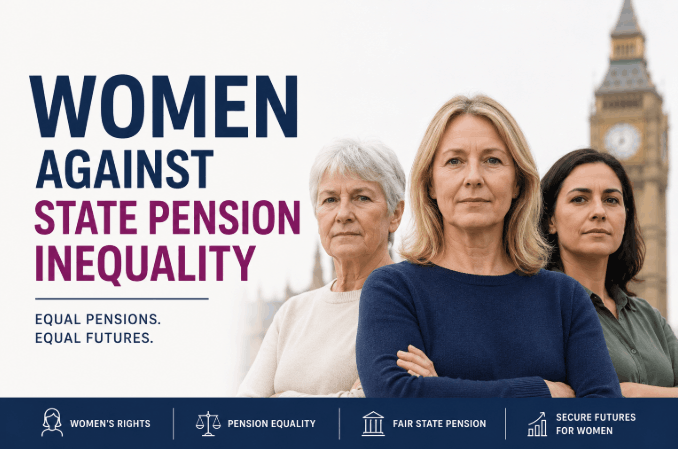
Women Against State Pension Inequality: 2026 Judicial Review, Eligibility, And Payouts
Women Against State Pension Inequality (WASPI) is a UK campaign group representing women born between 6 April 1950 and 5 April 1960 whose State Pension age rose from 60 to as high as 66 with inadequate notice. As of 2026, no compensation has been paid.
Key Takeaways
- WASPI represents around 3.6 million women born between 6 April 1950 and 5 April 1960 whose State Pension age was raised under the Pensions Act 1995 and the Pensions Act 2011.
- The Parliamentary and Health Service Ombudsman confirmed the DWP delayed sending individual pension age letters by 28 months, between August 2005 and December 2007.
- The Government rejected a compensation scheme on 29 January 2026, prompting WASPI to launch a fresh judicial review with legal firm Bindmans LLP.
What Is Women Against State Pension Inequality (WASPI)?
Women Against State Pension Inequality, commonly abbreviated to WASPI, is a campaign group formed in 2015 by five women to challenge how the Government raised the State Pension age. The group does not oppose State Pension age equalisation, but argues the process itself was rushed.
It says the Pensions Act 1995 and the accelerating Pensions Act 2011 were poorly communicated, leaving thousands of women with little time to adjust retirement plans.
WASPI’s founders originally called for transitional state pension arrangements rather than the change being reversed.
The women against state pension inequality campaign represents women born in the 1950s who saw their pension age rise by as much as six years, and it continues to campaign for compensation through Parliament and the courts.

Who Qualifies as a WASPI Woman? Eligibility by Date of Birth
Eligibility depends entirely on date of birth, not on personal financial circumstances. Around 3.6 million women born between 6 April 1950 and 5 April 1960 fall within the affected group, according to WASPI.
Women reaching the top of that range can also see current payment rates in the how much State Pension will I get at 66 guide. The table below outlines the state pension age increase for women by birth date.
| Date of Birth | State Pension Age Change |
|---|---|
| Before 6 April 1950 | Pension age remained 60 |
| 6 April 1950 to 5 April 1953 | Pension age rose gradually toward 65 under the Pensions Act 1995 |
| 6 April 1953 to 5 April 1960 | Pension age rose further toward 66 under the Pensions Act 2011 |
Anyone born in this window is treated as a WASPI woman whether or not she agrees with the campaign’s compensation demand.
Some women have seen conflicting forecasts online following a recent HMRC state pension tool error, which makes it worth checking GOV.UK directly for the latest State Pension age tied to an exact date of birth.
What Did the Ombudsman Find About DWP Communication Failures?
The Parliamentary and Health Service Ombudsman confirmed maladministration in how the DWP communicated pension age changes. Its March 2024 report set out exactly where the failures occurred.
- Between August 2005 and December 2007, DWP delayed a decision to send individual letters, creating a 28-month gap before letters began going out.
- The Ombudsman found no fault in how the 2011 Pensions Act changes were communicated, only in the earlier 1995 Act process.
- The Ombudsman recommended compensation between £1,000 and £2,950 per complainant, based on the severity of injustice suffered.
These state pension age communication failures form the legal basis for every compensation claim WASPI has pursued since.

What Is the Current WASPI Compensation Status in 2026?
The latest WASPI compensation decision, confirmed on 29 January 2026, ruled out any government scheme. It runs separately from the wider DWP state pension age change 2026 review, which deals with age adjustments rather than compensation.
Work and Pensions Secretary Pat McFadden set out the decision in the House of Commons, saying a flat rate payout could not be justified.
- Most women born in the 1950s already knew their pension age was rising before it changed, according to DWP research cited in the decision.
- Sending letters earlier would not reliably have altered retirement planning for the majority of women affected.
- A flat rate compensation payment, estimated to cost up to £10.5 billion, was ruled out as poor value for taxpayers.
Any future payout would also have had to sit alongside the state pension personal allowance threshold warning already affecting pensioner income, adding to the overall cost picture.
Despite confirming DWP maladministration in March 2024, the Parliamentary and Health Service Ombudsman cannot force the Government to pay compensation. Its powers stop at recommending a remedy, nothing more.
The final decision on whether WASPI compensation is paid rests with Parliament and the Department for Work and Pensions, not with the Ombudsman itself.
Why Did the Government Reject WASPI Compensation Twice?
The Government’s second refusal was not a reversal of its reasoning, only a correction of the process that produced it.
The November 2025 Evidence Concession
In November 2025, the Government admitted that research on Automatic Pension Forecast letters had not been shown to the minister who made the original December 2024 decision. WASPI’s legal team, instructed through Bindmans LLP, argued this made the first refusal unlawful.
The Government agreed to withdraw that decision and reconsider, pausing a judicial review hearing that had been scheduled for December 2025.
The January 2026 Decision
Reconsidering the evidence did not change the outcome. On 29 January 2026, the Government reached the same conclusion as Liz Kendall had reached thirteen months earlier: no compensation scheme would be introduced.
WASPI chair Angela Madden called the decision “a different DJ playing the same broken record,” and confirmed the group would return to court.

When Will WASPI Get a Decision? The Judicial Review Timeline
No fixed date exists for a final decision because the WASPI judicial review is now back before the High Court.
- March 2025: WASPI files for judicial review after the Government’s December 2024 refusal.
- June 2025: The High Court grants permission for a full hearing, calling the case arguable.
- December 2025: Days before trial, the Government pauses its defence and agrees to reconsider the decision.
- January 2026: The Government issues a fresh refusal, prompting WASPI to launch a second legal challenge.
- 2026 onward: The case proceeds through the High Court, with no scheduled ruling date confirmed.
What matters most in WASPI news in 2026 is this ongoing legal process, not a fixed decision date. The women against state pension inequality campaign is now waiting on the High Court, not Parliament, for its next answer.
Is There an Official WASPI Compensation Calculator?
No official WASPI compensation calculator exists, and no state pension compensation scheme currently accepts claims. Several websites run unofficial calculators and claims pages that suggest otherwise.
Common Myths About WASPI Compensation and What Is Actually True
| Myth | Reality |
|---|---|
| A WASPI compensation calculator can confirm how much a woman will receive | No official calculator exists, because no compensation scheme exists as of January 2026 |
| Compensation forms are being processed by DWP | DWP has confirmed no scheme has been approved to accept claims |
| Eligible women will be paid automatically | No automatic payment applies because no scheme has been created |
| Paying a fee guarantees faster compensation | WASPI warns that fee based claim services are scam operations |
Widely circulated claim: Several websites present a WASPI compensation calculator or claims process as though a payout scheme is active or forms are being processed.
Correct position: No compensation scheme exists. The Government confirmed on 29 January 2026 that no scheme would be introduced, and WASPI’s own website warns that services offering to process claims for a fee are scam operations.
Source: GOV.UK, Government response to the Parliamentary and Health Service Ombudsman’s investigation into Women’s State Pension age communications, 29 January 2026, and Women Against State Pension Inequality (waspi.co.uk).
Women wanting to check a genuine claim can take a few practical steps.
- Check waspi.co.uk directly for confirmed campaign updates rather than third party calculator sites.
- Use the free GOV.UK State Pension forecast tool to confirm an individual pension age, not a compensation estimate.
- Contact a local WASPI group or an MP for verified information rather than unsolicited emails or social media offers.
Pensioners keeping an eye on their income should also review the ongoing state pension tax threshold freeze, which affects take home pension regardless of any WASPI compensation outcome.

Conclusion
Women against state pension inequality remains an active, unresolved campaign in 2026. No compensation has been paid, and the Government’s January decision is now being challenged through a fresh judicial review.
Affected women should rely only on official sources such as GOV.UK and waspi.co.uk for updates. For affected women, women against state pension inequality remains an ongoing legal fight in 2026, not a confirmed payout.
FAQ
What does WASPI stand for?
WASPI stands for Women Against State Pension Inequality, the abbreviation used by the UK campaign group formed in 2015. It represents women born between 6 April 1950 and 5 April 1960 who say the State Pension age was raised without adequate notice.
Has WASPI compensation been confirmed?
No compensation has been confirmed. The latest WASPI compensation decision, made on 29 January 2026, upheld the December 2024 refusal. WASPI is now pursuing a judicial review at the High Court to challenge it.
How do I know if I am due WASPI compensation?
No woman is currently due WASPI compensation, because no scheme has been approved. Eligibility would depend on being born between 6 April 1950 and 5 April 1960, not on a National Insurance contributions record, but no claims process exists as of 2026.
What year did women stop getting State Pension at 60?
The State Pension age changed from 60 to 65 for women born after 5 April 1950, under the Pensions Act 1995. The Pensions Act 2011 later accelerated the rise toward 66 for women born later in the decade.
When will WASPI get a decision on compensation?
No confirmed date exists. The latest WASPI news in 2026 centres on the judicial review moving through the High Court, with the case timeline set by the court rather than by Parliament.
Disclaimer: This article is for informational purposes only and does not constitute official financial, legal, or professional advice.