State Pension Tax Threshold Freeze 2026/27: Personal Allowance Gap, Rules and What to Do
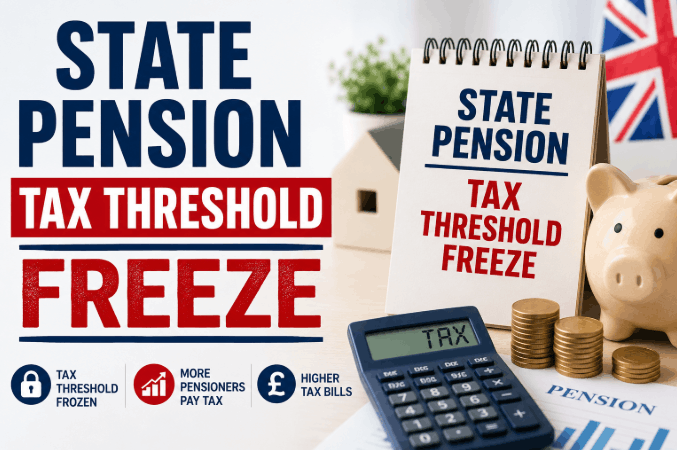
The state pension tax threshold freeze refers to the government holding the Personal Allowance at £12,570 since 2021/22 while the state pension keeps rising under the triple lock. For 2026/27, the full new state pension sits at £12,547.60, just £22.40 below that frozen threshold.
The Institute for Fiscal Studies projects the pension will exceed the allowance for the first time in 2027/28.
Key Takeaways
- The Personal Allowance has been frozen at £12,570 since 2021/22 and will remain frozen until April 2031, following the Autumn Budget 2025.
- The full new state pension for 2026/27 is £241.30 a week, or £12,547.60 a year, only £22.40 below the Personal Allowance.
- The Institute for Fiscal Studies projects that the full new state pension will exceed the Personal Allowance for the first time in 2027/28.
- The government has pledged that pensioners whose only income is the basic or new state pension will not face a Simple Assessment tax bill from 2027/28, though the exact mechanism has not yet been confirmed.
What Is the State Pension Tax Threshold Freeze?
The state pension tax threshold freeze refers to the government holding the income tax Personal Allowance at £12,570 while the state pension continues rising each year. HM Revenue and Customs sets the Personal Allowance as the amount of income a person can receive before paying income tax, and it has not moved since the 2021/22 tax year.
Autumn Budget 2025 confirmed this freeze would extend all the way to April 2031, rather than ending in 2028 as previously planned.
It’s a change that sits alongside the UK state pension age increase, another shift altering when people can actually start drawing these payments.
Because the state pension rises annually under the triple lock while this allowance stands still, the two figures are converging fast, and it’s this convergence that’s behind most of the tax questions pensioners are now raising.
How Close Is the State Pension to the Tax Threshold Right Now?
The full new state pension is now just £22.40 a year below the Personal Allowance, the narrowest gap since the threshold freeze began.
The table below sets out how both have moved since 2021/22, using confirmed Department for Work and Pensions figures rather than forecasts.
| Tax Year | Full New State Pension (annual) | Personal Allowance | Gap Remaining |
|---|---|---|---|
| 2021/22 | £9,339.20 | £12,570 | £3,230.80 |
| 2025/26 | £11,973.00 | £12,570 | £597.00 |
| 2026/27 | £12,547.60 | £12,570 | £22.40 |
| 2027/28 (projected) | exceeds £12,570 | £12,570 | none |
By the 2027/28 tax year, the full new state pension is expected to overtake the Personal Allowance for the first time since the new state pension began in 2016.
The full new state pension will exceed the £12,570 Personal Allowance for the first time in the 2027/28 tax year, according to Institute for Fiscal Studies projections.
Once that crossover happens, pensioners whose only income is the state pension will technically owe income tax on the excess, unless the government’s planned waiver takes effect as announced.
Many people nearing retirement first want to know how much State Pension they’ll get at 66 before turning to what it means for their tax position. That single crossover point is why pension and tax advisers are increasingly flagging this as one to watch.
How Much Can a Pensioner Earn Before Paying Tax in the UK?
A pensioner can earn up to £12,570 across all income sources before paying any income tax, not £12,570 from the state pension alone on top of other income. This single Personal Allowance covers the full picture of someone’s earnings.
Income counted toward this limit includes:
- The state pension itself, whether basic or new
- Workplace or private pension payments
- Part time earnings or self employment income
- Interest on savings held outside an ISA
- Rental income above the rent a room allowance
Income that does not count toward the limit includes ISA interest, dividends and gains, and certain trading and property allowances. Once total taxable income passes £12,570, the amount above that level is taxed, usually starting at the basic rate of 20 per cent.
A pensioner can earn up to £12,570 from all combined sources before paying any income tax in the UK.
This single Personal Allowance covers the state pension, private pension payments, part-time earnings, and savings interest together, not each source separately. Income above that level is taxed at 20 per cent under the basic rate.
Why Are Tax Thresholds Frozen While the State Pension Keeps Rising?
Tax thresholds remain frozen because successive Chancellors have used the freeze as a way to raise revenue without changing headline tax rates, a process economists call fiscal drag.
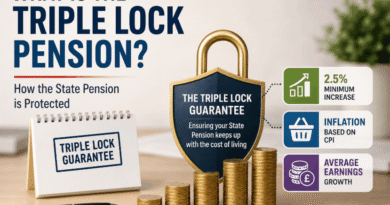
The triple lock guarantees the state pension rises every year by whichever is highest of average earnings growth, inflation, or 2.5 per cent, so it has a built-in floor that never falls.
No such floor exists for the Personal Allowance; the Finance Act 2021 fixed it in cash terms, and the Autumn Budget 2025 extended that freeze to 2031.
It’s one of several UK state pension age retirement changes brought in over recent years, each reshaping what retiring in Britain actually looks like.
The Institute for Fiscal Studies has calculated that extending threshold freezes for two further years would raise an additional £8.3 billion a year by 2029/30, much of it from people who would otherwise have paid no tax at all.
This is why the gap between the rising pension and the static allowance keeps narrowing every single year, almost mechanically, regardless of who is in government.

Do You Pay Tax on the State Pension If You’re Still Working?
Yes, if total income from the state pension and employment together exceeds £12,570, the amount above that threshold is taxable.
How that tax reaches HMRC depends on the source of the income, and it generally works in this order:
- HMRC totals the state pension and any employment or private pension income for the tax year.
- If the combined figure exceeds £12,570, HMRC adjusts the tax code applied to the employment or private pension income through PAYE.
- The employer or pension provider then deducts the extra tax automatically from that ongoing income, rather than from the state pension directly, since the state pension itself is paid without tax taken off at source.
- If there is no PAYE income to adjust, HMRC instead issues a Simple Assessment bill after the tax year ends, usually payable by the following 31 January.
Someone working part-time alongside their state pension rarely receives a separate pension tax bill as a result, HMRC quietly handles the adjustment through an amended tax code on their employment income, with no separate bill landing in the post.
Will Pensioners on the State Pension Alone Have to Pay Tax?
Pensioners whose only income is the basic or new state pension will not face a Simple Assessment tax bill from 2027/28, under a waiver announced in the Autumn Budget 2025.
To qualify for this protection, the following generally needs to apply:
- The basic or new state pension must be the person’s sole source of taxable income.
- The pension must not include additional payments such as the old State Earnings Related Pension Scheme, since these extras can push someone outside the protection.
- There must be no other taxable income, including private pension drawdown or savings interest above the personal savings allowance.
- Confirmation of the precise mechanism is still awaited from the Treasury, though the waiver is expected to run until the end of the current parliament.
Widely circulated claim: crossing the Personal Allowance means the whole state pension becomes taxable.
Correct position: only the income above £12,570 is taxed, not the full pension amount.
Source: HM Revenue and Customs guidance on Income Tax, which confirms tax applies solely to income exceeding the allowance.
A related issue raised in a parliamentary petition, which gathered over 119,000 signatures calling for a separate, higher tax code for state pensioners, shows the concern already extends well beyond Westminster.
It echoes a longer-running argument that the new state pension is unfair to existing pensioners, especially those who retired under the old system and believe they’ve ended up worse off as a result.
Pensioners whose only income is the basic or new state pension will not face a Simple Assessment tax bill from 2027/28, under a protection announced in Autumn Budget 2025.
The waiver does not cover those receiving additional payments such as SERPS, or anyone with savings interest, private pension drawdown, or other taxable income alongside their state pension.

How to Avoid Paying Unnecessary Tax on Your State Pension?
Pensioners cannot avoid tax on income above the Personal Allowance, but several legitimate steps reduce how much extra tax is paid.
Consider the following:
- Move savings into an ISA so that interest no longer counts toward the £12,570 limit
- Check your tax code each year to confirm HMRC has applied the correct allowance against the right income source
- Pace any private pension drawdown so withdrawals stay within the basic rate band rather than tipping into higher rate tax
- Use other tax free allowances, such as the trading allowance or rent a room relief, where they genuinely apply to your situation
None of these removes the underlying threshold freeze, but together they can keep more income within tax-free territory each year.
State Pension Tax Free Allowance: What Counts as Tax Free Income?
The state pension itself is not automatically tax free; it simply falls within the same £12,570 Personal Allowance as any other income. Genuinely tax free sources include ISA interest, dividends and capital gains, the first £1,000 of trading income, and the first £1,000 of property income under the relevant allowances.
Anyone relying solely on the state pension currently pays no tax only because their total income still sits below £12,570, a position that becomes increasingly fragile each year as the threshold freeze continues.
Conclusion
The state pension tax threshold freeze leaves the full new state pension just £22.40 below the Personal Allowance for 2026/27, with a crossover expected in 2027/28. Check your tax code now if you have any income beyond the state pension.
The waiver protects those relying solely on the basic or new state pension — but the window is narrowing fast, and the state pension tax threshold freeze means a growing tax bill for many pensioners in the UK from 2027 onward.
FAQ
How much can a state pensioner earn before paying tax?
A state pensioner can earn up to £12,570 across all combined income sources before paying income tax. This includes the state pension itself plus any private pension, savings interest, or part time earnings, all counted together against the single Personal Allowance.
Do I pay tax on my State Pension if I’m still working?
Yes, if combined income from the state pension and employment exceeds £12,570. HMRC usually collects the extra tax through an adjusted PAYE tax code on the employment income rather than billing the pension separately.
Is the state pension tax free?
No, the state pension counts as taxable income. It is simply paid without tax deducted at source, and only becomes a tax bill once total income exceeds the £12,570 Personal Allowance.
What is the average state pension per week in the UK?
The full new state pension for 2026/27 is £241.30 a week. People with fewer than 35 qualifying National Insurance years receive a lower, pro rata amount instead.
When will the State Pension exceed the Personal Allowance?
The Institute for Fiscal Studies projects the full new state pension will exceed the £12,570 Personal Allowance for the first time in the 2027/28 tax year, based on the minimum 2.5 per cent triple lock increase.
This article is for general information only and is not financial or tax advice; consult HMRC or a qualified adviser for guidance on your personal circumstances.