
Best Pension Provider UK 2026: Compare Top SIPP Fees, Investment Choices, And Performance
The best pension provider in the UK in 2026 depends on your pot size, how hands-on you want to be, and whether you are employed or self-employed. For most people, Vanguard (0.15% annual fee, capped at £375), AJ Bell (0.25% maximum), and PensionBee for simple consolidation lead the pack. Every provider worth considering is FCA-regulated. The 2026/27 annual allowance is £60,000.
Key Takeaways
- Always capture the full employer match in your workplace pension before opening a private SIPP. A matched 5% contribution delivers an instant 100% return that no investment beats.
- Vanguard’s SIPP charges just 0.15% per year, capped at £375, making it the cheapest option for UK savers with pots above £50,000 who are comfortable with index funds.
- The 2026/27 annual allowance sits at £60,000, with no lifetime allowance ceiling following its abolition, large pots can keep growing without a size-based tax penalty.
- All FCA-regulated pension providers carry FSCS protection of up to £85,000 per provider, your money is ring-fenced from the provider’s own finances if the firm fails.
The Best Pension Providers in the UK
Vanguard
- Best for low-cost, hands-off savings
- 0.15% per year, capped at £375
Vanguard is the go-to choice for savers who want to keep fees as low as humanly possible without spending hours managing their pension.
The headline number is 0.15% per year, capped at £375 annually. Once your pot reaches around £250,000, you pay no more than £375 regardless of how large it grows. That is a genuinely remarkable deal compared to almost every other provider.
The trade-off is choice. Vanguard only lets you invest in Vanguard’s own range of funds, around 80 options. For most people that is more than enough. The Global All Cap Index Fund covers thousands of companies across the world in a single investment at an ongoing fund charge of just 0.23%.
✅Pros
- Lowest platform fee in the UK market, once your pot hits £250,000 you never pay more than £375 per year regardless of growth.
- Simple, clean platform with a Global All Cap Index Fund that covers thousands of companies at just 0.23% ongoing fund charge.
- Free fund dealing, no per-transaction charges for buying or switching funds inside the SIPP.
❌Cons
-
Investment choice is limited to Vanguard’s own fund range only, no external funds, shares, or ETFs from other providers.
-
Not ideal for small pots under £32,000 where the new £48 flat annual fee makes it less competitive than percentage-fee rivals.
Who it suits best: Savers who want a simple, low-cost pension and are happy picking one diversified fund and leaving it to grow. Particularly strong for anyone with a pot above £50,000 where the fee cap starts to deliver serious savings.
Bottom line: For cost-focused, patient investors, Vanguard is hard to beat anywhere in the UK market.

AJ Bell
- Best all-rounder for most people
- 0.25% per year, £25 cap per quarter
AJ Bell sits in a sweet spot that few providers manage to hold. The fees are low without being restrictive, the investment range is broad, and the platform works well whether you are a complete beginner or an experienced investor.
The platform fee caps at 0.25% per year, with a quarterly cap of £25 on funds. That keeps costs predictable as your pot grows. Above £250,000, fees reduce further, making AJ Bell competitive for larger pots as well as smaller ones.
The investment range covers over 4,000 funds, shares across UK and international markets, ETFs, investment trusts, bonds, and gilts. You can build almost any portfolio here that you could build anywhere.
✅Pros
- Over 4,000 funds plus UK and international shares, ETFs, investment trusts, and bonds, genuine breadth at a competitive price.
- Quarterly fee cap keeps costs predictable as the pot grows, one of the fairest fee structures for mid-size savers.
- Strong research tools and a well-designed platform that works equally well for beginners and experienced investors.
❌Cons
- Share dealing fees of £3.50 to £5.00 per trade add up noticeably for active investors buying individual stocks regularly.
- Not the absolute cheapest for very large pots above £500,000 where Interactive Investor’s flat fee delivers better value.
Who it suits best: Savers who want genuine investment flexibility without paying Hargreaves Lansdown prices. AJ Bell is arguably the best all-round self-invested personal pension for most UK savers in the £10,000 to £250,000 range.
Bottom line: The most balanced pension provider on the market for everyday savers who want choice without complexity.
Interactive Investor
- Best for larger pots
- £5.99 to £12.99 flat per month
Interactive Investor (ii) does something almost no other provider does. It charges a flat monthly fee rather than a percentage of your pot.
From February 2026, the Core plan costs £5.99 per month, that is £71.88 per year regardless of whether your pension is worth £30,000 or £500,000. On a £500,000 pot, that works out to an effective annual rate of just 0.014%. No percentage-fee provider comes close to that.
The investment range is among the widest available in the UK, over 40,000 investments covering funds, shares, ETFs, investment trusts, and bonds.
✅Pros
- Flat monthly fee means your annual cost stays the same whether your pot is £50,000 or £500,000; the larger the pot, the better value it becomes.
- Over 40,000 investments available, one of the widest ranges of any UK platform covering funds, shares, ETFs, and investment trusts.
- Core plan includes SIPP, ISA, and trading account in one flat fee, no extra charge for holding multiple account types.
❌Cons
- Poor value for small pots, £71.88 per year on a £5,000 pot works out to an effective rate of 1.44%, far above Vanguard or AJ Bell.
- Per-trade dealing fee of £3.99 applies, active share traders, making many purchases each month, will see this add up.
Who it suits best: Savers with pots above £30,000 to £50,000 who want the predictability of a fixed annual cost. The larger the pot, the more compelling it becomes.
Bottom line: If your pot is above £50,000 and growing, Interactive Investor deserves serious consideration. For smaller pots, start elsewhere and transfer later.

Hargreaves Lansdown
- Best for investment choice and service
- 0.35% per year, £45 cap per quarter
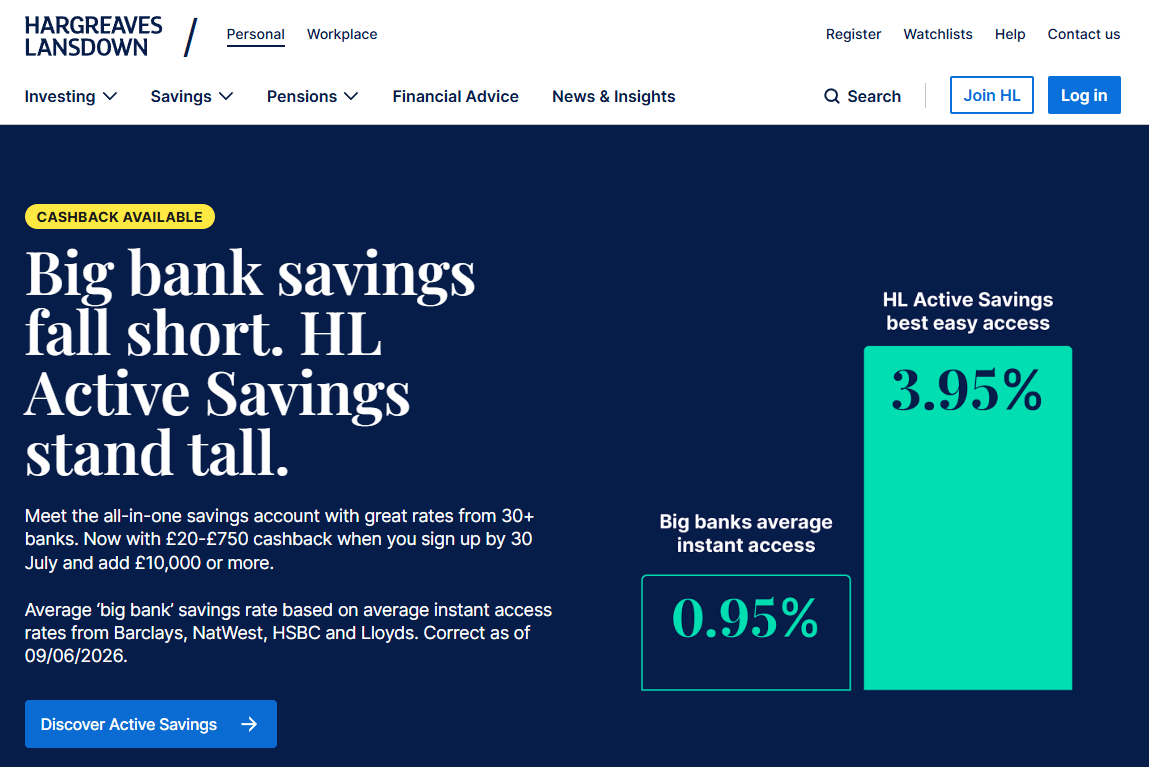
Hargreaves Lansdown is the UK’s largest investment platform by assets under management, with around £172 billion invested by over 2 million clients. That scale means they can offer things that smaller providers simply cannot match.
The investment range is exceptional. Over 3,000 funds, UK and international shares, ETFs, and investment trusts. Their Wealth Shortlist curates a recommended selection for investors who do not want to choose from thousands of options alone.
The fee is 0.35% per year following the March 2026 reduction (down from 0.45%). A quarterly cap of £45 on funds applies. Free fund dealing is a genuine advantage over providers that charge per transaction.
✅Pros
- Largest UK investment platform by assets, over 3,000 funds, international shares, ETFs, and investment trusts with a curated Wealth Shortlist for guidance.
- Free fund dealing removes per-transaction cost, a genuine advantage for savers who regularly buy or switch funds.
- Market-leading research tools, award-winning customer service, and a polished app trusted by over 2 million UK clients.
❌Cons
- Even at the reduced 0.35% rate, HL is more expensive than Vanguard, AJ Bell, and Interactive Investor for most pot sizes, on £200,000, that is £700 per year in platform fees alone.
- High share dealing charges at £11.95 per trade (reducing to £5.95 for frequent traders), significantly more expensive than rivals for active share investors.
Who it suits best: Engaged investors who want the widest possible choice, excellent research tools, and strong customer service. Also a good fit for anyone who values the confidence of using the UK’s most established retail investment platform.
Bottom line: Outstanding platform, outstanding service, but you pay for it. If cost is your primary concern, better value exists elsewhere.
PensionBee
- Best for combining old pensions
- 0.50% to 0.95% per year
PensionBee launched in 2014 with one clear mission: to make pensions simple for people who find them confusing or time-consuming.
More than 1 million people have now used PensionBee to combine old workplace pensions into a single, easy-to-manage pot. The app is genuinely straightforward, you can track your balance, set up contributions, and project your retirement income from your phone in minutes.
Fees range from 0.50% to 0.95% depending on the plan chosen. That is higher than Vanguard and AJ Bell, but PensionBee offers something neither provides, a dedicated pension consolidation service that actively chases down and combines your old pots for you.
✅Pros
- Pension finder service actively locates and consolidates old workplace pots on your behalf, no chasing former employers yourself.
- No minimum contribution requirement, ideal for irregular earners, freelancers, and sole traders who cannot commit to a fixed monthly payment.
- Genuinely simple app, balance, contributions, and retirement projections visible in under a minute, with funds managed by BlackRock and Legal and General
❌Cons
- Higher fees than most rivals, 0.50% to 0.95% per year versus 0.15% at Vanguard, a gap that compounds significantly over a 30-year savings period.
- Limited investment control, you choose a plan, not individual funds, so active investors who want granular portfolio decisions will find it too restrictive.
Who it suits best: Anyone who has changed jobs multiple times and suspects they have old workplace pensions scattered across former employers. Also well-suited to self-employed people and freelancers who want flexible contributions with no minimum monthly requirement.
Bottom line: The best pension consolidation platform in the UK market. Use it to find and combine old pots, then review the fee picture as your pot grows.
NEST
- Best for workplace savings
- 0.30% AMC plus 1.8% on contributions
NEST (National Employment Savings Trust) is the government-backed workplace pension scheme set up specifically to support auto-enrolment. It is the UK’s largest workplace pension master trust by membership, covering more than 500,000 employers as of 2025.
If your employer uses NEST and you are automatically enrolled, you do not need to do anything. Contributions go in, the government adds tax relief, and the default fund manages the investments on your behalf.
The fee structure is a 0.30% annual management charge plus a 1.8% charge on each new contribution. That contribution charge reduces the effective value of each payment in the short term, but for most workplace savers, the employer contribution and tax relief more than offset it.
✅Pros
- Government-backed and regulated by The Pensions Regulator, one of the most trusted and stable workplace pension providers in the UK.
- Zero setup cost for employees, contributions go in automatically through auto-enrolment with no action required from the saver.
- Serves over 500,000 employers including many small businesses that other large providers decline to work with.
❌Cons
- The 1.8% contribution charge reduces the effective value of each new payment in the short term, though employer contributions and tax relief more than offset this for most savers.
- Very limited fund choice compared to a full SIPP, not suitable for engaged investors who want meaningful control over their portfolio.
Who it suits best: Employees whose employer uses NEST for auto-enrolment and who want a simple, hands-off default option. Particularly well-suited to lower earners and those new to pension saving.
Bottom line: NEST does exactly what it was designed to do, give every UK worker access to a workplace pension at no setup cost. It is not the cheapest or most flexible, but it is reliable and fully regulated by The Pensions Regulator.
Which Is the Best Pension Provider in the UK?
There is no single winner. The right provider depends on where you are in your savings journey, and the answer genuinely changes as your pot grows. The table below gives you a fast overview. The detailed breakdowns that follow explain exactly who each provider suits and why.
| Provider | Annual Fee | Fee Cap | Best For |
|---|---|---|---|
| Vanguard | 0.15% | £375 per year | Low-cost index savers |
| AJ Bell | 0.25% | £25 per quarter | Small to mid pots |
| Interactive Investor | £5.99 to £12.99 per month flat | None | Large pots above £30,000 |
| Hargreaves Lansdown | 0.35% | £45 per quarter | Widest fund choice |
| PensionBee | 0.50 to 0.95% | None | Simple consolidation |
| NEST | 0.30% plus 1.8% on contributions | None | Workplace default |
One thing worth flagging before you read on. Hargreaves Lansdown cut its platform fee from 0.45% to 0.35% in March 2026. Many guides you will find online still quote the old rate. The figures above reflect current provider pricing confirmed as of June 2026.

How to Choose the Right Provider for Your Situation?
Now that the providers are clear, the decision comes down to your starting point.
- Employed savers: Start with the workplace pension and capture every penny of employer match before opening a SIPP. The employer match is free money, an instant return on contributions that no investment decision can replicate.
- Self-employed savers: No employer match is available, so fee efficiency matters most. Vanguard suits consistent monthly savers. PensionBee and Penfold suit those with irregular income or multiple old pots to combine.
- Consolidating old pots: PensionBee is the easiest starting point. Before any pension transfer, check carefully that no guaranteed benefits are being surrendered. The pension tax-free lump sum rules also affect how much of your consolidated pot you can withdraw tax-free at retirement.
- Large pot holders above £100,000: Percentage fees compound against a growing balance. Switching to Interactive Investor’s flat fee or AJ Bell’s quarterly cap can recover tens of thousands of pounds over a full accumulation period. Understanding pension withdrawal rule changes UK is equally important as savers approach the point of accessing their pot.
What the 2026 Regulatory Changes Mean for Choosing a Provider?
From 6 April 2026, FCA-authorised pension providers operating under PS25/22 can make group-based suggestions directly to savers without crossing into full regulated financial advice. The FCA estimates 23 million UK consumers are currently underserved by the advice and guidance markets.
The provider you choose now determines the quality of proactive support you will receive going forward. This is a bigger deal than most comparison guides acknowledge.
Under the Financial Conduct Authority’s targeted support regime, confirmed in policy statement PS25/22 and live from 6 April 2026, providers can suggest.
For example, a more sustainable withdrawal rate to a saver drawing down too quickly, or flag that a saver is holding excess cash that could be better invested.
Previously, any such suggestion risked being classified as regulated advice, and providers avoided it entirely.
Choosing a provider that has applied for and received targeted support permission is now a meaningful selection criterion, not just for the lowest fee.
The Pension Schemes Act 2021 established the framework for the Pensions Dashboards Programme, which requires all providers to connect their data to a central digital system by 31 October 2026.
Savers will soon be able to view every pension pot they have ever held in one place. Providers who are slow to connect will create friction when you try to locate and consolidate old pots.
Recent UK pension inheritance tax changes have also changed how savers should think about provider choice from an estate planning angle.
Understanding what happens to your private pension when you die matters more now that pensions are set to be brought within the scope of inheritance tax from April 2027.
FSCS protection of £85,000 per provider applies to every FCA-authorised pension. Your investments are held separately from the provider’s own balance sheet, if the firm fails, your money is protected.

Conclusion
Choosing the best pension provider in the UK in 2026 is not about finding one universal answer. Vanguard wins on cost for index investors. AJ Bell leads the mid-market for flexibility. PensionBee makes consolidation genuinely easy.
Interactive Investor becomes compelling as pots grow larger. For free, impartial guidance at any stage, the Money and Pensions Service (MaPS) is the recommended starting point.
FAQ
Who is the cheapest pension provider in the UK?
Vanguard is the cheapest for most savers. Its SIPP charges 0.15% per year, capped at £375 annually. For pots below £30,000, InvestEngine charges zero platform fee, though its investment range is limited to ETFs only. The cheapest provider for your specific pot size depends on whether percentage or flat fees work in your favour.
Which pension provider has the best returns in the UK?
No provider guarantees better returns than another, performance depends on the underlying investments, not the platform. Passive index funds available through Vanguard, AJ Bell, and Fidelity consistently outperform the majority of actively managed funds over 10 to 20 years net of charges, based on data from S&P Global’s SPIVA report.
What happens to my pension if my provider goes bust?
FSCS protection of up to £85,000 per FCA-authorised provider applies. Your investments are held separately from the provider’s own finances and are ring-fenced in insolvency. In practice, the Financial Conduct Authority typically arranges for another regulated firm to take over the book before any compensation claim is triggered.
Is it worth having a private pension in the UK?
Yes, for almost every earner. Tax relief means a basic-rate taxpayer receives £25 from the government for every £100 contributed. Higher-rate taxpayers receive an effective £67 per £100. Combined with tax-free investment growth inside the pension wrapper, private pensions remain the most tax-efficient long-term savings vehicle available in the UK under the 2026/27 annual allowance of £60,000.
Should I consolidate my old pensions?
Yes, in most cases, but verify first that no guaranteed annuity rates or defined benefit entitlements are attached to the old pension before any pension transfer. These guarantees can be worth far more than any fee savings from consolidation, and surrendering them is irreversible. Once confirmed safe to transfer, consolidating reduces admin and often cuts total annual fees meaningfully.
Disclaimer: The information in this article is for educational purposes only and does not constitute regulated financial advice; pension investments can fall as well as rise, and you may get back less than you invested.