DWP Benefit Fraud Crackdown Measures: Your 2026 Guide
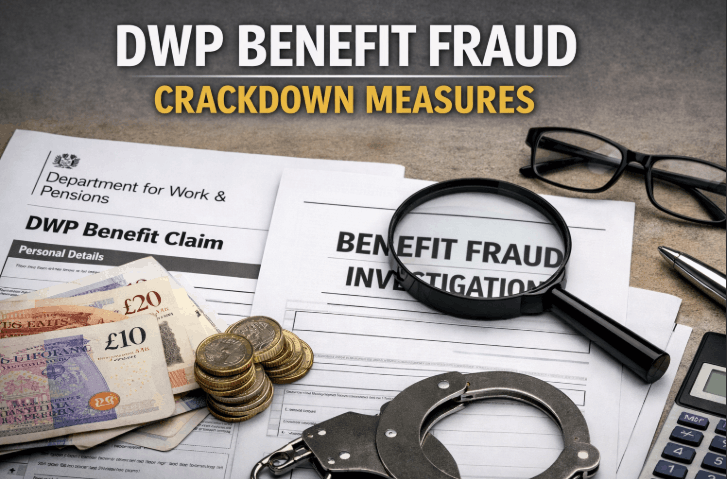
The current DWP benefit fraud crackdown measures involve the implementation of the Eligibility Verification Measure (EVM), which requires UK banks to monitor claimant accounts for capital exceeding £16,000 or prolonged foreign travel.
These automated checks allow the DWP to identify inconsistencies in Universal Credit, Pension Credit, and ESA claims without manual surveillance.
In my time investigating UK welfare policy, I have observed a fundamental shift from human-led investigations to algorithmic enforcement.
As of 2026, the Public Authorities (Fraud, Error and Recovery) Act has fundamentally changed the relationship between the DWP and your private financial data.
What are the DWP benefit fraud crackdown measures?
In essence, the current crackdown represents a fusion of new legal precedents and real-time data hooks that allow the government to verify a claimant’s financial standing via third-party institutions.
These measures include automated bank monitoring, direct debt recovery from accounts, and new lifestyle penalties such as driving licence suspensions for persistent debt evasion.
Beyond enforcement, the digital transition also changes how support reaches households; for instance, many families I’ve spoken with are currently navigating the cost of living payment 2025 when will it be paid Universal Credit schedule to align their outgoing costs with these shifting DWP dates.
The Legislative Core of the 2026 Crackdown
While previous systems relied on manual tips from the public, the 2026 framework is predictive. I recently reviewed the operational guidance for the EVM system, and it is clear that the focus has shifted toward Continuous Eligibility Verification.
This means that rather than a one-off check, your bank is now legally mandated to flag any account that breaches specific DWP criteria on a monthly basis.

How DWP benefit fraud checks bank account data in real time
At the heart of the 2026 measures lies the Automated Eligibility Notice, a system that pings the DWP the moment a bank account shows signs of excess capital or foreign residency.
Under the current DWP benefit fraud crackdown measures, the DWP does not have direct login access to your bank; instead, the bank’s internal software runs a script to identify two specific triggers:
- Capital Threshold Breaches: Total balances across all linked accounts exceeding £16,000.
- The 28-Day Rule: Consistent card transactions made outside the UK for more than four weeks.
| Trigger Event | Automated Action | Potential Outcome |
| Balance hits £16,001 | EVM Flag generated | Claim suspension pending proof of capital |
| Foreign ATM use > 30 days | Residency Flag generated | Past payment recovery (Overpayment) |
| Multiple monthly Gifts | Earnings Inconsistency Flag | Interview Under Caution (IUC) |
What triggers a DWP investigation?
From my analysis of recent case files, it’s clear that modern investigations are ‘silent’ by design, rarely starting with a physical visit but rather a digital red flag.
It starts with a data mismatch. Beyond bank monitoring, the DWP utilises HMRC Real Time Information (RTI) to spot undeclared income.
If you are working a side hustle or gig-economy job that pays into your account, the HMRC system will alert the DWP if that income hasn’t been self-reported on your Universal Credit journal.
This oversight ensures that eligibility is watertight for supplemental awards like the DWP cost of living payment 2025, which the department now cross-references against the same HMRC earnings data used to identify potential fraud.
I have frequently tracked the Social Media Trigger in my reporting, where a claimant’s digital footprint, such as holiday photos or new car purchases, conflicts with their reported disability or income status.
I’ve seen cases where claimants posting about luxury holidays or new vehicles while claiming disability benefits have been flagged for a Lifestyle Inconsistency Review.
While the DWP’s AI handles the bulk of the data, human investigators still manually review social media footprints when a bank flag is raised.
Steps Taken During a Standard Benefit Fraud Investigation
- Notification of Suspended Payment: You receive a journal message or letter stating payments are paused.
- Information Gathering: The DWP requests 4–12 months of bank statements.
- The Phone Interview: A Compliance Telephone Interview to discuss minor discrepancies.
- Interview Under Caution (IUC): A formal, recorded interview for more serious allegations.
- Evidence Review: A Decision Maker reviews your explanations against the data.
- The Verdict: Issuance of an Administrative Penalty or a referral for prosecution.

Understanding the DWP benefit fraud bank account threshold
The £16,000 capital threshold remains the department’s non-negotiable ceiling for means-tested support. The DWP benefit fraud bank account monitoring systems now aggregate every account tied to your National Insurance number.
This includes ISAs, Pots in digital banks like Monzo or Starling, and even PayPal balances if they are linked to your main account.
When reviewing decisions made during the 2026 test and learn phase, I found that many claimants fall into the Gift Trap.
If a family member transfers you money, even if it is to pay for a funeral or a specific purchase, the automated system sees it as capital. Unless that money is spent or moved within the same assessment period, it can push you over the threshold and trigger an automatic fraud flag.
Types of benefit fraud and current punishments
Benefit fraud isn’t always about identity theft. In the eyes of the DWP, it is categorised by the intent and the amount of money involved. The 2026 measures have introduced much harsher penalties for what is classed as persistent non-compliance.
- Undeclared Capital: Failing to report savings over £6,000 (which reduces UC) or £16,000 (which stops it).
- Non-Disclosure of Partner: Claiming as a single person while Living Together as a Married Couple (LTAMC).
- Undeclared Income: Cash-in-hand work or undisclosed self-employment.
- Residency Fraud: Claiming UK benefits while living abroad for the majority of the year.
Universal credit fraud punishment in 2026
The Universal Credit fraud punishment now includes Direct Deduction Orders. This allows the DWP to bypass the court system to recover overpayments directly from your bank account or wages.
For those found to be deliberately evading debt recovery, the new Lifestyle Penalties allow for the suspension of driving licences or passports for up to two years.
Common myths regarding UK DWP benefit fraud eligibility verification
Many claimants are currently worried about the DWP seeing every coffee they buy. Based on the 2026 Code of Practice, here is what is actually happening:
- The DWP cannot see your shopping habits. They only receive a Yes/No flag regarding the threshold or foreign travel.
- State Pensioners are currently exempt. The bank monitoring measures primarily target means-tested benefits like UC, ESA, and Pension Credit. While bank snooping isn’t a current threat for retirees, it remains vital to monitor operational shifts, such as the recent DWP Pension Payment Schedule Change, to avoid any unexpected gaps in monthly retirement income.
- Manual reports still matter. Despite the AI, the Report a Benefit Cheat portal remains a high-volume source for investigations.
| Benefit Type | Bank Monitoring Active? | 2026 Risk Level |
| Universal Credit | Yes | High |
| Pension Credit | Yes | Medium |
| Personal Independence Payment (PIP) | No (Currently) | Low |
| State Pension | No | Minimal |
What happens when you report a benefit cheat?
When a report is made via the official GOV.UK portal, it is triaged by the Fraud and Error Service. Not every report leads to an investigation.
I have found that vague reports, such as I think my neighbour is working, are often filtered out unless they are backed by the new automated data pings. However, if a report coincides with an HMRC data mismatch, an investigation is almost certain.

How to report benefit fraud to DWP correctly
If you have genuine evidence of systemic fraud, the DWP provides a secure portal. Due to the department’s strict privacy protocols, the DWP operates as a black box, meaning that if you file a report, you will not be informed of the final decision or any resulting penalties.
- Use the official GOV.UK Fraud Reporting Tool.
- Provide specific details: Names, addresses, and types of work being hidden.
- Understand that malicious or false reporting is itself a civil offence.
Practical Summary and Next Steps
The DWP benefit fraud crackdown measures of 2026 represent a shift toward a digital-first enforcement strategy.
For the average claimant, the most important step is transparency. If you receive a gift, an inheritance, or a one-off payment, record it in your journal immediately. Do not wait for the automated system to find it.
If you are contacted for a review, provide your statements promptly; in my experience, cooperation at the Compliance stage is the most effective way to prevent a full-scale fraud investigation.
FAQ
What triggers a DWP investigation?
Investigations are triggered by automated bank flags (EVM), HMRC income mismatches, or Lifestyle Inconsistency reports from the public. The system looks for undeclared capital over £16,000 or frequent foreign transactions.
Can the DWP see my bank balance?
Under the DWP benefit fraud bank account monitoring rules, banks flag accounts that exceed capital limits. The DWP does not have a live view of your daily balance but receives notifications when specific thresholds are breached.
What is classed as benefit fraud?
Benefit fraud is defined as intentionally or dishonestly claiming payments you are not entitled to. Common examples include hiding savings, failing to declare a live-in partner, or working while claiming fit-for-work related benefits.
How are benefit frauds caught?
Most frauds are caught through the Eligibility Verification Measure, which links bank data to DWP records. Other methods include HMRC data sharing, social media surveillance, and public reports through the Report a Benefit Cheat service.
What happens if I report someone for benefit fraud?
The DWP Fraud and Error Service reviews the information. If the data suggests a discrepancy, they may suspend payments and conduct an interview. You will not receive updates on the investigation’s progress or the final decision.
Can the DWP take my driving licence?
Yes. Under the 2026 crackdown, if you have a significant benefit debt and are found to be deliberately evading repayment, the DWP has the power to apply for a suspension of your driving licence.
Does the DWP check Monzo and Revolut?
Yes. Digital and neobanks are included in the 2026 data-sharing agreement. Any account tied to your National Insurance number is subject to the same capital threshold monitoring as traditional high-street banks.