HMRC Savings Account Tax Letters Explained: Rules, Scams, Calculation, and Legal Tax Cuts
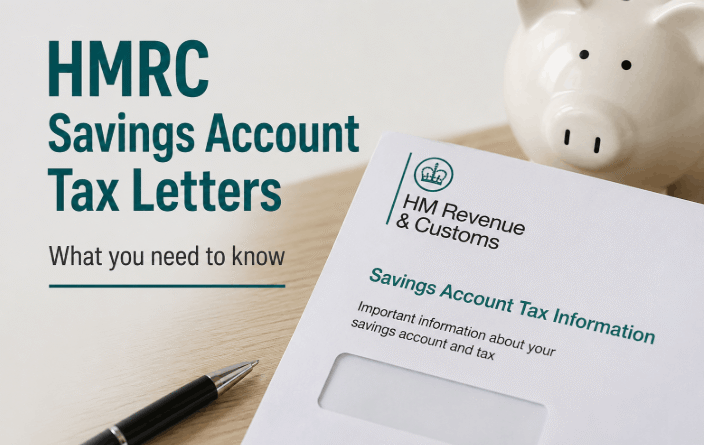
HMRC savings account tax letters are official notices telling a saver that interest earned above their Personal Savings Allowance may be taxable. HMRC issues them after banks report interest data directly, without any need for the saver to declare it first.
For the 2025 to 2026 tax year, most letters are sent between June and the following March.
Key Takeaways
- The Personal Savings Allowance is £1,000 for basic rate taxpayers, £500 for higher rate taxpayers, and £0 for additional rate taxpayers.
- Banks and building societies report savings interest to HMRC automatically, so no self reporting is required unless a Self Assessment return is already due.
- GOV.UK confirms tax calculation letters are sent between June and March following the end of the tax year.
What Are HMRC Savings Account Tax Letters?
An HMRC savings account tax letter tells a saver that their bank has reported interest which may push them over their tax free allowance. It is not a penalty notice, simply HMRC checking that the right amount of tax has been paid.
Banks and building societies send interest data to HMRC every year as part of their standard reporting. HMRC then compares this against a saver’s tax record and flags any gap. If interest exceeds the Personal Savings Allowance, a letter follows explaining what is owed or refunded.

What Is the HMRC Warning for Savings Over £3,500?
A saver with as little as £3,500 in a fixed rate account can end up owing tax, but the balance itself is not the trigger. What matters is the interest earned once the fixed term pays out in full.
A three year fixed account paying five per cent on £3,500 can generate more than £500 in interest, all crystallised in a single tax year. That single payout can push a higher rate taxpayer straight past their £500 allowance.
Interest from several account types counts toward this allowance:
- Bank and building society savings accounts
- Fixed rate bonds and regular savings accounts
- Peer to peer lending returns
- Some government or company bonds
- Life annuity payments
Widely circulated claim: Several news outlets frame £3,500 in a savings account as a flat tax threshold in itself.
Correct position: GOV.UK sets the actual tax free thresholds by taxpayer band, not by account balance. A £3,500 figure only becomes relevant at certain fixed interest rates once the interest is paid out.
Source: GOV.UK, Tax on savings interest.
How Does HMRC Actually Collect the Tax?
HMRC collects tax on savings interest in one of two ways, depending on how a saver already pays tax. Employed savers usually see it through a tax code change, while others settle it via Self Assessment.
- If employed or receiving a pension, HMRC estimates the year’s interest and adjusts the tax code so PAYE collects it automatically.
- If not employed or already filing Self Assessment, the saver reports interest directly and settles any balance through that return.
- Where a P800 or Simple Assessment is issued, the letter itself states the amount owed and the collection method.
Joint account holders should note that interest is normally split equally between named holders for tax purposes, unless HMRC is told otherwise.
This detail catches out more savers than any other part of the process, so it is worth checking how HMRC joint bank accounts savings tax rules apply to a specific household.
Is Your HMRC Savings Letter Genuine, or a Scam?
A genuine HMRC savings letter arrives by post or through a Personal Tax Account, never by unsolicited text link or urgent phone demand. Scammers frequently copy HMRC branding to pressure people into paying quickly.
A few checks help confirm whether a letter is genuine:
- Genuine letters reference an actual tax reference number, not a generic case ID
- HMRC never asks for bank details through a text message link
- Suspicious emails can be forwarded to phishing@hmrc.gov.uk for checking
- Suspicious texts can be forwarded to 60599
If anything about a letter feels off, contacting HMRC directly through the number on GOV.UK, rather than any number printed on the letter itself, is the safest first step.
How Much Interest Can You Earn Before Paying Tax?
The Personal Savings Allowance sets how much interest a saver can earn before tax applies, and it depends entirely on their income tax band. Higher earners get a smaller allowance, and additional rate taxpayers get none at all.
| Income Tax Band | Personal Savings Allowance | Tax Rate Above Allowance |
|---|---|---|
| Basic rate | £1,000 | 20% |
| Higher rate | £500 | 40% |
| Additional rate | £0 | 45% |
Savers with modest non savings income may also qualify for the starting rate for savings, worth up to £5,000 on top of the Personal Savings Allowance. This applies in full only where other income sits below £17,570, and it shrinks pound for pound above that point.
Is Savings Interest Taxed Differently When You’re Retired?
Retirees are not automatically exempt from tax on savings interest, and pension income counts toward the same allowance calculations as a salary would. A modest private pension combined with decent savings interest can still tip someone into a higher band.
Total income for this purpose includes:
- The State Pension and any private or workplace pensions
- Part time earnings or self employed income
- Savings interest itself, once other income is added first
Anyone checking their expected pension income to work out which tax band applies should first rule out the known HMRC state pension tool error, since some people using the online forecast have been shown an inaccurate figure.
The Low Incomes Tax Reform Group has separately noted that retirees are among those most likely to be caught out by a first time letter.
Why Some Savers Never Receive a Letter at All?
Not receiving a letter does not mean nothing is owed, because HMRC cannot always match a savings account to the right taxpayer. The Association of Taxation Technicians has confirmed that around one in five bank accounts cannot currently be matched to a taxpayer record.
Roughly 20% of the 130 million bank accounts reporting interest to HMRC cannot be matched to a taxpayer record, according to the Association of Taxation Technicians. This means responsibility for declaring tax owed can fall back on the individual, even when no nudge letter ever arrives.
Savers who exceed their allowance without a letter must still contact HMRC by 31 March following the tax year to avoid a penalty.
This mismatch usually happens because a bank holds incomplete identifying details, not because a saver has done anything wrong. It reflects a limitation in HMRC’s system rather than any error by the saver, though the saver still remains responsible for the tax owed.
Is HMRC Still Sending Paper Letters in 2026?
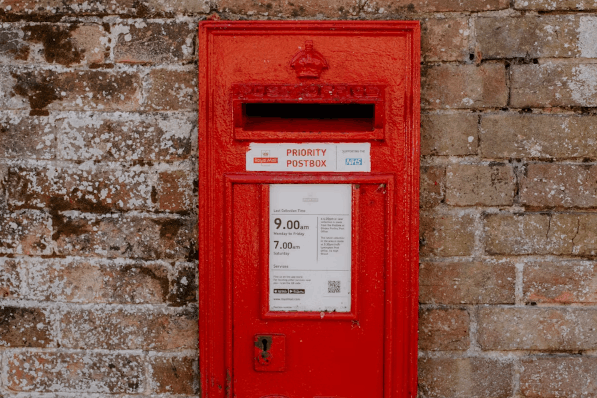
HMRC is moving away from paper correspondence, and this changes how future savings tax letters may arrive. Anyone expecting a traditional brown envelope should be aware the system is shifting toward digital notifications.
- HMRC has confirmed plans to eliminate most outbound post except letters that generate revenue, such as tax demands.
- This is expected to cut the total volume of letters sent by around 75%.
- Digitally excluded taxpayers will still receive letters where needed.
- A Personal Tax Account is increasingly the primary place notifications will appear.
Checking a Personal Tax Account from time to time is becoming a more reliable habit than waiting for the post, particularly for anyone with savings interest close to their allowance.
How to Reduce Tax on Your Savings Legally?
Several legitimate options exist to reduce or avoid tax on savings interest without breaking any rules. Most rely on using tax free products or spreading income more evenly across a household.
- Move eligible savings into an Individual Savings Account, where interest is entirely free of tax regardless of income.
- Split savings between spouses or civil partners so each person’s own Personal Savings Allowance is used fully.
- Review income sources ahead of the tax year, since staying under the higher rate threshold preserves the larger £1,000 allowance.
- Check whether Self Assessment is actually required before assuming it is, since many savers are covered by PAYE adjustments alone.
Reducing taxable income through pension contributions is one option some savers overlook, and anyone considering this route should check the current HMRC salary sacrifice limit before deciding how much salary to redirect into pension savings.
Conclusion
HMRC savings account tax letters mean a saver’s reported interest may have exceeded their Personal Savings Allowance for the 2025 to 2026 tax year.
Checking figures against bank statements, verifying a letter’s authenticity, and using tax free accounts where possible keeps most savers in control. This applies to anyone earning meaningful interest in the UK today.

FAQ
Do I have to notify HMRC of savings interest?
No, not usually. Banks and building societies report interest automatically, so most savers do not need to declare it separately unless they already complete Self Assessment for other income.
How does HMRC know about my savings?
Banks and building societies send annual interest reports directly to HMRC for every account holder. HMRC then matches this data against a saver’s tax record to check whether the Personal Savings Allowance has been exceeded.
Can I reclaim tax paid on savings interest?
Yes. Overpaid tax on savings interest can be reclaimed within four years of the end of the relevant tax year, either through a Self Assessment return or a separate repayment claim form.
What happens if I ignore an HMRC savings tax letter?
Ignoring a genuine letter can lead to penalties and added interest on any unpaid tax. HMRC expects a response even where a saver disagrees with the figures shown.
Are HMRC savings account tax letter templates available online?
No official template exists, since every letter is generated individually from a saver’s own reported interest data. GOV.UK’s guidance instead explains what a genuine letter should contain.
Disclaimer: This article is for informational purposes only and does not constitute formal financial, legal, or professional tax advice.