How To Beat The State Pension Tax Raid: Frozen Allowances And Exemption Rules Explained
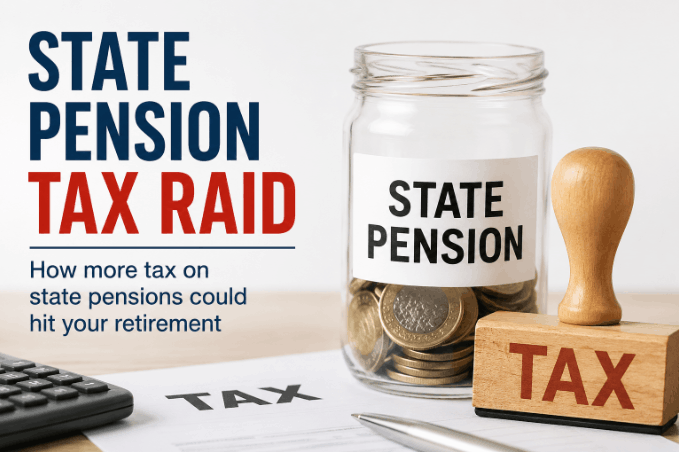
A state pension tax raid describes the growing likelihood that UK pensioners will pay income tax on their state pension once it exceeds the frozen Personal Allowance of £12,570. That threshold has stayed fixed since 2021 and is now frozen until April 2031, while the state pension keeps rising under the triple lock.
Key Takeaways
- The full new state pension for 2026/27 is £241.30 a week, or £12,547.60 a year, according to the Department for Work and Pensions.
- The Personal Allowance has remained at £12,570 since 2021/22 and is frozen until April 2031 following the Autumn Budget.
- Only around 700,000 pensioners are expected to qualify for the 2027/28 tax exemption, according to pension consultants LCP.
The State Pension Tax Raid Explained
The state pension tax raid is not a new tax. It is the result of a frozen allowance colliding with a rising pension. HM Revenue and Customs has confirmed the state pension has always counted as taxable income, even though it arrives without any deductions at source.
The margin between the two figures is what has narrowed. Chancellor Rachel Reeves confirmed in the 2025 Budget that pensioners relying solely on the state pension would not have to pay tax through Self Assessment or Simple Assessment once the pension exceeds the allowance, but that protection has strict limits.
For everyone outside it, the gap between pension income and tax free income is closing fast.

How Close Is the State Pension to the Personal Allowance in 2026/27?
The gap between the full new state pension and the tax free threshold now stands at just £22.40 a year. That margin has never been this narrow since the current Personal Allowance was set.
| Figure | 2026/27 Amount | Source |
|---|---|---|
| Full new state pension (weekly) | £241.30 | DWP |
| Full new state pension (annual) | £12,547.60 | DWP |
| Personal Allowance | £12,570 | HMRC |
| Remaining headroom | £22.40 | Calculated from above |
| Basic state pension (weekly) | £184.90 | DWP |
Figures confirmed as of June 2026 via the House of Commons Library’s Benefits Uprating briefing. Any additional income, from a small workplace pension to savings interest, will now push most new state pension recipients over the line.
The state pension personal allowance threshold warning sets out this narrowing gap in further detail.
Why the State Pension Tax Raid Is Happening?
Fiscal drag is the direct cause. The Personal Allowance has not moved since 2021/22, while the state pension rises every April under the triple lock, which guarantees an increase based on the highest of inflation, average earnings, or 2.5 percent.
For 2026/27, average earnings growth of 4.8 percent triggered the uplift, according to the Institute for Fiscal Studies.
The Low Incomes Tax Reform Group has confirmed the Personal Allowance freeze was extended to April 2031 at the most recent Autumn Budget, locking in years of further drift toward the tax threshold. The state pension tax threshold freeze was confirmed as part of this same Autumn Budget announcement.
- Widely circulated claim: several guides state the Personal Allowance freeze runs only until April 2028.
- Correct position: the freeze was extended to April 2031 at the 2025 Autumn Budget.
- Source: Low Incomes Tax Reform Group, confirming the chancellor’s Autumn Budget announcement.
This extension means the collision between the triple lock and the frozen threshold will not resolve itself for several more years. Pensioners with no other income now sit closer to a tax bill than at any point since the allowance was set.

Who Qualifies for the State Pension Tax Exemption From 2027?
Pensioners may qualify for the 2027/28 exemption if the state pension is genuinely their only source of taxable income. HM Treasury confirmed this protection applies specifically to those without any other earnings.
Anyone unsure of their own starting figure can check how much State Pension they will get at 66 before assessing eligibility. To qualify, you generally need to meet all of the following:
- Your only income is the basic or new state pension, with no increments added.
- You have no workplace pension, private pension, or employment income.
- You have no taxable savings interest above your Personal Savings Allowance.
- You are not drawing any additional state pension such as SERPS or the State Second Pension.
- Your circumstances remain unchanged for the tax year in question.
Meeting all five conditions removes the tax liability entirely under the current plan, rather than simply reducing the bill.
Who Will Miss Out on the State Pension Tax Exemption?
You are likely to miss out if you receive any income on top of the basic or new state pension. LCP’s analysis found that only around one in eighteen pensioners will actually benefit from the 2027/28 exemption.
The groups excluded include:
- The 6.5 million people on the old state pension system who also receive SERPS or State Second Pension top ups, a distinction examined in the new state pension is unfair to existing pensioners.
- Anyone with a small workplace or private pension, however modest.
- Pensioners who deferred their state pension and now receive an enhanced weekly amount.
- Anyone earning savings interest above the tax free Personal Savings Allowance.
Missing out carries a real cost. LCP calculates a pensioner who falls just £1 outside the exemption in 2027/28 will pay tax not only on that £1 but also on the full £88 tax charge on the pension itself, a figure projected to rise to £220 by 2029/30.
How HMRC Collects Tax From the State Pension?
HMRC does not deduct tax from the state pension at source. Payments arrive from the DWP in full, and any tax owed is collected separately.
The process generally follows these steps:
- The DWP reports total state pension income to HMRC for the tax year.
- If you have a workplace or private pension, HMRC adjusts your PAYE tax code to collect the amount owed automatically.
- If the state pension is your only income and exceeds the allowance, HMRC issues a Simple Assessment bill after the tax year ends.
- Payment is due by the deadline stated on the Simple Assessment notice, without the need for a full Self Assessment return.
This system was designed for straightforward tax affairs, but the House of Commons Library has noted the DWP would effectively be running a payroll scheme for around 12 million pensioners, ten times larger than the biggest employer PAYE scheme in the UK.
HMRC state pension tool error has already affected some pensioners attempting to confirm their tax position online.

How to Avoid Crossing the State Pension Tax Threshold?
You cannot reduce tax on the state pension itself, but you can manage the income sitting alongside it. Shifting savings into an ISA is the most direct lever available, since ISA income does not count toward the Personal Allowance calculation.
Consider the following where relevant to your circumstances:
- Use your full annual ISA allowance before holding taxable savings elsewhere.
- Review how much you draw from a private pension pot each year, rather than taking a single larger withdrawal.
- Check your tax code annually, since HMRC bases it on reported state pension income.
- Ask a regulated adviser about pacing withdrawals if you hold a workplace pension alongside the state pension.
Income from Individual Savings Accounts never counts as taxable income under UK tax rules, regardless of the amount held. This makes ISAs the only income source that will never affect the Personal Allowance calculation used to assess state pension tax liability.
State Pension Tax Trap: Common Myths and the Facts
Confusion about the state pension tax trap is widespread. Research from Royal London found 41 percent of adults do not realise the state pension counts as taxable income at all.
| Myth | Reality |
|---|---|
| The state pension is always tax free | It has always been taxable; only current amounts fall below the allowance |
| Everyone on the state pension will get the 2027 exemption | Only those with no other income qualify |
| HMRC takes tax directly from state pension payments | Tax is collected via PAYE code changes or Simple Assessment |
| A small pension pot has no effect on state pension tax | Even modest additional income can trigger a tax bill |
| The Personal Allowance will rise to match the pension | It remains frozen at £12,570 until April 2031 |
According to HMRC, the state pension has never been exempt from income tax; it has simply sat below the threshold until now.
State Pension Tax Warning: What Happens After 2027/28?
The gap between the state pension and the Personal Allowance will keep narrowing if the freeze continues. The Office for Budget Responsibility’s projections, cited by LCP, assume further triple lock rises of at least 2.5 percent in both 2028/29 and 2029/30.
Under those assumptions, the cliff edge facing pensioners with even £1 of extra income grows sharply, from £88 in 2027/28 to £153 in 2028/29 and £220 in 2029/30.
The House of Commons Library notes the government has not yet published detailed legislation on how the exemption will operate beyond the current Parliament, leaving the position beyond 2029 unresolved.
The DWP state pension age change 2026 is a related factor worth reviewing alongside these figures, since eligibility age can affect when this tax exposure begins.
Conclusion
The state pension tax raid means a rapidly narrowing tax free margin for UK pensioners heading into 2027. With the Personal Allowance frozen until 2031 and only a small group protected by the planned exemption, most retirees should expect a state pension tax bill within the next few years.
FAQ
What Does the State Pension Tax Raid Mean for Pensioners?
The state pension tax raid means more pensioners will owe income tax as the state pension approaches the frozen £12,570 allowance. Only those with no other income and no increments qualify for the planned 2027/28 exemption, leaving most pensioners exposed to a tax bill for the first time.
Does the State Pension Count as Taxable Income?
Yes, the state pension has always counted as taxable income under UK tax law. It is simply paid without tax deducted at source, which leads many pensioners to mistakenly assume it is tax free.
How Much Income Can a Pensioner Have Before Paying Tax?
A pensioner can receive up to £12,570 in total taxable income before paying tax, using the current Personal Allowance. With the full new state pension now at £12,547.60, only £22.40 of headroom remains for any other income.
How to Avoid Paying Tax on the State Pension in the UK?
There is no way to avoid tax on the state pension itself once total income exceeds £12,570. Using ISAs for savings and managing private pension withdrawals carefully can help keep other income below the threshold.
Will Pensioners Get a Tax Exemption From 2027?
Yes, but only pensioners whose sole income is the basic or new state pension without increments will qualify. HM Treasury confirmed this narrow exemption in the 2025 Budget, and LCP estimates it will cover roughly 700,000 people.
Disclaimer: This article is for informational purposes only and does not constitute professional financial or legal advice.