Pensioners Income Tax Personal Allowance Freeze 2026/27: State Pension Gap And Rules
The pensioners income tax personal allowance freeze refers to the tax free personal allowance remaining fixed at £12,570 since April 2021, now extended until April 2031 under the Autumn Budget 2025.
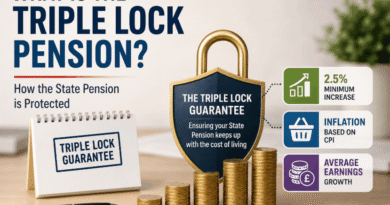
Because the state pension rises annually under the triple lock, more pensioners face income tax for the first time as of 2026/27.
Key Takeaways
- The personal allowance remains £12,570 for 2026/27, frozen since April 2021 until April 2031.
- The full new state pension reached £241.30 weekly in April 2026, just £22.40 below the personal allowance.
- HMRC plans to ease Simple Assessment tax bills for state pension only pensioners from 2027/28.
What the Pensioners Income Tax Personal Allowance Freeze Means?
The pensioners income tax personal allowance freeze means the £12,570 tax free threshold has not risen since April 2021 and will not rise before April 2031. HM Treasury sets the personal allowance each year, the amount of income excluded from tax under rules that HMRC then confirms and applies.
Pensioners receive the same £12,570 allowance as working-age taxpayers. The separate higher allowance, once available to those over 65, was phased out in 2013.
Every pound earned above this threshold, whether from a private pension, savings interest, or the state pension itself, becomes liable for income tax at 20 percent, 40 percent, or 45 percent depending on total taxable income and the applicable income tax bands.

How long does the Personal Allowance Freeze last?
The personal allowance is frozen until April 2031, three years longer than many pensioners still expect. The table below shows how the freeze has developed since it began.
| Tax Year Period | Personal Allowance | Policy Event |
|---|---|---|
| 2021/22 to 2025/26 | £12,570 | Freeze announced at Spring Budget 2021 |
| 2026/27 to 2027/28 | £12,570 | Freeze originally due to end April 2028 |
| 2028/29 to 2030/31 | £12,570 | Extended to April 2031 at Autumn Budget 2025 |
- Widely circulated claim: The personal allowance freeze ends in April 2028.
- Correct position: The freeze was extended by three further years to April 2031 at the Autumn Budget 2025.
- Source: House of Commons Library, Direct taxes Rates and allowances for 2026/27 (CBP 10618).
Why the State Pension Personal Allowance Gap Matters in 2026 to 2027?
The gap matters because the full new state pension now sits just £22.40 below the frozen personal allowance. Pensioners on the older basic State Pension, paid to those who reached state pension age before April 2016, currently receive £184.90 a week, comfortably below the allowance on its own.
Around 8.8 million pensioners already pay some income tax, a figure forecast to reach 9.3 million by 2030 according to Institute for Fiscal Studies analysis.
The narrowing gap between rising pension income and a fixed threshold sits at the centre of the state pension tax threshold freeze, a pattern that has tightened year on year since 2021.
As of April 2026, the full new state pension pays £241.30 a week, equal to £12,547.60 a year, according to Department for Work and Pensions triple lock uprating data.
That leaves only £22.40 of headroom before a pensioner with no other income starts paying tax on the state pension alone.
How the Simple Assessment State Pension Exemption Works?
HMRC currently collects tax on state pension income through Simple Assessment when a pensioner has no other PAYE income to absorb it.
- HMRC calculates any tax owed using DWP data and issues a Simple Assessment bill after the tax year ends, rather than requiring a full self assessment return.
- Savings interest earned outside a pension can also prompt HMRC notices for UK pensioners savings, sent separately from any Simple Assessment bill covering state pension income.
- The Autumn Budget 2025 promised to ease this burden for pensioners whose sole income is the basic or new state pension from 2027/28.
- Rachel Reeves has since stated verbally that eligible pensioners will not pay income tax at all for the remainder of this Parliament, a broader commitment than the written Budget text describes, according to the Chartered Institute of Taxation and LITRG.
The administrative detail behind this exemption has not yet been published, and eligibility should not be assumed until the Finance Bill confirms how it will work.

Whether the Personal Allowance Could Rise to £20,000?
No, the Government has confirmed it has no plans to raise the personal allowance to £20,000.
- A petition calling for the £20,000 threshold gathered 253,000 signatures and was debated in Parliament in May 2025.
- Increasing the allowance to £20,000 would cost many billions of pounds a year, according to the House of Commons Library.
- Officials argued the change would mainly benefit higher income households, since a third of adults already earn below the current £12,570 threshold.
When the Personal Tax Allowance Will Increase According to GOV.UK?
According to GOV.UK, the personal allowance will not increase before April 2031, when the government intends to uprate it in line with inflation. HMRC’s current rates and allowances page confirms £12,570 applies for the whole 2026/27 tax year, unchanged from the previous five years.
The Finance Act 2026 gives this freeze legal effect, and no Spring Budget announcement to date has altered it. National Insurance contributions are calculated separately and remain unaffected by this particular freeze.
What Fiscal Drag Means for the Freeze in Income Tax Thresholds?
Fiscal drag happens when rising incomes are pulled into tax without any change to the tax rates themselves.
- A pensioner receiving £12,000 a year in 2021/22 paid no income tax, since the amount sat below the £12,570 allowance.
- If that same income rises with inflation to £13,200 by 2026/27, £630 of it now falls above the frozen allowance and is taxed at 20 percent.
The Office for Budget Responsibility has confirmed that frozen thresholds significantly increase overall tax revenue compared with allowances that rise each year with prices.
Pensioners feeling this squeeze from fiscal drag may find some relief through cost of living support payments for pensioners, a scheme that sits entirely outside income tax rules.
How Pensioners Can Protect Their Tax Free Allowance?
Pensioners can reduce their exposure to the freeze using three specific, currently available mechanisms.
- Check the HMRC tax code annually to confirm the correct allowance is applied across all pension sources.
- Apply for Marriage Allowance if one partner earns below £12,570, which transfers £1,260 of unused allowance and can save up to £252 a year.
- Use the full £20,000 ISA allowance to keep savings interest and investment income outside taxable calculations.
The UK cash ISA allowance reduction, is worth factoring in too, since a smaller cash limit within the overall ISA allowance changes how pensioners might choose to shelter savings income.
None of these steps raises the frozen allowance itself. Each one simply lowers the total income measured against it. These figures are confirmed as of April 2026 under GOV.UK income tax rates guidance, and pensioners should recheck them each new tax year.
Pensioners Income Tax Personal Allowance Freeze: Myth vs Reality
| Myth | Reality |
|---|---|
| The state pension is tax free | The state pension counts as taxable income, though it is paid without tax deducted at source |
| Pensioners get a higher personal allowance than working age adults | Pensioners have received the same £12,570 allowance as everyone else since the age related allowance ended in 2013 |
| Simple Assessment and Self Assessment are the same thing | Simple Assessment is a bill HMRC calculates and sends directly, with no tax return required |
| The freeze means the allowance is falling | The allowance is not falling, it is remaining fixed while incomes rise around it |
| Reaching state pension age stops all tax code issues | Multiple pension sources can still produce an incorrect tax code that needs checking each year |
Conclusion
The pensioners income tax personal allowance freeze means the £12,570 threshold stays fixed until April 2031 while the state pension keeps rising under the triple lock.
Pensioners should check their tax code annually and watch for Finance Bill detail on the promised Simple Assessment exemption. This freeze on the pensioners income tax personal allowance points to continued fiscal drag for UK pensioners through 2026/27.
FAQ
What Happens When State Pension Exceeds the Personal Allowance?
Yes, tax becomes due on the amount above the threshold. HMRC collects it through Simple Assessment if the state pension is the only income, or through a tax code adjustment if other pension income exists to absorb the charge.
Whether Pensioners Are Going to Pay Tax on State Pension?
Yes, some pensioners already pay tax on state pension income today, since the state pension has always counted as taxable income under HMRC rules. Numbers affected are expected to grow as the frozen allowance and rising pension approach each other.
Whether the Personal Tax Allowance Will Increase in 2026 for Pensioners?
No, the personal tax allowance remains frozen at £12,570 for the 2026/27 tax year for pensioners and working age taxpayers alike. The Autumn Budget 2025 confirmed that no increase will occur before April 2031.
How Much Income a Pensioner Can Have Before Paying Tax?
A pensioner can receive up to £12,570 in total income during 2026/27 before paying income tax. This figure includes the state pension, private pensions, and any other taxable income combined, not each source separately.
Whether a Pensioner Needs to Pay Tax on State Pension Income?
Yes, if total income including the state pension exceeds £12,570 in 2026/27. Below that threshold no income tax applies, though the state pension itself is always classed as taxable regardless of the amount received. GOV.UK publishes updated personal allowance figures each tax year, so pensioners should confirm the current threshold before relying on older estimates.
This article is for general information only and does not constitute financial or tax advice; consult HMRC or a qualified adviser before acting on it.