Universal Credit Loophole £1500: DWP Scam Warnings, Legal Backdating Rules, And 2026 Payouts
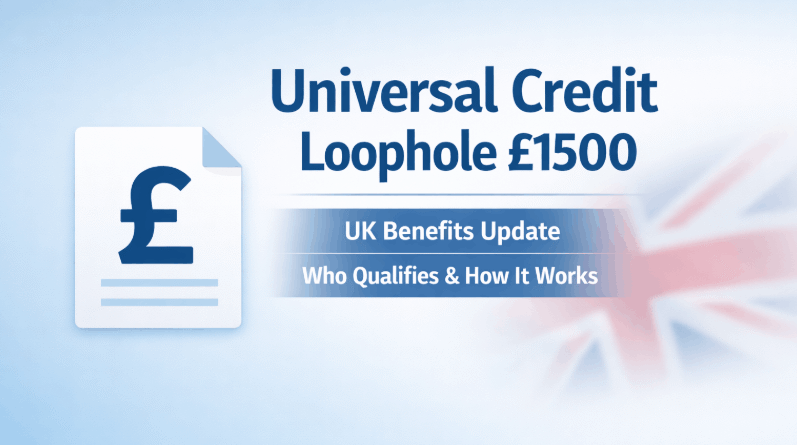
The Universal Credit loophole £1500 refers to a fraudulent exploitation of the Department for Work and Pensions (DWP) advance payment system, where claimants or third-party agents misrepresent personal circumstances to secure immediate funds. In 2026, the DWP classifies this activity as benefit fraud, punishable by mandatory repayment, administrative penalties, and potential criminal prosecution.
Much of the confusion surrounding this loophole is fueled by social media misinformation promising free grants. The truth is that these offers are actually high-interest identity theft traps or misapplied government loans that trigger immediate benefit deductions.
Key Takeaways for 2026
- No Free Loophole: The £1,500 is an advance on future benefits, not a grant, and must be repaid in full via monthly deductions.
- DWP AI Detection: The Department for Work and Pensions now utilizes Targeted Case Review AI to flag suspicious £1,500 advance patterns instantly.
- Liability Risk: Claimants remain 100% liable for the debt, even if a third-party scammer took a commission from the payout.
- Legal Alternatives: Legitimate Budgeting Advances are available but require strict eligibility and genuine financial need.
What is the Universal Credit Loophole £1500?
The Universal Cedit loophole £1500 is a misnomer for a specific type of benefit fraud targeting the DWP’s Advance Payment facility. Traditionally, new claimants can request an advance to cover the five-week wait for their first payment. The exploit involves submitting false information, such as fabricated housing costs or children, to artificially inflate the maximum advance limit to the £1,500 threshold.
According to the Public Authorities (Fraud, Error and Recovery) Act 2025, any funds obtained through the deliberate provision of false information are subject to Direct Recovery of Debt.
This means the DWP does not require a court order to begin deducting up to 25% of a claimant’s standard allowance until the loophole funds are recovered.

How the £1,500 Advance Payment Loophole Actually Works?
The technical mechanism behind the £1,500 Universal Credit loophole involves an exploit of the DWP’s automated verification phase.
Scammers often instruct claimants to apply for a Budgeting Advance alongside a new claim, claiming high-value emergency expenses (such as a broken boiler or funeral costs) that total approximately £1,500.
Historically, the DWP system allowed these payments to be issued before manual caseworker verification.
However, under the 2026 Integrated Risk Framework, the DWP now cross-references application data with HMRC and Land Registry records in real-time.
Any loophole attempt now triggers an automatic Claim Enhanced Review(CER), suspending all payments until the claimant attends an in-person evidence interview at a Jobcentre Plus.
Financial Risks of the Universal Credit Loophole Debt
Many claimants are lured into the loophole by scammers who claim to be DWP agents. These scammers typically take a 30% to 50% fee (£450–£750) from the £1,500 payout. However, the claimant remains legally responsible for the entire £1,500 debt.
Furthermore, if a claimant was previously on Legacy Benefits (such as Housing Benefit or Tax Credits), triggering a new Universal Credit claim via a loophole application permanently terminates their Transitional Protection.
This can result in a permanent reduction of monthly income that far exceeds the initial £1,500 gain within the first year alone.
These long-term losses don’t just affect your current budget; they can disrupt your future financial stability and retirement goals. Safeguarding your income now is vital for long-term stability, particularly when calculating how much State Pension will I get at 66 to ensure a secure retirement.
Comparing Universal Credit Grant Myths and 2026 Reality
| Feature | The Social Media Myth | The 2026 Regulatory Reality |
| Payment Type | Non-repayable government grant. | An advance loan on future benefits. |
| Eligibility | Everyone is eligible via a glitch. | Requires verified emergency expenditure. |
| Cost | One-off fee to an agent. | 100% repayment + potential 50% penalty. |
| Credit Impact | None. | Possible CCJ if fraud is prosecuted. |
| DWP Response | They won’t notice. | AI-driven Targeted Case Review detection. |
| Legacy Status | You can go back to old benefits. | Permanent migration to Universal Credit. |
DWP Advance Payment Scam Enforcement Update 2026
The DWP advance payment scam warning has been upgraded in 2026 following the introduction of the Unified Fraud View. This system allows the DWP to monitor bank accounts for the specific £1,500 credit followed by a large immediate withdrawal—the hallmark of a scammer’s commission.
Under the latest DWP guidelines, being tricked by a scammer is no longer a valid defense against debt recovery. If you provided your login details to a third party, the DWP views this as a breach of the Claimant Commitment, making you fully liable for the resulting fraud debt.

Can You Apply Online for the £1,500 Universal Credit Loophole Legally?
It is impossible to legally apply online for the £1,500 Universal Credit loophole, as the process itself constitutes a criminal act. However, you may be eligible for a legitimate Budgeting Advance if you have been receiving Universal Credit for six months or more.
To apply legally, you must demonstrate a livelihood risk. Legitimate reasons include:
- Essential Work Equipment: Buying tools or uniforms for a new job.
- Home Improvements: Necessary repairs to keep a home habitable.
- Travel Expenses: Costs associated with starting work.
Differences Between Legitimate UC Advances and Fraudulent Claims
| Category | Legitimate Advance | Fraudulent Loophole |
| Max Amount | £812 (Couples) | £1,500 (Via false data) |
| Verification | Receipts/Quotes required. | None (Instruction to lie). |
| Application | Via Journal or Phone. | Often via third-party agents. |
| Interest | 0% | 0% (But carries fraud penalties). |
Legal Ways to Increase Payouts Using UC Backdating Rules 2026
If you are looking for a legal way to secure a higher initial payment, you should investigate Universal Credit backdating rules 2026 rather than loopholes. You can request a backdated payment for up to one month if you could not apply earlier due to circumstances beyond your control.
How to Legally Request Backdated Payments
To start a legal request, first verify your eligibility reason, then collect supporting evidence before submitting your claim through the official journal.
- Identify the Reason: Common valid reasons include illness (supported by a fit note), a system failure on the DWP website, or being misdirected by an official.
- Gather Evidence: Collect medical certificates or screenshots of technical errors.
- Submit the Request: Use your Universal Credit online journal to write to your work coach.
- Specify the Date: State exactly when your circumstances changed and why you couldn’t apply then.
- Attend the Interview: A decision-maker will call you to verify the evidence.
What is happening to Universal Credit in 2026?
In 2026, Universal Credit is undergoing Enhanced Digital Migration, where the final cohorts of legacy benefit claimants (Employment and Support Allowance) are being moved to the system.
Concurrently, the DWP has launched the Enhanced Fraud Payback initiative, utilizing real-time bank stream monitoring to identify loophole patterns.
This crackdown on fraud is part of a wider departmental overhaul, which includes the DWP state pension age change 2026 and stricter eligibility checks across all benefit types.
This means that any £1,500 advance obtained via the loophole is now flagged within 30 days, whereas previously it could take months or years to be detected.

What is the new 30 hour rule for Universal Credit?
The Administrative Earnings Threshold (AET) has increased in 2026. If you are a lead carer or part of the All Work Related Activity group, you may now be expected to work at least 30 hours a week at the National Living Wage.
If you fail to meet this threshold, you will be required to attend more frequent Jobcentre appointments.
Most importantly, if you carry an outstanding Universal Credit loophole £1500 debt, the DWP will prioritize debt recovery over your monthly allowance, significantly impacting your take-home pay under these new hour requirements.
Conclusion
The Universal Credit loophole £1500 is not a legitimate financial strategy; it is a high-risk, fraudulent exploit that the DWP is aggressively targeting in 2026.
While the immediate influx of cash may seem helpful, the long-term consequences—including Double-Liability, the loss of legacy protections, and mandatory 25% income deductions—make it a devastating financial trap.
For those in genuine need, legal Budgeting Advances and backdating rules remain the only safe paths to support.
Ultimately, the Universal Credit £1,500 loophole represents a dangerous illegal advance payment exploit that puts claimants at severe financial risk in 2026.
FAQ
Is the £1,500 Universal Credit payout a grant?
No. There is no such thing as a £1,500 Universal Credit grant. Any payment of this size issued at the start of a claim is an Advance Payment, which is a loan. You must repay it back through deductions from your monthly Universal Credit statements, usually over 24 months.
While these advances must be repaid, those looking for legitimate ways to manage their wealth might instead review the latest pension withdrawal rule changes UK for legal financial flexibility.
Can I get in trouble for using the £1500 loophole?
Yes. Using the universal credit loophole £1500 is considered benefit fraud. The DWP can impose a fixed administrative penalty (often starting at £350) on top of the debt recovery. In serious cases involving identity fraud or organized scams, you may face criminal prosecution and a permanent criminal record.
What should I do if I already claimed the £1,500 loophole?
You should contact the DWP Debt Management line immediately. Voluntarily disclosing that you were misled into a loophole scam may help you avoid the most severe fraud penalties, though you will still be required to repay the full amount.
What does Martin Lewis say about the £1,500 loophole?
No. Martin Lewis and MoneySavingExpert have repeatedly warned against Universal Credit scams and loopholes. They explicitly advise that these deals found on social media are dangerous and lead to significant financial hardship and debt.
Can the DWP take money from my wages for a loophole debt?
Yes. If you stop claiming Universal Credit before the £1,500 is repaid, the DWP can use a Direct Earnings Attachment (DEA). This allows them to contact your employer and deduct the money directly from your salary without needing a court’s permission.
Will the £1,500 loophole affect my credit score?
While Universal Credit itself doesn’t appear on your credit report, a fraud conviction or an unpaid debt that results in a County Court Judgment (CCJ) during the recovery process will severely damage your credit rating for six years.
How do I report a Universal Credit loophole scammer?
You should use the official Report Benefit Fraud tool on the GOV.UK website. Providing the DWP with the social media handles or phone numbers of the agents who promoted the loophole can assist in their criminal investigations.
Disclaimer: This article is for informational purposes only and does not constitute legal or financial advice; please consult the official GOV.UK website or a qualified advisor for specific benefit guidance.