Labour House Value Tax: Confirmed £2M+ Home Surcharge vs Andy Burnham’s Tax Proposals
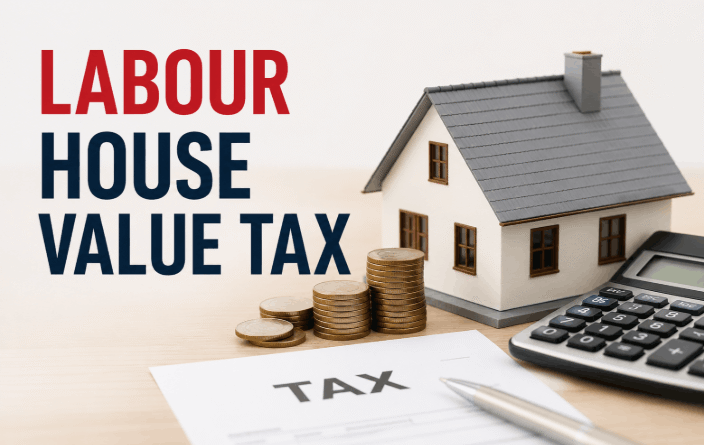
Labour house value tax is a search term covering three separate ideas: the High Value Council Tax Surcharge, a confirmed annual charge on English homes worth £2 million or more from April 2028, and two unconfirmed positions personally backed by Prime Minister Andy Burnham, a Proportional Property Tax and a Land Value Tax, as of July 2026.
Key Takeaways
- The High Value Council Tax Surcharge, Labour’s only confirmed property tax, charges £2,500 to £7,500 yearly on £2m+ homes from April 2028.
- Andy Burnham backs a 0.48% Proportional Property Tax replacing council tax and stamp duty, but it remains unconfirmed.
- Burnham ruled out scrapping stamp duty this Budget cycle on 27 July 2026, calling wider reform unlikely for now.
What Is Labour House Value Tax?
Labour house value tax is not one policy. It is a search term describing three distinct ideas in English property taxation, and confusion between them is the single biggest source of misinformation on this topic.
Only one is confirmed:
- High Value Council Tax Surcharge (HVCTS): Law in progress, applies from April 2028, confirmed at the Autumn Budget 2025
- Proportional Property Tax (PPT): A proposal Andy Burnham has personally endorsed, not government policy
- Land Value Tax (LVT): A separate, older position Burnham has long favoured, also not government policy
GOV.UK guidance confirms the HVCTS as the only one of the three currently working its way toward legislation. Everything else remains political positioning rather than settled house value tax UK policy, regardless of how firmly some coverage presents it.

The High Value Council Tax Surcharge: The Only Confirmed Tax
The High Value Council Tax Surcharge is the only Labour house value tax currently confirmed in law. Rachel Reeves announced it at the Autumn Budget 2025, and it takes effect from April 2028, charged to owners rather than occupiers, in addition to existing council tax.
| Property value band | Annual surcharge |
|---|---|
| £2m to £2.5m | £2,500 |
| £2.5m to £3.5m | £3,500 |
| £3.5m to £5m | £5,000 |
| Over £5m | £7,500 |
The House of Commons Library estimates the surcharge will raise around £400 million in 2028/29, and the Office for Budget Responsibility projects roughly 165,000 properties affected before behavioural change is factored in.
Fewer than 1% of English properties are expected to cross the £2 million threshold. Landlords holding portfolios that include high value units face particular exposure once valuations are finalised, adding to a run of recent government landlord tax hikes already working through the sector.
No official mansion tax UK calculator exists yet, so estimates rely on the published bands above.
Who Pays It, and How the Valuation and Deferral Process Works
No action is required yet, but knowing how the process works helps homeowners prepare before the bands take effect. The Valuation Office Agency will assess which homes fall into scope using recent sales data, aerial mapping, and planning records, rather than physical inspections in most cases.
- The VOA identifies homes potentially worth £2 million or more, using 2026 valuations
- Your property is placed into one of four HVCTS bands based on that valuation
- Local authorities add the surcharge to your existing council tax bill from April 2028
- If you cannot pay, you may defer the charge until the property is sold, similar to the adult social care deferral model
You remain liable for existing council tax regardless of any HVCTS deferral. The government’s consultation, covering labour property tax proposals such as leaseholder liability and exemptions for student halls and social housing, closed on 14 July 2026, and full appeal details have not yet been published.

Who Is Most Affected? The Confusion That Trips People Up
Three groups carry most of the real world impact, and each faces a different version of the same confusion.
- Homeowners in London and the South East: around 85% of eligible properties sit in these two regions, according to Hamptons analysis, making the surcharge geographically concentrated rather than universal
- Landlords and portfolio investors: owners, not tenants, are liable, so a rental property crossing £2 million adds a direct annual cost on top of existing obligations
- Asset rich but cash poor pensioners: those who bought decades ago in now expensive areas may qualify for deferral, which interacts with how the estate is later taxed, a detail worth reading alongside Labour inheritance tax pension changes before assuming deferral is automatic or free
This happens because HVCTS, PPT and LVT are routinely reported under one umbrella term, even though only one carries any legal weight.
A £600,000 home in London is nowhere near HVCTS scope, but could be affected if a Proportional Property Tax were ever introduced, an entirely different and unconfirmed scenario.
Has Burnham Ruled Out a Bigger Property Tax Overhaul?
Yes, for now. Reports through mid-2026 suggested Prime Minister Andy Burnham was preparing to replace stamp duty and council tax with a single new annual property tax at the coming Budget. That is not accurate.
Widely circulated claim: Stamp duty and council tax are being replaced by a single new Labour house value tax in the near term.
Correct position: On 27 July 2026, asked directly whether he would change or scrap stamp duty in the coming Budget, Burnham said: “That won’t be happening.” Council tax reform remains under consideration; a change on this scale does not.
Source: Reported Burnham statement, 27 July 2026, cross referenced against HM Treasury Budget planning.
His first measures in office were a VAT cut on household electricity and a £2 bus fare cap, not property tax reform, which reinforces that an annual property tax instead of stamp duty is not imminent.

Andy Burnham’s Preferred Reform: The Proportional Property Tax
Before becoming Prime Minister, Burnham repeatedly backed the Fairer Share campaign’s Proportional Property Tax as his preferred long run fix for council tax, and, properly understood, the proportional property tax remains a proposal rather than law.
- A flat 0.48% of property value annually, replacing council tax and stamp duty on main homes.
- A higher 0.96% rate on second homes, empty homes, and homes owned by non UK residents.
- Existing owners’ annual increases capped at £1,200 during a transition period, ending when the home is next sold.
- Fairer Share modelling claims roughly 77% of households would pay less, with savings concentrated outside London and the South East.
Burnham’s broader argument that the UK taxes labour too heavily and assets too lightly, a framing that also runs through Labour inheritance tax policy. Chancellor John Healey has not adopted the PPT into any Budget planning to date.
Land Value Tax: A Different, Older Burnham Position
Land Value Tax is a distinct idea from the Proportional Property Tax, and conflating the two is a common mistake in older coverage of Labour tax on homes.
A Land Value Tax charges owners annually based only on the value of the land beneath a property, excluding any buildings or improvements.
Andy Burnham has described it as a productive form of taxation, since owners sitting on undeveloped or little used land face the same charge as those who develop it, unlike the Proportional Property Tax, which taxes the whole property including any buildings.
The Chartered Institute of Taxation notes Burnham has held this view for years, predating his premiership, and campaign groups within the party have pushed for a full land value tax in the UK since at least 1931. No detailed LVT scheme has been formally modelled by his government.
Where Property Tax Fits Burnham’s Wider Tax Agenda?
Property is not the only area under review. Chancellor John Healey inherits a fiscal gap analysts put at roughly £22 billion, and Burnham has said the government “might be having to ask for a little more” to balance the books.
Other reviews reportedly running alongside property tax discussions include:
- Capital gains tax thresholds and reliefs
- Inheritance tax reliefs for farming and business property
- A tax crackdown on savings accounts affecting higher rate savers
Rachel Reeves, Chancellor at the time of the Autumn Budget 2025, is no longer in post; Healey took over following Burnham’s appointment on 20 July 2026.
Labour has committed to holding income tax, employee National Insurance, and the main VAT rate unchanged for the remainder of this Parliament, which narrows where any further revenue could come from.
Common Myths About Labour House Value Tax
Several inaccurate claims about Labour house value tax continue to circulate. The table below corrects the five most common, drawing on the official sources cited throughout this article.
| Myth | Reality |
|---|---|
| Labour house value tax applies to homes over £500,000 | The only confirmed charge, HVCTS, applies from £2 million; the £500,000 figure traces back to an unadopted proposal reportedly linked to Resolution Foundation modelling |
| Stamp duty is being scrapped this year | Burnham explicitly ruled this out for the current Budget cycle on 27 July 2026 |
| This is Rachel Reeves’ tax | Reeves announced HVCTS in November 2025, but John Healey is now Chancellor under Prime Minister Burnham |
| The mansion tax is still just a rumour | HVCTS was confirmed at the Autumn Budget 2025 and its consultation closed on 14 July 2026 |
| Your existing council tax band decides HVCTS liability | HVCTS uses a fresh VOA valuation exercise unrelated to council tax bands based on 1991 values |
Conclusion
Labour house value tax currently means one thing in law: the High Value Council Tax Surcharge on homes worth £2 million or more from April 2028. Everything wider, including Burnham’s Proportional Property Tax and Land Value Tax preferences, remains unconfirmed.
Labour house value tax means one legislated surcharge on £2 million plus homes, not a broader replacement of stamp duty or council tax, for UK homeowners in 2026.
FAQ
Is there a new Labour house value tax?
Yes, in one specific form. The High Value Council Tax Surcharge is Labour’s only confirmed property tax, charging £2,500 to £7,500 annually on English homes worth £2 million or more from April 2028.
Who is the Chancellor now?
John Healey is the current Chancellor of the Exchequer, appointed after Andy Burnham became Prime Minister on 20 July 2026. Rachel Reeves, who announced the mansion tax in November 2025, no longer holds the role.
Is the mansion tax definitely happening?
Yes. The High Value Council Tax Surcharge is confirmed government policy, not a proposal. Its consultation closed on 14 July 2026, with charges due to begin in April 2028 pending a future Finance Bill.
Will stamp duty be scrapped for a house value tax?
No, not currently. Andy Burnham ruled out changing or scrapping stamp duty in the current Budget cycle on 27 July 2026, describing wider property tax reform as unlikely at this stage.
What other tax changes is Labour reviewing?
Alongside property tax, reports point to reviews of capital gains tax, inheritance tax reliefs, and a Labour pension tax write-off for higher earners, though none have been confirmed as Budget measures.
This article reflects publicly available policy statements and official guidance as of 31 July 2026. Not tax or financial advice; check GOV.UK for the most current figures and eligibility criteria.