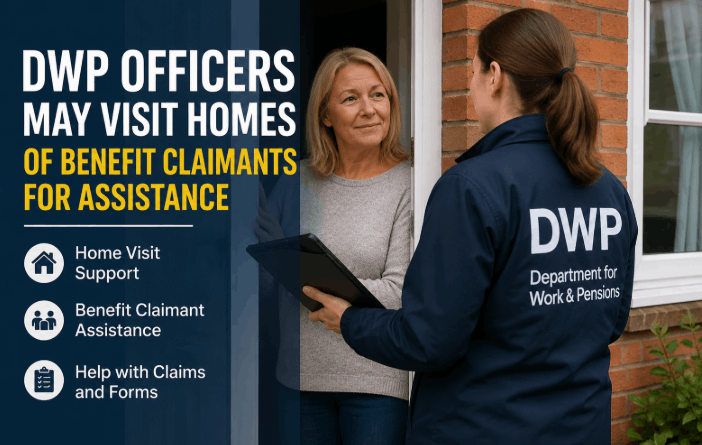
When DWP Officers May Visit Homes of Benefit Claimants for Assistance: Your Essential Rights and Safety Guide
DWP officers may visit homes of benefit claimants for assistance when someone needs extra support to make or manage a claim, confirm eligibility during a compliance check, or assess a proposed appointee.
Three distinct visit types exist, each with its own trigger and process. Figures confirmed as of July 2026 via GOV.UK.
Key Takeaways
- DWP home visits fall into three separate categories, support visits, compliance visits, and appointee assessment visits, each authorised by a different DWP team.
- A DWP support visit is always booked in advance and confirmed by letter, while a compliance visit from the Local Service Compliance Team can happen with only short notice or none at all.
- A DWP visiting officer must show a GOV.UK issued photo identity card, and claimants who cannot check it may arrange a password with the DWP Visiting Team in advance.
Why DWP Officers May Visit Homes of Benefit Claimants for Assistance?
DWP officers may visit the homes of benefit claimants for assistance because some people cannot complete a claim, review, or assessment through the standard online or telephone channels. The Department for Work and Pensions arranges these visits so a communication barrier does not stop someone from accessing the benefits they are entitled to.
GOV.UK confirms that a visit can be booked when a claimant has complex needs, a disability, or nobody else is able to help them apply.
Not every visit has the same purpose. Some help someone complete paperwork, while others check that an existing award is still correct. Knowing which type applies to a letter or phone call removes much of the uncertainty claimants describe.

Three Types of DWP Home Visits Explained
Three distinct visit types exist under the DWP home visiting programme, and mixing one up with another is often the biggest source of claimant anxiety.
| Visit Type | Arranged By | Purpose | Notice Given |
|---|---|---|---|
| Support visit | DWP Visiting Team | Help complete or manage a claim | Always booked in advance |
| Compliance visit | Local Service Compliance Team | Check an existing award is still correct | Short notice, sometimes none |
| Appointee assessment | DWP Visiting Team | Confirm a proposed appointee is suitable | Always booked in advance |
A DWP home visit differs from a health assessment for Personal Independence Payment or Employment and Support Allowance.
Those medical style examinations are arranged by a separate assessment provider working on behalf of the department, not by the visiting team. Confusing the two can leave claimants worrying about the wrong appointment.
Who Qualifies for a DWP Support Visit?
You may qualify for a DWP support visit if standard claim channels are not accessible to you for a specific, identifiable reason.
- You have a disability or long term health condition that limits how you can communicate with DWP.
- You are a vulnerable young person making a claim for the first time without family support.
- You have no reliable internet access or struggle to use online services.
- You are applying to become someone’s appointee, or someone is applying to become yours.
Meeting any one of these circumstances is usually enough for DWP to consider a visit rather than expecting you to manage the claim unsupported.
How to Arrange a DWP Home Visit?
You cannot book a DWP home visit yourself; the visit has to be arranged through the department or a referral partner.
- Call the number for the specific benefit you are claiming and explain that you need extra help. Using the correct DWP contact number before you call helps avoid being passed between departments.
- Ask a support organisation such as Citizens Advice or Age UK to refer you if you would rather not contact DWP directly.
- Wait for the visiting team to call and confirm a date, time, and location, which may be your home, a hospital, or another agreed place.
Once eligibility is confirmed, DWP handles the scheduling, leaving you to simply choose how you want to be referred.

How to Confirm a DWP Visiting Officer Is Genuine?
You can confirm a DWP visiting officer is genuine using three checks before you let them into your home.
- Ask to see their DWP photo identity card and compare the name and photograph with the confirmation letter or text.
- Call the DWP Visiting Team using the number on your letter and give the officer’s name to confirm they are expected.
- Use a prearranged DWP home visit password if you have a visual impairment or cannot check photo identification easily.
None of these checks delay a genuine visit, and a real DWP officer will wait patiently while you carry them out.
Can You Refuse a DWP Home Visit?
You can refuse to let a DWP officer into your home, and doing so alone will not affect a genuine support visit. Refusing entry to a DWP home visit does not automatically trigger a fraud investigation or stop a benefit claim.
Department guidance instructs officers to explain the visit’s purpose, seek consent to enter, and arrange a return visit if a claimant declines, unless a separate and specific reason for suspicion already exists.
A compliance visit works differently, since a Local Service Compliance officer may note a refusal and pass unresolved concerns to a fraud team. You are also entitled to ask for the meeting to take place at a Jobcentre instead of your home, or to reschedule if the timing does not suit you.
Genuine DWP contact, whether a visit, letter, or text message, such as those confirming a DWP Winter Fuel Payment, can always be checked through an official number rather than acted on under pressure.
What Happens During a DWP Compliance Visit?
A DWP compliance visit checks that an existing benefit award still matches a claimant’s circumstances, rather than helping someone make a new claim.
The Local Service Compliance Team or a Performance Measurement review officer carries out these visits, and either may arrive as an unannounced visit for Employment and Support Allowance or a similarly sensitive benefit.
The officer typically asks about income, savings, and any change in health or living arrangements since the last award decision. Two forms of identification are usually requested, and the meeting commonly lasts around an hour.

What Benefits Trigger a DWP Home Visit?
Certain benefits are more likely than others to trigger a DWP home visit, largely because of how often circumstances change.
- Personal Independence Payment claims, particularly where a change in condition has been reported.
- Universal Credit claims involving complex housing costs or a recent change in household composition.
- Employment and Support Allowance claims under review by the Local Service Compliance Team.
- Legacy benefit claims moving through migration, including those affected by the DWP PIP legacy benefits changes as older awards move onto newer schemes.
A visit relating to any of these benefits does not automatically signal a problem; it more often reflects DWP checking that recorded details are still accurate.
What Happens if a DWP Visit Uncovers an Overpayment?
A DWP visit that finds an overpayment leads to a formal review before any repayment is requested.
- DWP recalculates the correct entitlement based on the updated information gathered during the visit.
- A decision letter is sent explaining the overpayment amount and the reason it occurred.
- Claimants are given repayment options, including cases that involve a DWP benefit payments refund code used to track and reconcile the adjustment.
- An appeal or mandatory reconsideration can be requested if the claimant disagrees with the decision.
Common Myths About DWP Home Visits and What Is Actually True
Understanding the difference between DWP support and compliance visits clears up most of the myths claimants describe online.
| Myth | Reality |
|---|---|
| Every DWP home visit is a fraud investigation | Most visits are support visits intended to help someone complete or manage a claim, not investigate it |
| You must let a DWP officer into your home immediately | You can verify identity first or reschedule without losing entitlement to a genuine support visit |
| DWP visits always happen without warning | Support and appointee visits are booked in advance; only some compliance visits arrive with little or no notice |
| Refusing a visit automatically stops your benefit | Refusal alone does not stop payment, though it may lead to a rescheduled visit or further review in compliance cases |
| A DWP visit is the same as a PIP medical assessment | Medical assessments are usually run by a separate provider working for the department, not the DWP Visiting Team |
How to Prepare for a DWP Home Visit?
You can prepare for a DWP home visit by gathering the right documents before the officer arrives.
- Collect identification such as a passport, driving licence, or birth certificate.
- Gather recent bank statements, particularly relevant to the DWP pensioner bank account monitoring changes, if you are claiming Pension Credit.
- Set aside tenancy agreements, council tax bills, or mortgage paperwork relevant to your housing costs.
- Prepare any medical letters or evidence relating to a health condition affecting your claim.
Having documents ready in one place usually shortens the visit and lowers the chance of a further appointment. Claimants who want to double check current visit procedures can look these up directly on GOV.UK.
Conclusion
DWP officers may visit homes of benefit claimants for assistance across three distinct situations, support, compliance, and appointee checks, each with its own process and notice period.
Verifying identity, knowing your rights, and preparing documents in advance make any visit easier to manage. DWP home visits mean straightforward, verifiable support for benefit claimants across the UK in 2026.
FAQ
Can you refuse a DWP home visit?
Yes. Refusing entry alone will not stop a genuine support visit or your benefit payments. A compliance visit is treated more cautiously, and DWP may record the refusal or arrange a return visit rather than proceeding without consent.
How do you check a DWP visiting officer is genuine?
Ask to see their DWP photo identity card, then call the DWP Visiting Team using the number from your confirmation letter to check the officer’s name matches. A prearranged password offers an additional check for anyone unable to review photo identification.
Do you get notice before a DWP home visit?
Yes, for support and appointee visits, which are always booked and confirmed by letter or text in advance. No, not always for certain compliance visits, which claimants sometimes call a welfare check, and which the Local Service Compliance Team may carry out with short notice or none.
What happens if you miss a DWP home visit?
Contact the DWP Visiting Team as soon as possible using the number on your confirmation letter to explain and rearrange. Missing a visit without any contact can delay your claim, though it does not automatically end your benefit entitlement.
Who qualifies for a DWP support visit?
Claimants with a disability, complex needs, or no other way to manage a claim typically qualify for a DWP support visit.
Disclaimer: This article is for informational purposes only and does not constitute formal legal or financial advice; always verify current procedures directly via GOV.UK.