

Pensioner Energy Bill Savings Tips: Hacks, Price Caps, And 2026/27 Winter Support Schemes
Pensioner energy bill savings tips combine everyday habits, such as lowering boiler flow temperature and draught proofing, with government support schemes including the Winter Fuel Payment, Warm Home Discount and Pension Credit.
Together, these can cut a typical pensioner household’s annual energy costs by several hundred pounds. Figures below reflect confirmed rates for winter 2026 to 2027.
Key Takeaways
- The Winter Fuel Payment for winter 2026 to 2027 is worth £200 for households where the oldest person is under 80, and £300 where they are 80 or over, with automatic repayment through the tax system for anyone earning over £35,000.
- The Warm Home Discount gives a single £150 reduction on electricity bills, applied automatically to most Pension Credit recipients and available on application to other households on qualifying benefits.
- The Household Support Fund ended on 31 March 2026 in England and has been replaced by the Crisis and Resilience Fund, which still provides help with energy costs through local councils.
- Guarantee Credit, the main part of Pension Credit, tops up weekly income to £238 for a single pensioner or £363.25 for a couple in 2026/27.
Most pensioners already have the basics down, turning off lights, wrapping up warm, not leaving the heating on full blast all day.
The bigger savings usually come from somewhere less obvious, a boiler setting that’s never been touched since it was installed, a council fund that’s quietly changed its name, or a benefit that opens the door to several other payments.
This guide runs through both sides in full, starting with the changes that make the quickest difference to a bill.
Pensioner Energy Bill Savings Tips
The single biggest win on this list is turning down the boiler’s flow temperature, worth around 4% off a typical gas bill for a five minute adjustment. Combined with the other nine changes below, a typical pensioner household could realistically save several hundred pounds over a year.
The full list is below, with a closer look at each one underneath.
- Turn down your boiler’s flow temperature to 60°C or below
- Drop your thermostat by just one degree
- Draught proof doors, windows and letterboxes
- Bleed radiators and keep them clear of furniture
- Wash at 30°C and cut back on the tumble dryer
- Compare tariffs against the current Ofgem price cap
- Join your energy supplier’s Priority Services Register
- Insulate lofts, cavity walls and hot water tanks
- Get a smart meter fitted, it’s free
- Ask for free energy advice before spending on any upgrades
Turn down your boiler’s flow temperature
Most combi boilers arrive set to heat radiators to 70-80°C, hotter than needed. Turning it down to 60°C or below helps the boiler run more efficiently, recovering heat that would otherwise escape. This isn’t the room thermostat, so nowhere gets colder.
Nesta’s free boiler challenge tool shows the right dial to adjust, and it can cut gas bills by around 4% a year.
Drop your thermostat by just one degree
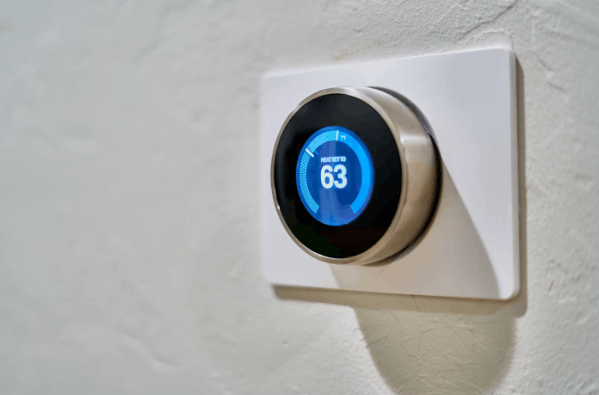
Dropping from 21°C to 20°C can save around £90 a year, according to the Energy Saving Trust. The World Health Organisation says 18°C is enough for healthy adults, a touch more for anyone older or unwell.
It’s simply a case of finding the lowest setting that still feels comfortable, rather than cutting the heating off altogether.
Draught proof doors, windows and letterboxes
Heat escapes through gaps most people stop noticing, under doors, round windows, through letterboxes. Cheap foam strips and a letterbox brush can save around £55 a year, per Energy Saving Trust figures. Leave some ventilation in the kitchen and bathroom to avoid condensation.
Bleed radiators and keep them clear
Cold at the top, warm at the bottom means trapped air, and the boiler works harder than it needs to. Bleeding takes two minutes with a radiator key. Also check nothing’s blocking it, sofas and thick curtains trap the warmth instead of letting it into the room.
Wash at 30°C and cut back on the tumble dryer
Modern machines clean well at 30°C. One fewer wash a week, always with a full load, saves around £27 a year. The tumble dryer costs more to run than almost anything else in the house, so an airer instead can save around £50 a year.
Compare tariffs against the current Ofgem price cap
Ofgem’s cap for July to September 2026 puts a typical household at around £1,862 a year. It limits the price per unit, not the total bill, so usage still matters. Fixed deals sometimes beat the cap slightly, worth a quick comparison every few months.
Join your energy supplier’s Priority Services Register
Free, takes minutes, and many eligible households never sign up. Open to anyone over State Pension age, disabled, or caring for someone who is.
It brings advance notice of power cuts and priority reconnection, and sits alongside wider support like the Labour home support plan pensioner devices initiative.
Insulate lofts, cavity walls and hot water tanks
It takes more effort, but the payback is bigger too. Loft insulation topped up to 270mm saves around £190 a year, cavity wall insulation around £240 a year. A hot water cylinder jacket, often under £30, saves around £45 a year. For funding larger jobs, a lifetime mortgage calculator is worth checking first.
Get a smart meter fitted, it’s free
Every supplier has to offer one, no installation charge. It doesn’t reduce a bill on its own, though it does show exactly what’s being used and when, in pounds and pence rather than estimates, which makes waste far easier to spot.
Ask for free energy advice before spending on any upgrades
Before paying for insulation, a new boiler, or solar panels, get advice first. Citizens Advice and the Energy Saving Trust offer free, no obligation guidance, and local councils often know about grants that aren’t widely advertised.
Understanding the July 2026 Energy Price Cap
The energy price cap set by Ofgem changes every three months, and the current one, running from 1 July to 30 September 2026, sets a typical dual fuel household’s costs at around £1,862 a year.
It’s a limit on what a supplier can charge per unit and for the daily standing charge, not a ceiling on the final bill, so two neighbours on identical tariffs can still end up with very different totals depending on how much they actually use.
Figures confirmed as of July 2026 via Ofgem. Anyone unsure what they’re currently paying can check their most recent bill against the published rates, or contact their supplier directly to query anything that looks off.

How Much Is the Winter Fuel Payment for 2026 to 2027?
The Winter Fuel Payment for winter 2026 to 2027 is worth £200 where the oldest person in the household is under 80, and £300 where they’re 80 or over.
It’s paid automatically to anyone born on or before 27 June 1960 who meets the residency conditions during the qualifying week of 21 to 27 September 2026, and it no longer depends on receiving Pension Credit.
| Circumstance | Amount |
|---|---|
| Household, oldest person under 80 | £200 |
| Household, oldest person 80 or over | £300 |
| Living alone, born between 28 September 1946 and 27 June 1960 | £200 |
| Living alone, born before 28 September 1946 | £300 |
Widely circulated claim: A number of guides still describe the Winter Fuel Payment as only available to pensioners who also receive Pension Credit.
Correct position: That rule applied for winter 2024/25 only. From winter 2025/26 onward, the payment is universal for everyone of State Pension age, with HMRC recovering it through the tax system from anyone earning over £35,000, rather than restricting who receives it in the first place.
Source: GOV.UK and House of Commons Library briefings on Winter Fuel Payment eligibility, 2026.
Anyone earning above that threshold has the payment recovered gradually through a change to their HMRC pensioner tax codes from April 2027, working out to roughly £17 a month for a typical £200 payment.
The age line for the higher £300 rate lines up closely with the 80th birthday state pension milestone, which affects a few other allowances too. Anyone who’d rather not receive the payment can opt out any time up to September 2026.
Is Everyone Getting £150 Off Energy Bills This Year?
No. The £150 Warm Home Discount depends on receiving Guarantee Credit, the main part of Pension Credit, or another qualifying income assessed benefit, and it only applies to electricity bills. It’s a separate scheme from the Winter Fuel Payment and doesn’t affect it either way.
Eligibility splits into two groups:
- Core Group 1, automatic for anyone getting Guarantee Credit who’s named on the electricity bill, no application needed
- Core Group 2, covering households on other income assessed benefits, including Universal Credit and Housing Benefit, since the old “high cost to heat” property test was scrapped
Some households in Core Group 2 also rely on support through 66 Year Olds Universal Credit arrangements, which apply where one partner is under State Pension age.
Letters confirming eligibility go out between late October and early January, and there’s a helpline available right up to the late February 2027 deadline for anyone who thinks they should qualify but hasn’t heard anything.
Pension Credit and the Crisis and Resilience Fund: What Changed in 2026
Pension Credit sits behind most of the other support on this page, since it’s the gateway benefit that unlocks the Warm Home Discount, Cold Weather Payments and more. Alongside it, the fund many households used to know as the Household Support Fund has changed.
It ended on 31 March 2026 in England and was replaced from 1 April by the Crisis and Resilience Fund, still funded by the Department for Work and Pensions and still distributed through local councils.
Renames like this happen because local welfare schemes usually run in fixed funding cycles rather than staying under one name indefinitely, and each renewal gives the government a chance to adjust the criteria slightly.
That does cause a real problem in practice: anyone searching for “Household Support Fund” now finds pages saying it’s closed, and understandably assumes there’s no local help left, when the replacement fund covers exactly the same essentials, energy costs included, just under a different name.
Checking eligibility for what Pension Credit unlocks comes down to a few steps:
- Confirm State Pension age has been reached and weekly income sits below £238 for a single person or £363.25 for a couple, the 2026/27 Guarantee Credit thresholds
- Factor in any severe disability addition, worth £86.05 a week, or £172.10 where both partners in a couple qualify, and any carer addition of £48.15 a week, since these raise the income threshold before Guarantee Credit stops applying
- Contact the local council directly about Crisis and Resilience Fund support, since what’s offered and how it’s administered varies by area
- Check whether any recent change in circumstances affects an existing award, covered in more detail in guidance on the pension credit holiday rule
Claims are increasingly cross-checked against other government records automatically, part of the wider DWP pensioner bank account monitoring changes, aimed more at finding people who are eligible but haven’t claimed than at catching anyone out.

Cold Weather Payments and Other Support
A Cold Weather Payment triggers automatically whenever the average temperature in a local area is recorded at zero degrees Celsius or below for seven consecutive days between November and March.
Anyone receiving a qualifying benefit during that period gets the payment without having to apply for it separately.
Qualifying benefits include:
- Pension Credit
- Income based Jobseeker’s Allowance or income related Employment and Support Allowance
- Universal Credit, in most circumstances
- Income Support
Anyone receiving other income assessed support, including those who’ve recently checked a PIP back pay calculator after a successful claim, should double check whether Personal Independence Payment passports them into these wider benefits, since the rules differ depending on household circumstances.
Winter Fuel Payment vs Warm Home Discount vs Cold Weather Payment: At a Glance
These three are easily confused, largely because they all arrive around the same time of year despite working in completely different ways.
| Scheme | Amount | Who qualifies | When paid |
|---|---|---|---|
| Winter Fuel Payment | £200 or £300 | Automatic for those born on or before 27 June 1960 | November or December |
| Warm Home Discount | £150 | Guarantee Credit automatic, others on application | November to March |
| Cold Weather Payment | £25 per 7 day cold spell | Those on qualifying income assessed benefits | Within 14 working days of the trigger |
Conclusion
The tips above work best alongside the schemes covered next. Small habits such as boiler settings, draught proofing and a smart meter bring quick reductions, while checking eligibility for the Winter Fuel Payment, Warm Home Discount and Pension Credit can add hundreds more on top.
Put together, these tips and schemes add up to lower, more manageable heating costs for older households across the UK this year.
FAQ
Is everyone getting £150 off their energy bills?
No. Only households receiving Guarantee Credit or another qualifying income assessed benefit get the Warm Home Discount, and it applies to electricity accounts only, not the household bill as a whole.
How much is the Winter Fuel Payment for 2026 to 2027?
It’s £200 where the oldest person in the household is under 80, and £300 where they’re 80 or over. Anyone earning over £35,000 has it recovered gradually through their tax code the following year.
Who qualifies for the Warm Home Discount 2026/27?
Guarantee Credit recipients qualify automatically under Core Group 1. Households on other income assessed benefits, such as Universal Credit or Housing Benefit, qualify under Core Group 2 instead.
Is the Household Support Fund still available?
Not under that name. It closed on 31 March 2026 in England and was replaced by the Crisis and Resilience Fund, which still provides help with energy and other essential costs through local councils.
Disclaimer: This article is for informational purposes only and does not constitute formal financial advice; please check official government channels or consult an accredited advisor to verify benefit eligibility.