How Do You Cancel a Credit Card in the UK? Clear Balances, Stop Payments, Protect Credit
Key Takeaways
- Only the card issuer can close the account: Experian says you cannot cancel a card simply by cutting it up, cancelling Direct Debits or stopping using it.
- A borrower can withdraw from a new regulated credit agreement within 14 days without giving a reason under section 66A of the Consumer Credit Act 1974. The clock starts the day after the latest of several dates, not simply when the card arrives.
- The Financial Conduct Authority (FCA) says a card issuer must stop recurring card payments once asked. The request must be made by the end of the business day before the next payment is due.
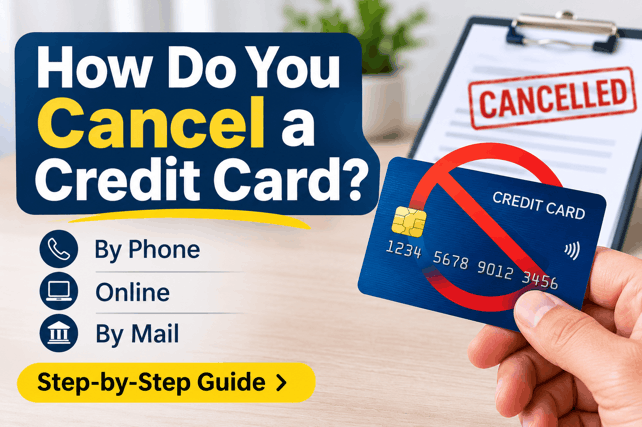
How do you cancel a credit card? You clear or agree the balance, move any recurring payments, tell the card issuer to close the account, and ask for written confirmation.
Cancelling a credit card is a formal account closure requested from the card issuer, and understanding how a credit card works makes it easier to see why the account remains open until the issuer closes it.
Once the balance is cleared, the issuer closes the account; a new regulated credit agreement may instead be withdrawn from under section 66A of the Consumer Credit Act 1974. Cutting up the card, cancelling the Direct Debit or leaving the card unused does not close the account, which stays open and visible on the credit file.
How Do You Cancel a Credit Card? The Five Steps in Order
To cancel a credit card, complete five steps in this order: clear the balance, move recurring payments, tell the issuer, get written confirmation, then destroy the card.
- Get a settlement figure and clear the balance. Ask the issuer for the exact amount owed, including interest and pending transactions, then pay it. Keep the repayment Direct Debit running until the balance is fully cleared.
- Move recurring payments and use up rewards. Switch subscriptions and bills to another payment method, and check whether any cashback or points can still be redeemed or transferred before closure, as reward terms vary by card.
- Tell the issuer to close the account. Some let you request closure in an app or by chat, while others ask you to call or write. Check your issuer’s app, website or terms for its process.
- Get written confirmation. Ask for a message or letter showing the account closed at your request, a £0 balance and the closure date.
- Destroy the card once confirmation arrives. Cut through the chip and magnetic strip, and remove the card from any mobile wallet.
What Does Not Cancel a Credit Card?
Cutting up the card, cancelling the repayment Direct Debit and simply not using the card all leave the account open. A card can also be blocked or stopped from new spending without the account being closed. Ask the issuer to confirm whether it has closed the account or only restricted the card.
| Action | What actually happens | What to do instead |
|---|---|---|
| Cut up the card | The account remains open and still appears active | Ask the issuer to close it |
| Cancel the repayment Direct Debit | The account stays open, and repayments on any balance stop being collected | Keep the Direct Debit until the balance is cleared |
| Stop using the card | The account stays open with the same credit limit | Tell the issuer you want it closed |
A closure request to the issuer is what actually closes the account.
Can You Cancel a Credit Card With a Balance or Pending Payments?
A credit card with a balance can be cancelled, but the account usually stays open until the balance is cleared. The issuer may keep the account open until the balance is paid off, so ask it how it will handle the card and closure request.
Interest continues on any remaining balance, and pending transactions must clear before the final figure is known. Before deciding how to clear what you owe, it helps to understand whether you can transfer money from a credit card, as moving money or debt can affect the balance and interest charged.
Experian says that if you still owe the provider, you can ask to cancel, but it will keep the account open and visible on your credit report until the balance is paid off.
Ask the issuer for a settlement figure that covers pending transactions and interest up to the payment date, then pay exactly that amount. If clearing the balance in one payment is difficult, comparing top 10 balance transfer credit cards may help you move the debt before asking the issuer to close the account.
If the balance is already zero, ask the issuer to close the account and confirm when closure will take effect. Once the balance reaches £0, use the after-closure checks further down to confirm that the account has genuinely closed.
Additional cardholders add a further step. Check with the issuer whether the main account holder must make the closure request. Once the account closes, every additional cardholder’s card and PIN should be destroyed.
What Happens to Recurring Payments When You Cancel a Credit Card?
Once a cardholder asks, the card issuer must stop recurring card payments, even if the business has not been contacted, according to the FCA, the UK financial regulator. Recurring card payments, also called continuous payment authorities, let a business charge a card repeatedly without asking each time.
- Cardholders can cancel through the business or through the issuer, and the issuer cannot insist on contacting the business first.
- The request must reach the issuer or business by the end of the business day before the next payment is due, or the payment can still be taken.
- Payments taken after cancellation are unauthorised, and the issuer must refund them and related charges immediately.
- Cancelling a recurring card payment does not end the underlying contract, so any money owed under it remains payable.
If you have used the card for cash or need emergency funds while sorting out payments, read: Can you withdraw cash from a credit card before relying on it to cover other commitments.
Recurring card payments differ from Direct Debits. A Direct Debit draws money from a bank account. The FCA confirms that recurring card payments are not covered by the Direct Debit Guarantee.
This is why the Direct Debit repaying the card should stay in place, while subscriptions charged to the card must move. If a payment is taken after cancellation, contact the issuer first and ask for a refund. If it is not refunded, make a complaint.

Can You Cancel a Credit Card Online, by Phone or in Branch?
Closure routes vary by issuer and may include an app, online chat, phone call or written request.
- App or online banking: Look for a close-account option or a secure message facility on the card’s page.
- Online chat: Ask the in-app assistant or an adviser to close the account.
- Phone: Call the number on the back of the card; some issuers require closure by phone.
- Post or branch: Where offered, send a signed letter or visit a branch to leave a paper record.
Whichever route you use, ask for three things:
- The settlement figure, including pending transactions and interest.
- Confirmation of whether the card can still be used after the request.
- Written confirmation of closure, with the closure date.
Because closure routes and timings vary by issuer, check the issuer’s app, website or terms before choosing how to request closure.
What reason should you give?
An issuer may ask why you are closing the card and may offer an incentive to stay. Decide beforehand whether you would accept one. A short, truthful reason, such as not using the card, keeps the conversation brief. The 14-day right described below needs no reason at all.
How Long Does Closure Take, and What Should You Check Afterwards?
The issuer should confirm when it has closed the account, but credit reports may not update immediately. There is no single official timeline for a credit report to show an account as closed, so check the record after the issuer confirms closure.
- Check the confirmation. It should show the account closed at your request, a £0 balance and the closure date.
- Destroy every card. Include any additional cardholder’s card and PIN, and delete the card from mobile wallets.
- Wait a few weeks, then check your credit file. The account should show as closed or settled.
- Act on mismatches. If the account still shows as open or carries a balance, send the written confirmation to the issuer and ask for the record to be corrected.
Each of Experian, Equifax and TransUnion offers a statutory credit report, the copy of a credit file that a person can request by law. A correction request made to Experian applies only to Experian, so Equifax and TransUnion must be contacted separately.
Does Cancelling a Credit Card Affect Your Credit Score?
Cancelling a credit card can lower a credit score temporarily, mainly by reducing total available credit and sometimes by shortening the average age of your accounts.
Credit utilisation is the percentage of a person’s total credit limit currently in use. Closing a card with a £0 balance removes its limit from the total, so utilisation rises even though the balances have not changed. Lenders look at that percentage when assessing credit risk.
The figures below are hypothetical and rounded to show the arithmetic.
| Scenario | Total credit limit | Total balances | Credit utilisation |
|---|---|---|---|
| Before closing | £10,000 | £2,000 | 20% |
| After closing a £3,000 card with a £0 balance | £7,000 | £2,000 | 29% |
Experian suggests keeping utilisation below 25% as a rule of thumb, rather than treating it as a fixed rule.
A closed account can stay on a credit file for up to six years, as Experian’s report covers the last six years of history. Keeping a card open at a zero balance preserves its limit and its age, but an annual fee can make an unused card cost money. Paying other balances down first limits the rise in utilisation.
Can You Cancel a Credit Card Within 14 Days?
The 14-day withdrawal right lets a borrower cancel a new regulated credit agreement without giving a reason. The 14 days begin the day after the latest of several dates, including when the agreement is made and when the credit limit is notified.
The borrower then repays the credit plus interest within 30 days. Section 66A of the Consumer Credit Act 1974, published on legislation.gov.uk, creates this cooling-off period, a short window in which a borrower can back out without giving a reason.
It applies to regulated credit agreements, although some agreements fall outside it.
When does the 14-day clock start?
Do not rely on a general estimate for the start date. Check the agreement paperwork, because section 66A sets the relevant dates that start the 14-day period.
The statute works differently. The 14 days start the day after the latest of several dates, including when the agreement is made and when the credit limit is notified.
| Point | 14-day withdrawal | Ordinary closure |
|---|---|---|
| Time limit | 14 days, starting the day after the relevant date | Any time after the agreement starts |
| Reason needed | None | Issuer may ask why |
| What is repaid | Credit used plus interest accrued | Outstanding balance plus interest until cleared |
| Repayment deadline | Within 30 days of giving notice | No fixed deadline; account closes once the balance is cleared |
| Agreements covered | Regulated credit agreements only | Any card account |
Check the dates on your agreement paperwork to work out your deadline, and give oral notice in the way the agreement specifies. Avoid two common errors: counting from the wrong date and missing the 30-day repayment window. If the 14 days have passed, use the five-step closure process instead.
Conclusion
How do you cancel a credit card? Clear or agree the balance, move recurring payments, ask the issuer to close the account and keep written confirmation. You can ask to cancel a credit card with a balance, but the account stays open until it is cleared.
With a new card, check your agreement dates first, as the 14-day right may let you withdraw without a reason.
FAQs
Does cancelling a credit card hurt your credit score?
It can lower the score temporarily. Closing a card removes its limit, which can raise credit utilisation, and it may shorten average account age. The effect varies by lender and file, and paying down other balances first limits it.
Is it better to cancel a credit card or just stop using it?
Cancelling closes the account, while leaving the card unused keeps it open with its limit. An unused card preserves the limit but can carry an annual fee, so the better choice depends on the fee and the card’s effect on utilisation.
Should you cancel a credit card once it is paid off?
Closing a paid-off card is reasonable when it carries an annual fee or is no longer needed. Keeping it open can help credit utilisation when it carries no fee.
How do you cancel a credit card you have never used?
An unused card remains open until you ask the issuer to close it, as Experian explains. Request closure through the app, phone or post; ask for written confirmation, then destroy the card.
This article is general UK information, not financial advice; check your card issuer’s terms before closing an account.