Mastering Stocks And Shares ISA Tax Rules: How To Shield Investments And Avoid The 2027 Cash Penalty
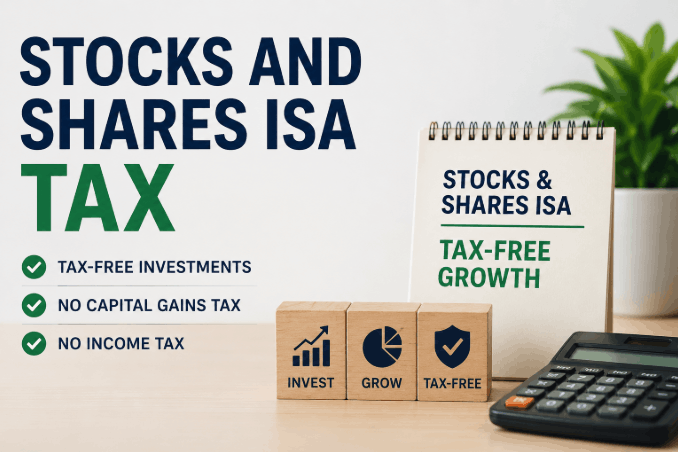
Stocks and shares ISA tax refers to the rules governing which investment income HMRC exempts inside the wrapper, and which new charges apply from April 2027. As of the 2026/27 tax year, growth, dividends and bond interest inside the ISA remain free of income tax and capital gains tax.
Key takeaways
- The 2026/27 ISA allowance is £20,000, with growth, dividends and bond interest inside it staying tax free.
- From 6 April 2027, HMRC will charge 22% tax on interest earned from cash left uninvested in the ISA.
- ISA withdrawals are never taxed, but non flexible ISAs lose that part of the allowance once withdrawn.
Do You Pay Tax on a Stocks and Shares ISA?
No, stocks and shares ISA tax does not apply to growth, dividends or bond interest held inside the wrapper. HMRC exempts three separate types of investment income for as long as the money stays inside the account.
That includes capital gains, dividend payments and bond interest. There is no upper limit on how much tax free growth an ISA can shelter. Only contributions are capped, not returns.
A stocks and shares ISA that grows from £20,000 to £80,000 pays no capital gains tax on that £60,000 increase. This is what makes the wrapper more valuable, the longer the money stays invested.
How does the Stocks and Shares ISA Tax Wrapper Works?
A stocks and shares ISA tax wrapper shelters three types of investment income from HMRC. Each exemption applies automatically, with no separate claim needed.
- Capital gains tax exemption. Profits made when investments are sold inside the ISA are never taxed, regardless of size.
- Dividend tax exemption. Dividend income from shares or funds held in the ISA sits outside the £500 dividend allowance calculation entirely, so there is no tax on ISA dividends.
- Income tax exemption. Interest from bonds or gilts held in the ISA does not count as taxable income.
These three exemptions are why HMRC treats the ISA as a wrapper, rather than a product in its own right.
Stocks and Shares ISA Tax Allowance and Rates for 2026/27
The stocks and shares ISA tax free allowance for 2026/27 is £20,000, shared across every ISA type held in the same tax year. That single figure is the full tax free allowance a stocks and shares ISA carries this year.
| Income type | Inside a stocks and shares ISA | Outside an ISA (2026/27) |
|---|---|---|
| Capital gains | 0% | 18% basic rate, 24% higher rate, above £3,000 allowance |
| Dividends | 0% | 10.75% basic rate, 35.75% higher rate, above £500 allowance |
| Bond interest | 0% | Taxed as savings income |
| Cash interest (from April 2027) | 22% flat charge | Taxed via Personal Savings Allowance |
These figures are confirmed on GOV.UK for the current tax year, with the 22% cash charge taking effect from 6 April 2027.
Stocks and Shares ISA Rules: HMRC Sets the Eligibility and Contributions
Stocks and shares ISA rules for 2026/27 require UK tax residency and a minimum age of eighteen. HMRC applies these conditions to every provider offering the account.
Who Can Open One
Savers must be eighteen or over and resident in the UK for tax purposes to open a stocks and shares ISA. Anyone unsure how many ISAs they can have should note that savers may hold multiple ISAs across different providers in the same tax year. The combined £20,000 allowance still applies across every ISA type held.
Annual Contribution Rules
- The tax year runs from 6 April to 5 April.
- Unused allowance does not carry over to the next tax year.
- Money already held in an ISA keeps its tax free status permanently, even after the allowance resets.
Under the Individual Savings Account Regulations 1998, ISA managers are required to report annual subscriptions directly to HMRC.

What Happens to Stocks and Shares ISA Tax When You Withdraw Money?
Stocks and shares ISA withdrawal tax never applies, regardless of how much money is taken out. You can withdraw funds at any time without paying capital gains tax, dividend tax or income tax on the amount.
The distinction that matters is whether your ISA is flexible. A flexible ISA lets you withdraw cash and pay it back in during the same tax year without losing any allowance. A non flexible ISA treats a withdrawal as final, so that portion of your £20,000 allowance cannot be reused until the new tax year begins.
Stocks and Shares ISA Tax Changes Confirmed for April 2027
The new ISA rules 2027 were confirmed by HM Treasury on 23 June 2026, taking effect from 6 April 2027.
- A flat 22% charge will apply to interest earned on cash left uninvested inside a stocks and shares ISA.
- The cash ISA allowance for under 65s will fall to £12,000, though the overall £20,000 ISA limit stays the same.
- New ISA transfer rules also apply, banning transfers from a stocks and shares ISA into a cash ISA for savers under 65.
- Savers aged 65 and over keep the full £20,000 cash ISA allowance and face no new transfer restrictions.
For savers who keep cash sitting inside their ISA, this uninvested cash charge is the biggest change of the reform. These changes followed the Autumn Budget 2025, where a shift away from cash saving toward investing was first signalled.
Why the New Cash Interest Charge Interacts With Your Personal Savings Allowance?
These cash ISA changes, announced under Chancellor Rachel Reeves, exist because cash held inside the wrapper has never counted toward the Personal Savings Allowance. That gap is what the 2027 reform closes.
Outside an ISA, most savers can earn up to £1,000 in savings interest tax free through the Personal Savings Allowance, or £500 for higher rate taxpayers. Cash sitting inside a non cash ISA has always sat outside that system entirely, because the ISA wrapper already exempted it.
From April 2027, HMRC closes that gap differently, by charging 22% directly on ISA cash interest rather than folding it into the existing allowance.
Holding cash inside a stocks and shares ISA after April 2027 can be less tax efficient than holding the same cash outside one.
A saver using their full £1,000 Personal Savings Allowance outside an ISA pays no tax on that interest, while identical interest earned inside the ISA faces a flat 22% charge with no equivalent allowance.
A widely circulated claim holds that cash held inside a stocks and shares ISA is always completely tax free.
In fact, from 6 April 2027, interest earned on uninvested cash inside a stocks and shares ISA will be taxed at a flat 22%, regardless of the saver’s income tax band.
This is confirmed in the ISA Reform 2027 Anti Circumvention Rules Factsheet, published by HM Treasury.
Common Myths About Stocks and Shares ISA Tax and What Is Actually True
Several persistent myths about stocks and shares ISA tax do not match HMRC’s actual rules.
| Myth | Reality |
|---|---|
| ISAs are 100% tax free | Inheritance Tax still applies, and from April 2027, a 22% charge applies to uninvested cash interest |
| Withdrawing money loses the tax wrapper permanently | Stocks and shares ISA withdrawal tax does not apply; flexible ISAs let savers repay within the same tax year |
| ISAs give tax relief like a pension | ISAs exempt income from tax, they do not add a government funded top up the way pension relief does |
| You get £20,000 for each ISA type | The £20,000 allowance is shared across every ISA type held in one tax year |
| Cash inside an ISA is always tax free | From 6 April 2027, cash interest inside a stocks and shares ISA is taxed at 22% |
| Money market funds are banned from ISAs | Money market funds remain allowed, but cannot represent all of the assets held |
Stocks and Shares ISA Tax vs Cash ISA Tax: What Is the Difference?
Stocks and shares ISA tax and cash ISA tax both exempt returns from income tax, but the two accounts diverge sharply after April 2027.
- A cash ISA shelters savings interest only, with no exposure to capital gains or dividend tax.
- A stocks and shares ISA shelters capital gains, dividends and bond interest, alongside cash interest, until the 2027 charge begins.
- From 6 April 2027, under 65s face a £12,000 cash ISA limit, while the stocks and shares ISA limit stays at £20,000.
- The Financial Conduct Authority regulates both account types, and the Financial Services Compensation Scheme protects cash held with authorised providers up to £85,000.
As MoneyHelper notes, the choice between the two often comes down to how long the money will stay invested.
Conclusion
Stocks and shares ISA tax stays generous for now, exempting capital gains, dividends and bond interest from HMRC. That changes from 6 April 2027, when a flat 22% charge reaches cash left uninvested inside the wrapper. For UK savers, 2027 brings continued tax free growth on investments, paired with tighter limits on cash.
FAQ
Are ISAs 100% tax free?
No, ISAs are not 100% tax free. Inheritance Tax still applies to ISA balances left to anyone other than a spouse or civil partner, and from 6 April 2027, a 22% charge applies to interest on uninvested cash inside a stocks and shares ISA.
What are the new rules on stocks and shares in ISA?
The stocks and shares ISA tax rules change from 6 April 2027. HM Treasury has confirmed a 22% charge on cash interest inside stocks and shares ISAs, alongside a lower £12,000 cash ISA limit for savers under 65.
Can you put £20,000 in a cash ISA and £20,000 in a stocks and shares ISA in the same year?
No, the £20,000 allowance is shared across all ISA types in a single tax year. Splitting money between a cash ISA and a stocks and shares ISA still counts against the same combined limit.
Can HMRC tax your stocks and shares ISA?
Yes, HMRC can tax certain elements of a stocks and shares ISA. Inheritance Tax applies on death, and from April 2027, interest on uninvested cash inside the ISA faces a flat 22% charge.
Readers should check GOV.UK or HMRC directly for the most current ISA allowance figures and confirmed dates ahead of April 2027, as draft legislation and technical consultation may still adjust the final details.