Rachel Reeves Inheritance Tax Changes: New Pension Rules And APR Relief Shifts Explained
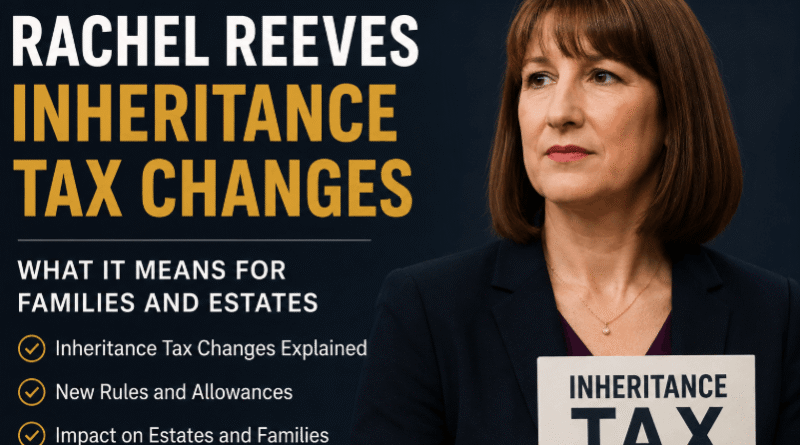
Following the 2024 Autumn Budget, the Rachel Reeves inheritance tax changes primarily involve freezing the Nil-Rate Band at £325,000 until 2030, bringing unused pension funds into the tax net from April 2027, and reforming Agricultural and Business Property Reliefs with a new £1 million combined cap starting April 2026.
These reforms represent a fundamental shift in UK estate planning, moving away from long-standing exemptions for qualifying business assets and pension wrappers.
To navigate these complexities, many are now reviewing the UK pension inheritance tax changes to understand how their specific retirement funds will be appraised under the new rules.
For many residents, these measures necessitate an immediate review of long-term financial structures to ensure compliance with upcoming HMRC regulations.
Key Takeaways
- Threshold Freeze: The Nil-Rate Band (£325,000) and Residence Nil-Rate Band (£175,000) remain frozen until April 2030.
- Pension Inclusion: From 6 April 2027, most unused pension funds and death benefits will be included in the value of a deceased person’s estate for IHT purposes.
- APR/BPR Cap: A combined £1 million cap on 100% relief for Agricultural and Business Property Reliefs begins in April 2026, with a 50% relief rate applied thereafter.
- Liability Increase: These changes are projected to increase the number of estates qualifying for IHT, particularly those involving family-owned farms and large private pension pots.
What are the Rachel Reeves inheritance tax changes?
The Chancellor’s reforms are designed to broaden the tax base by targeting assets that were previously sheltered from the 40% headline tax rate.
While investors look to mitigate these future tax liabilities, many are also adjusting their immediate liquidity strategies following the NS&I savings rate increase to ensure their cash reserves remain competitive.
According to HM Treasury, these measures ensure that wealthier estates contribute more to public services while maintaining protections for smaller family homes.
Summary of key legislative shifts
- Pensions: Most unused pension funds and death benefits will be included in the inheritance tax (IHT) estate from April 2027.
- Farms and Businesses: A new £1 million cap on 100% relief; assets above this will face an effective 20% tax rate from April 2026.
- Frozen Thresholds: The £325,000 Nil-Rate Band remains frozen until 2030, meaning more estates pay tax as property values rise.
- Gifting: No changes to the 7-year rule, but stricter scrutiny on high-value asset transfers.
Crucially, business and agricultural assets exceeding the £1 million limit will attract an effective 20% tax rate.

Rachel Reeves announces inheritance tax changes for pensions in UK: The 2027 Shift
The Chancellor’s decision to bring authorised pension death benefits into the IHT net marks a total departure from previous policy. Historically, pensions were held outside the estate, allowing individuals to pass on significant wealth without incurring IHT.
From 6 April 2027, pension providers will be responsible for reporting and paying the IHT due on these funds directly to HMRC.
This change effectively treats the pension wrapper as part of the taxable estate. It is critical to distinguish between the IHT due on the fund and the potential Income Tax liabilities for the beneficiary.
While the pension fund itself becomes taxable at the 40% IHT rate (after thresholds), the recipient may still face Income Tax if the deceased was over the age of 75.
How double taxation impacts pension beneficiaries after 75?
An overlooked consequence of the 2024 reforms is the friction between Inheritance Tax and Income Tax on pension assets. Under current rules, if a pension holder dies after age 75, the beneficiary pays Income Tax at their marginal rate on any withdrawals.
When the 2027 IHT changes take effect, that same pension pot will first be reduced by a 40% IHT charge before the beneficiary receives the remainder.
The Double Taxation trap occurs when a pension is subject to a 40% IHT charge as part of the estate and subsequently taxed as income for the beneficiary.
Concerns regarding the longevity of retirement incentives have also grown amidst rumors of whether the pension tax-free lump sum to be scrapped in future fiscal updates.
To mitigate this, individuals must review their expression of wish forms and consider the timing of their pension drawdowns.

Why Chancellor Rachel Reeves announced inheritance tax changes for farmers and businesses?
The reform of Agricultural Property Relief (APR) and Business Property Relief (BPR) aims to curb the use of land and private company shares as IHT avoidance vehicles. Prior to this announcement, these assets often qualified for 100% relief regardless of value.
From April 2026, the 100% relief will only apply to the first £1 million of combined agricultural and business assets. For any value above this threshold, the relief falls to 50%. This means the excess value is effectively taxed at 20% (50% of the 40% IHT rate).
New APR and BPR tax rates for business assets from 2026
This tiered relief structure shifts the tax burden onto larger estates, as shown in the updated rates below.
| Asset Value | Relief Rate | Effective Tax Rate |
| First £1,000,000 | 100% | 0% |
| Value over £1,000,000 | 50% | 20% |
| AIM Shares | 50% | 20% |
| Non-Business Assets | 0% | 40% |
What will Rachel Reeves do to Inheritance tax thresholds?
The Chancellor has confirmed that the Nil-Rate Band (NRB) will remain at £325,000 until April 2030. Additionally, the Residence Nil-Rate Band (RNRB) stays at £175,000, and the taper threshold for the RNRB remains at £2 million.
By keeping these thresholds static during a period of property price inflation (fiscal drag), a larger percentage of the UK population will be pulled into the tax net. Currently, only about 4-5% of estates pay IHT, but this is expected to rise significantly by the end of the decade.
How to avoid 40% inheritance tax under the new rules?
Reducing an IHT liability requires proactive estate management, particularly given the new caps on business and pension assets.
- Utilise the 7-Year Rule: Make Potentially Exempt Transfers (PETs) early. Gifts made more than seven years before death generally fall out of the estate.
- Annual Exemptions: You can gift up to £3,000 per year tax-free. You can also carry forward one year’s unused allowance.
- Gifts from Surplus Income: If you have more income than you need to maintain your standard of living, you can make regular gifts that are immediately exempt from IHT.
- Charitable Legacies: Leaving at least 10% of your net estate to charity can reduce your overall IHT rate from 40% to 36%.
- Trust Structures: Use Discretionary or Bare Trusts to move assets out of your legal ownership while retaining some control over how they are distributed.

What is the 7 year rule in inheritance tax?
The 7-year rule dictates how gifts are treated for IHT purposes. If you survive for seven years after making a gift to an individual, the gift is typically exempt from tax. If you die within this period, the gift is added back into your estate value.
If you die between three and seven years after making a gift, Taper Relief may apply. This reduces the tax rate on the gift (not the value of the gift itself) on a sliding scale. For example, if you die 5–6 years after the gift, the tax rate on that gift is reduced by 60%.
Can I gift £100,000 to my child tax-free?
Yes, you can gift any amount to your child, but it is classified as a Potentially Exempt Transfer (PET). There is no immediate tax to pay. However, the gift only becomes fully tax-free if you survive for at least seven years.
If you die within that timeframe, the £100,000 will be included in your estate valuation for IHT calculations, potentially using up part of your £325,000 Nil-Rate Band.
Facts about the latest Rachel Reeves inheritance tax reforms
Navigating the distinction between social media speculation and actual HMRC legislation is the first step in protecting family wealth.
| Myth | Reality |
| Pensions are taxed at 40% immediately. | No changes apply from April 2027 and depend on thresholds. |
| All family farms will be sold to pay tax. | 100% relief still applies to the first £1m of assets. |
| The 7-year rule has been scrapped. | False; the 7-year PET rule remains unchanged. |
| Everyone now pays 40% death tax. | No, the standard thresholds (£325k/£175k) still protect many. |
| Gifting property is now illegal. | Gifting is legal but subject to Gift with Reservation of Benefit rules. |
Essential estate planning steps before the April 2026 deadline
Moving from theory to action requires a clear timeline to ensure assets are restructured before the 2026 deadline.
- Audit Business Assets: Identify which assets fall under APR or BPR and calculate if they exceed the £1 million cap.
- Review Pension Nominations: Update your Expression of Wish forms and evaluate the IHT impact of your current fund size.
- Map Out Gifting: Start larger transfers sooner rather than later to begin the 7-year clock.
- Life Insurance: Consider Whole of Life insurance written in trust to cover the projected IHT bill for your heirs.
- Seek Professional Advice: Tax rules are complex; consult a qualified financial planner or tax solicitor to verify your specific liability.

Conclusion
The Rachel Reeves inheritance tax changes represent a targeted effort to increase tax revenue from large estates, pensions, and agricultural holdings. By freezing thresholds and capping long-standing reliefs, the government has narrowed the path for tax-free wealth transfer in the UK.
For those with assets exceeding £500,000 (including property and pensions), the 2024 Budget serves as a critical trigger for renewed estate planning.
While some headlines suggest a flat 40% tax on all retirement funds, the reality is more nuanced; pensions will simply be appraised as part of the total estate, with tax only falling due on values exceeding the available Nil-Rate Bands.
FAQs
Is Rachel Reeves taxing property?
While there is no direct property tax increase, the freeze on the Nil-Rate Band and Residence Nil-Rate Band means that as house prices rise, more of a property’s value becomes subject to the 40% inheritance tax rate.
What is the new proposed inheritance tax rate?
The headline rate remains 40%. However, the effective rate for farms and businesses over the £1 million cap is now 20%, due to the 50% relief applied to those assets.
What are the changes to inheritance tax in April 2026?
This is when the £1 million cap on Agricultural and Business Property Relief (APR/BPR) begins. Assets exceeding this combined limit will no longer receive 100% relief.
Who pays the 40% inheritance tax?
The tax is typically paid by the estate of the deceased person. HMRC requires the tax to be settled, usually within six months, before probate is granted and assets are distributed to beneficiaries.
Can I just gift £100k to my son?
Yes, but if you die within 7 years, it counts toward your estate’s taxable value. This is a common strategy to reduce estate size, particularly for those receiving large payouts who may be wondering how much tax will i pay on 60,000 redundancy before deciding how much to gift.
It remains an effective way to lower the total estate value, provided you don’t need the capital for your own care.
How do wealthy people avoid inheritance tax?
They often use a combination of early gifting, business relief investments (like AIM shares), and complex trust structures to move assets out of their personal estate.
How to avoid paying 40% inheritance tax?
The most effective ways are spending the money, gifting it 7 years prior to death, or leaving assets to a spouse or civil partner, which is usually 100% exempt.
Disclaimer: This article is for informational purposes only and does not constitute professional financial or legal advice; please consult a qualified tax specialist regarding your specific circumstances.