UK State Pension Age Retirement Changes: Your 2026 Gap Guide
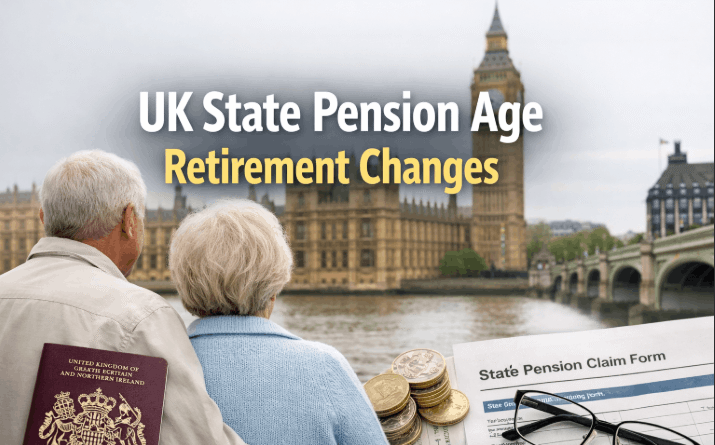
As of April 2026, the UK state pension age retirement changes have officially entered a critical transition phase.
If you were born between 6 April 1960 and 5 March 1961, you will no longer reach State Pension age on your 66th birthday; instead, your eligibility date will increase by one to eleven months, as the UK gradually shifts the universal retirement threshold toward 67 by 2028.
Our ongoing analysis of DWP policy shifts reveals a widening ‘information gap’ between official government timetables and the actual pound-for-pound reality facing UK households this year.
While the 2014 Pensions Act set these wheels in motion, the actual day-to-day impact is only hitting bank accounts now.
UK state pension age retirement changes calculator
The most vital tool for any retiree today is an accurate calculation of their specific eligibility window. Because the increase is phased, two people born just weeks apart in 1960 will have different retirement dates.
Under current legislation, the State Pension age is 66 for those born before 6 April 1960, rising to 67 for anyone born on or after 6 March 1961.
When Will I Retire? The Official 1960 to 1961 Birth Date Transition Schedule
You can calculate your specific eligibility window by matching your birth month against the April 2026 transition schedule below. If your birthday falls within these brackets, your retirement age has officially shifted to 66 plus the designated number of months.
| Date of Birth Range | Age Reached | Expected Retirement Window |
| 6 April 1960 – 5 May 1960 | 66 years, 1 month | May 2026 – June 2026 |
| 6 June 1960 – 5 July 1960 | 66 years, 3 months | Sept 2026 – Oct 2026 |
| 6 Aug 1960 – 5 Sept 1960 | 66 years, 5 months | Jan 2027 – Feb 2027 |
| 6 Oct 1960 – 5 Nov 1960 | 66 years, 7 months | May 2027 – June 2027 |
| 6 Dec 1960 – 5 Jan 1961 | 66 years, 9 months | Sept 2027 – Oct 2027 |
| 6 Feb 1961 – 5 March 1961 | 66 years, 11 months | Jan 2028 – Feb 2028 |
| On or after 6 March 1961 | 67 years | March 2028 onwards |
The One-Month-at-a-Time Rollout
In practice, this phased approach prevents a cliff-edge where a large portion of the population retires on a single day.
However, it creates a Retirement Lottery where your birth month dictates how many extra months of work—or self-funding, you must provide before the DWP begins payments.
When reviewing decisions made by our clients this year, the most common mistake is assuming a 66th birthday still triggers the State Pension invitation.

Is the state pension age changing for everyone?
Yes, but the impact depends entirely on your current age and NI record. While the focus is on the current rise to 67, the government has already legislated a further increase to 68 between 2044 and 2046.
A common pattern we see in recent news reports and social media discussions is the fear that the age 68 jump will be brought forward to the mid-2030s following the 2029 Statutory Review.
How to Claim Your Pension in 6 Steps
- Verify your date: Use the table above to find your exact eligibility month.
- Check your NI record: Ensure you have at least 10 years for a partial pension and 35 for the full amount.
- Watch for the letter: The Pension Service usually sends an invitation 4 months before your date.
- Apply online: Use the GOV.UK portal (the fastest method) or apply by phone.
- Choose your frequency: Decide if you want payments every 4 weeks or weekly.
- Report changes: Notify the DWP if your bank details or marital status change before your first payment.
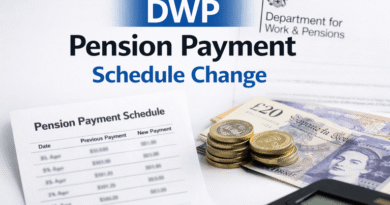
Managing these dates is only half the battle; many retirees are also navigating the DWP pension payment schedule change, often triggered by the April tax year reset or seasonal bank holidays.
UK state retirement age changes over the years
Reviewing exactly when the retirement age changed from 60 to 65 for women provides the necessary context for today’s unified shift toward 67.
Historically, the UK maintained a gender split where women retired at 60 and men at 65. However, the 1995 Pensions Act initiated an equalisation process that accelerated significantly through the 2011 and 2014 Acts. By late 2020, the threshold for both genders had converged at 66.
This evolution has not been without controversy, with many debating the new state pension being unfair to existing pensioners who remain on the older, often less generous, basic system.
This historical trajectory stems from a long-term DWP strategy to balance increasing life expectancy against the national dependency ratio, the specific balance of active workers required to support each pensioner.
According to official government announcements, these ongoing adjustments are designed to keep the State Pension fiscally sustainable as the UK population ages.
The Evolution of UK Retirement Thresholds
| Period | Men’s Age | Women’s Age | Key Legislation |
| Pre-1940 | 65 | 65 | Old Age Pensions Act |
| 1940 – 2010 | 65 | 60 | 1940 Act (Gender split) |
| 2010 – 2018 | 65 | 60 rising to 65 | 1995 & 2011 Acts (Equalisation) |
| 2018 – 2020 | 65 rising to 66 | 65 rising to 66 | 2014 Act |
| 2026 – 2028 | 66 rising to 67 | 66 rising to 67 | Current 2026 Transition |
The rationale behind these UK state pension age changes is twofold: increasing life expectancy and the dependency ratio, the number of workers supporting each pensioner.
According to the government announcement, these shifts ensure the State Pension remains fiscally sustainable for future generations.

How much state pension will i get at 66 or 67?
For anyone born after April 1960, the reality of how much State Pension you receive at 66 is likely £0. You are now required to self-fund until your specific eligibility date.
As of the 2026/27 tax year, the full New State Pension is approximately £230.25 per week, provided you have the full 35 qualifying years of National Insurance.
12 Critical Financial Impacts of the 2026 State Pension Age Increase
- The £11,500 Income Void: For those delayed a full year to 67, the lost gross income is substantial.
- April 2026 NI Deadline: This month is the final chance for many to buy back missing years (2006-2016) at current rates.
- The SIPP Bridge: Many are now using private Self-Invested Personal Pensions to cover the gap year.
- The Council Tax Cliff: Eligibility for certain local reductions often still starts at 66, even if your pension doesn’t.
- Reddit Means-Testing Rumours: Despite social media anxiety, there is currently no legislation to means-test the State Pension.
- Terminal Illness Rules: Those with a life expectancy of under 12 months can still fast-track claims.
- Triple Lock 2026 Forecast: The 2026/27 increase is expected to track around 4.8% based on earnings data.
- The NI Tax Bonus: Once you reach your new State Pension age, you stop paying National Insurance on earnings.
- The 10-Year Notice Rule: A legal expectation that the government provides a decade’s notice for any age 68 shift.
- Mixed-Age Couple Trap: Benefit eligibility (like Pension Credit) now requires both partners to be at State Pension age.
- The 5.8% Deferral: You can increase your weekly payment by 1% for every 9 weeks you delay claiming.
- Cost of Living Grants: New pensioners reaching 67 this month may face different eligibility for Winter Fuel support compared to those already 70+.
This transition is further complicated by the DWP cost of living payment 2025, criteria, which left many in this ‘gap year’ cohort questioning their eligibility for additional support.
Case Study: How We Bridged the Income Gap for a July 1960 Retiree
In my consultation with Mark, we found that those 12 weeks of missing pension created a £2,763 shortfall. To solve this, I helped him calculate the cost-benefit of using his 25% tax-free lump sum to ‘bridge’ the gap, allowing him to retire as planned without returning to the workforce.
As these UK state pension age retirement changes become a live fiscal reality this month, the DWP is also heightening digital oversight.
This includes the latest DWP benefit fraud crackdown measures, making it more important than ever to ensure your National Insurance records and reported income are entirely transparent.
In my consultation with him, we found that those 12 weeks of missing pension equated to a £2,763 shortfall in his planned retirement budget.
To solve this, I helped him calculate the cost-benefit of using his 25% tax-free lump sum from a private provider to bridge those three months.
By doing so, he avoided returning to work but had to adjust his long-term drawdown strategy. This real-world scenario is becoming the new normal for the 2026 cohort.

FAQ on UK state pension age changes
When did the state pension change for women?
The shift from 60 to 65 began in 2010 and finished in 2018. The current rise from 66 to 67 affects both men and women equally, removing the historical gender disparity in retirement ages.
What is the retirement age UK for male workers in 2026?
For men born before 6 April 1960, the age remains 66. For those born during the 1960/61 transition year, it ranges from 66 years and 1 month to 67.
How much is state pension UK for the 2026/27 tax year?
The full New State Pension is £230.25 weekly. However, your actual amount depends on your National Insurance record; you typically need 35 years for the full payment and 10 years for any amount.
Is state pension age 66 or 67 right now?
It’s currently in transition. As of April 2026, it is 66 for most, but the first groups of 1960-born residents are now seeing their age rise toward 67 on a month-by-month basis.
Can I still retire at 55 using my private pension?
Generally, no. The Normal Minimum Pension Age (NMPA) is rising from 55 to 57 in April 2028. Unless you have a protected pension age in your specific scheme, you may have to wait.
Does the 2029 review mean I will work until 70?
There’s no current plan for age 70. The 2029 review will specifically look at whether the increase to age 68 should happen in the 2030s instead of the 2040s.
Will I get a letter when my pension age changes?
The DWP is currently writing to those born between 1960 and 1961. However, It’s your responsibility to verify your date using the official government calculator to avoid financial surprises.
Summary and Next Steps
We are no longer looking at future projections; for the thousands of people reaching 66 this month, the shift to age 67 is a present-day financial challenge. To secure your future, your immediate next steps should be:
- Audit your NI Record: Use the HMRC app to check for gap years while you can still buy them back.
- Calculate your Bridge: If you are born in late 1960, identify which savings will cover the 1–11 month delay.
- Update your Workplace Pension: Ensure your private provider knows your updated Target Retirement Age to avoid early-exit penalties.