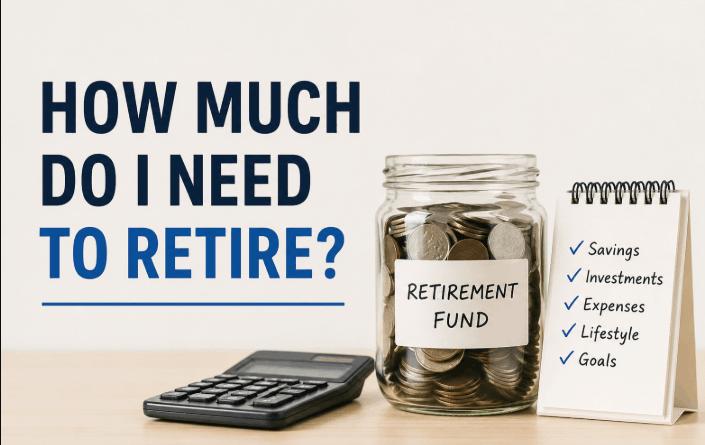
How Much Do I Need to Retire in the UK: Pension Pot Calculations, Income Tiers, and Inflation
Retirement income needs in the UK depend on the lifestyle target chosen, but the current Pensions UK benchmark puts a single person’s minimum retirement income at £13,900 a year, moderate income at £32,700, and comfortable income at £45,400, based on the May 2026 Retirement Living Standards update from Loughborough University.
The starting point is deciding which of these three tiers best fits your retirement plans.
Key Takeaways
- The minimum single person retirement income in the UK is £13,900 a year in 2026/27, moderate income is £32,700, and comfortable income is £45,400, according to Pensions UK.
- A single person targeting a moderate income of £32,700 a year would need a private pension pot of roughly £504,000 under the 4% Rule, once the full State Pension of £12,548 is deducted.
- A single person planning to retire in 20 years should budget for a moderate income of roughly £48,600 a year in future prices, not today’s £32,700, once inflation at the Bank of England’s 2% target is factored in.
What Counts As A Minimum, Moderate And Comfortable Retirement Income In The UK?
Pensions UK’s Retirement Living Standards define three retirement income tiers for the UK: minimum, moderate, and comfortable, each covering a different standard of living.
| Lifestyle | Single Person | Two Person Household | What It Covers |
|---|---|---|---|
| Minimum | £13,900 | £22,500 | Basic needs, one UK holiday a year, no car |
| Moderate | £32,700 | £45,400 | A small car, one European holiday a year |
| Comfortable | £45,400 | £62,700 | Two holidays a year, greater spending flexibility |
Many financial sites still quote a minimum retirement income of around £13,000 to £14,400 for a single person, often under the old PLSA branding. The current figure from Pensions UK, updated in May 2026, is £13,900 for a single person and £22,500 for a two-person household.
Source: Centre for Research in Social Policy, Loughborough University, on behalf of Pensions UK, formerly the Pensions and Lifetime Savings Association.
These figures are reviewed every year, so it’s worth checking the latest update before setting a savings target, rather than working from an outdated one.
How Much Of That Does The State Pension Cover?
The full new State Pension covers most of the minimum retirement income tier but falls well short of the moderate and comfortable tiers.
It pays £241.30 a week, or £12,548 a year, in the 2026/27 tax year. For a single person, that covers £12,548 of the £13,900 minimum target, leaving a shortfall of just £1,352 a year. For a two person household with two full State Pensions, combined income of £25,096 already exceeds the £22,500 minimum target entirely.
The State Pension age itself is also increasing, moving from 66 to 67 between April 2026 and April 2028, a shift covered in detail in UK state pension age retirement changes, and that timing matters just as much as the income figures do.
Anyone retiring before State Pension age needs to bridge that gap entirely from personal savings.
How Big A Pension Pot Do You Actually Need?
Turning an annual income target into a pension pot size requires the 4% Rule, a widely used safe withdrawal guideline built to make a pot last around 30 years.
| Income Needed After State Pension | Approximate Pot Required |
|---|---|
| £1,352 (minimum shortfall, single) | £33,800 |
| £20,152 (moderate shortfall, single) | £504,000 |
| £32,852 (comfortable shortfall, single) | £821,300 |
MoneyHelper, the government-backed guidance service, also has a pot-sizing tool based on similar methodology, handy for double-checking your own numbers.
The 4% Rule offers a useful starting estimate, but it assumes a 30 year retirement and does not account for market downturns or changing living costs.
How Do You Calculate How Much You Need To Retire?
Working out a personal retirement number takes four steps: setting a target income, subtracting the State Pension, applying the 4% Rule, and adjusting for early retirement.
- Decide which lifestyle tier reflects the desired retirement, minimum, moderate, or comfortable, and note the relevant annual income figure.
- Subtract the expected State Pension income, currently £12,548 a year for someone with a full National Insurance record, from that target.
- Divide the remaining shortfall by 4% to estimate the private pension pot required to fund it for around 30 years.
- Add extra to the pot if retirement is planned before State Pension age, since that income needs replacing entirely from savings until it starts.
A useful rule-of-thumb check is the salary multiple rule. Aiming for around ten times final salary by retirement age gives a rough approximation of a moderate income pot. The exact figure still depends heavily on when contributions started and how they were invested.
How Much Do You Need To Retire At 55?
Retiring at 55 means covering a comfortable income entirely from private savings for at least ten years before the State Pension starts.
Someone targeting the comfortable tier of £45,400 a year would need close to £1.14 million in savings to fund that income from 55 onward, since none of it is offset by the State Pension until well into the sixties.
An FCA-regulated financial adviser can help work out the exact pot needed for a specific early retirement date.
Normal Minimum Pension Age Is Rising To 57
The Normal Minimum Pension Age is 55 currently, but it rises to 57 on 6 April 2028. Anyone born after 5 April 1973 will typically need to wait until 57 to access a defined contribution pension, unless a protected pension age applies.
This age rule matters just as much as the income maths, and it can push back a retirement date even if the savings target has already been hit.
How Much Do You Need To Retire At 60 Compared To 65?
Retiring at 60 instead of 65 adds several more years without the State Pension, increasing the private pot required by a wide margin.
- Retiring at 60 means funding the full moderate income of £32,700 a year entirely from savings for six or seven years until State Pension age.
- Retiring at 65 still falls one or two years short of State Pension age under the rising 66 to 67 timetable, so a smaller savings buffer is still needed.
- Retiring at State Pension age, 66 or 67 depending on birth date, allows the State Pension to offset part of the target immediately, reducing the private pot needed to roughly £504,000 for a moderate income.
How Will Inflation Change How Much You Need To Retire?
The figures above are today’s prices, and inflation means the actual amount needed will be higher the further away retirement is.
UK CPI inflation stood at 2.6% in June 2026, but retirement planning conventionally uses the Bank of England’s 2% medium-term target for long-range projections, since a single year’s rate is too volatile to plan two decades around.
| Years From Now | Single Person (Moderate) | Two Person Household (Moderate) |
|---|---|---|
| Today | £32,700 | £45,400 |
| 5 years | £36,100 | £50,100 |
| 10 years | £39,900 | £55,300 |
| 15 years | £44,000 | £61,100 |
| 20 years | £48,600 | £67,500 |
The minimum and comfortable tiers scale the same way. A comfortable single person target of £45,400 today would sit closer to £67,500 in 20 years’ time, at the same 2% assumption.
Someone aged 45 today planning to retire at 65 is really planning against the 20 year column, not today’s figure, which is why a savings target worked out in your forties is worth revisiting now and then, rather than treated as set in stone.
Why Don’t Couples Need Simply Double The Single Person Figure?
Couples need less than double the single person figure because housing, utilities, and transport costs are shared rather than duplicated.
At the minimum tier, a single person needs £13,900 while a two person household needs £22,500, a combined figure well below double. The same pattern holds at the moderate and comfortable tiers, where shared costs like council tax, broadband, and a single car reduce the per person cost of living together.
That’s largely why couples find the minimum and moderate tiers easier to reach than two single people living separately.
Does Where You Live In The UK Change The Target?
Location changes the retirement income needed, with London figures running noticeably higher than the rest of the UK.
- In London, the minimum retirement income for a single person rises to around £14,600 a year, compared with £13,900 across the rest of the UK.
- Couples face a similar gap in London, needing around £24,100 a year against £22,500 elsewhere at the minimum tier.
- Moving to a lower cost UK location after retirement, covered in best places to retire, can reduce the pension pot required for the same lifestyle tier.
How Much You Need To Retire: Myth vs Reality
| Myth | Reality |
|---|---|
| The State Pension alone is enough to retire comfortably. | It covers close to the minimum tier for a single person, not the moderate or comfortable levels. |
| Couples need exactly double the income of a single retiree. | Shared housing and living costs mean couples need considerably less than double at every tier. |
| The PLSA still publishes these figures under that name. | The organisation renamed to Pensions UK, and the current figures come from its May 2026 update. |
| Everyone can access their pension from age 55. | The Normal Minimum Pension Age is rising to 57 on 6 April 2028 for most savers. |
| A pension pot lasts forever if only 4% is withdrawn each year. | The 4% Rule is built for around a 30 year retirement, not an unlimited one. |
How Is Your Pension Income Taxed In Retirement?
Pension income in retirement is taxed like other income, aside from a tax free lump sum available when withdrawals begin.
Tax Free Lump Sum
- Up to 25% of a pension pot can usually be withdrawn tax free, subject to HMRC limits, when drawdown or an annuity purchase begins.
Tax On Ongoing Withdrawals
- Any further withdrawals, whether taken as drawdown income or annuity payments, count as taxable income alongside the State Pension.
- Spreading large withdrawals across tax years, rather than taking them all in one go, can help avoid moving into a higher tax band unnecessarily.
HMRC rules around pension tax can change, so it is worth confirming current allowances before making any large withdrawal.

What If You’re Behind On Your Retirement Savings?
Falling behind on retirement savings is common, and the gap can still be closed later in working life with the right adjustments.
Increasing pension contributions by even a small percentage, particularly where an employer matches extra contributions, compounds meaningfully over a decade or more.
Pension Wise, the free government guidance service, offers a one to one appointment for anyone aged 50 or over to talk through the options with an impartial adviser.
Reviewing pension savings at 50, 55, and 60 catches shortfalls early enough to still make a meaningful difference.
Conclusion
A personal pot target comes from the minimum, moderate, and comfortable tiers set by Pensions UK, then applying the State Pension and the 4% Rule to work out the actual figure needed. That number moves with age, and it shifts again once inflation, location, and household size are factored in.
How much you need to retire means aiming for £504,000 or more in private savings today, or closer to £750,000 in 20 years’ time at current inflation assumptions, for a moderate lifestyle for UK savers in 2026/27.
FAQ
How much do I need to retire in the UK on the State Pension alone?
There’s no single guaranteed figure, since the State Pension alone doesn’t stretch to most retirement lifestyles. It currently pays £12,548 a year in 2026/27, which covers close to the minimum Retirement Living Standard but falls well short of the moderate or comfortable tiers.
Can I retire at 55 with £300,000 in the UK?
Yes, but only at a modest income level. A £300,000 pot funding a 4% withdrawal rate would provide around £12,000 a year, close to the minimum tier, and it must last without any State Pension top up for at least a decade.
Could I retire at 60 with £500,000?
Yes, for a moderate income level. A £500,000 pot supports a withdrawal of roughly £20,000 a year under the 4% Rule, though the full State Pension will not be added until several years later at the current State Pension age.
Can I retire at 60 with £250,000 in the UK?
Only at close to the minimum tier. A £250,000 pot generates around £10,000 a year at a 4% withdrawal rate, which sits below the £13,900 minimum income benchmark and would need topping up from other savings or a later retirement date.
Disclaimer: This article is for informational purposes only and does not constitute regulated financial or pension advice; consult an FCA-authorised financial adviser for personal guidance.